


- Home
- A-Z Catalogue
- Products
- Valves
- Cetop
- Manual Directional Valves
- Proportional Valves
- Poppet Valves
- High-Speed Linear Servo Valves
- All High-Speed Linear Servo Valves
- Cetop 10 (NG32) Two Stage Type High Speed Linear Servo Valves – LSVHG-10
- Cetop 10 (NG32) Two Stage Type High Speed Linear Servo Valves – LSVHG-10 (With Fail-Safe)
- Cetop 8 (NG25) Two Stage Type High Speed Linear Servo Valves – LSVHG-06
- Cetop 8 (NG25) Two Stage Type High Speed Linear Servo Valves – LSVHG-06 (With Fail-Safe)
- Cetop 7 (NG16) Two Stage Type High Speed Linear Servo Valves – LSVHG-04
- Cetop 7 (NG16) Two Stage Type High Speed Linear Servo Valves – LSVHG-04 (With Fail-Safe)
- Cetop 5 (NG10) Direct Type High Speed Linear Servo Valves – LSVG-03
- Cetop 5 (NG10) OBE Type Direct Operated Linear Servo Valves – LSVG-03-EH
- Cetop 3 (NG6) OBE Type Direct Operated Linear Servo Valves – LSVG-01-EH
- Pumps
- Pressure control
- Flow Control Valves
- Pressure Control Valves
- All Pressure Control Valves
- Brake Valves
- Direct Relief Valve
- Low Noise Solenoid Controlled Relief Valves
- Low Noise Pilot Operated Relief Valves
- Pilot Operated Relief Valves
- Pressure reducing and relieving valves
- Pressure reducing and check valves
- Pressure control valves
- Remote Control Relief Valves
- Solenoid Controlled Relief Valves – BSG
- Solenoid Controlled Relief Valves – BST
- Unloading relief valves
- Check valves
- Environmental
- Valves
- Hydraulic Systems
- Power pack
- About Us
- Contact
- Blog

2026 Top Fluorinated Rubber Types for Global Buyers
The 2026 fluorinated rubber market is becoming more specialized, not simply larger. Global buyers now compare chemical resistance, temperature limits, compression set, processing needs, and total service life. Fluorinated Rubber remains essential in fuel systems, semiconductor equipment, aerospace seals, chemical pumps, and demanding industrial assemblies.
Dr. John S. Dick, a respected rubber technologist and author, has stated, “Rubber selection must begin with the service environment, not the catalog.” This principle matters when choosing between FKM, FFKM, FEPM, and specialized tetrafluoroethylene-based compounds. A black FKM O-ring beside a fuel injector may look ordinary. Its formulation is not. Small differences in cure chemistry, fluorine content, filler design, and hardness can change leakage performance at 200°C.
Real conditions are rarely perfect. Temperature cycles occur. Surfaces may be imperfect. Cleaning fluids can attack unsuitable compounds. Some buyers still choose by unit price alone, and that approach deserves reconsideration. A lower-cost seal can create replacement labor, downtime, and rejected batches.
This guide examines the leading Fluorinated Rubber types for global buyers in 2026. It considers performance data, application fit, supplier consistency, certification expectations, and practical purchasing risks. Material names can be confusing. Marketing claims can be broader than test results. Buyers should request compound-specific data, not generic promises.
The strongest choice is not always the most chemically resistant grade. It is the grade that remains reliable under the actual pressure, temperature, media, and maintenance conditions. That distinction can protect both equipment and budgets.
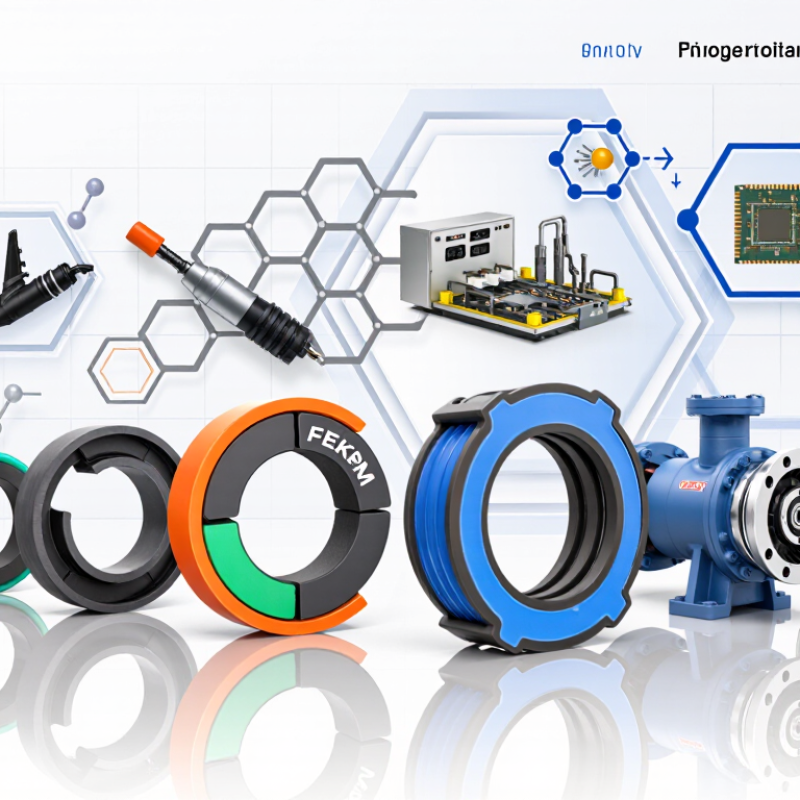
Table of Contents [Hide]
What Is Fluorinated Rubber and Why Does It Matter?
2026 Top Fluorinated Rubber Types for Global Buyers
What Is Fluorinated Rubber and Why Does It Matter?
Fluorinated rubber is an elastomer designed to resist heat, oils, fuels, and aggressive chemicals. Its fluorine-rich structure helps limit swelling and hardening in demanding environments. It is commonly used in seals, gaskets, hoses, and molded components. In practical inspections, the right compound often remains flexible after repeated exposure to heat and fluid contact. That reliability can reduce leakage risks and unplanned maintenance.
Different types serve different conditions. FKM is widely selected for high-temperature sealing and chemical resistance. FVMQ can offer better flexibility across changing temperatures, but it may have lower resistance to some fuels. Specialty grades may improve performance against acids, steam, or low temperatures. No material is perfect. A seal that performs well in a laboratory may behave differently after installation, compression, or storage.
Tips: Check temperature, pressure, fluid type, and movement before choosing a grade. Ask for test data, batch traceability, and clear compound specifications. Confirm dimensions under actual compression, not only at room temperature. Buyers should also review storage conditions and expected service life. Small details matter. A common mistake is choosing by polymer name alone. Real performance depends on formulation, curing quality, surface finish, and application design. When evidence is limited, request samples and conduct controlled testing before placing a large order.