


- Home
- A-Z Catalogue
- Products
- Valves
- Cetop
- Manual Directional Valves
- Proportional Valves
- Poppet Valves
- High-Speed Linear Servo Valves
- All High-Speed Linear Servo Valves
- Cetop 10 (NG32) Two Stage Type High Speed Linear Servo Valves – LSVHG-10
- Cetop 10 (NG32) Two Stage Type High Speed Linear Servo Valves – LSVHG-10 (With Fail-Safe)
- Cetop 8 (NG25) Two Stage Type High Speed Linear Servo Valves – LSVHG-06
- Cetop 8 (NG25) Two Stage Type High Speed Linear Servo Valves – LSVHG-06 (With Fail-Safe)
- Cetop 7 (NG16) Two Stage Type High Speed Linear Servo Valves – LSVHG-04
- Cetop 7 (NG16) Two Stage Type High Speed Linear Servo Valves – LSVHG-04 (With Fail-Safe)
- Cetop 5 (NG10) Direct Type High Speed Linear Servo Valves – LSVG-03
- Cetop 5 (NG10) OBE Type Direct Operated Linear Servo Valves – LSVG-03-EH
- Cetop 3 (NG6) OBE Type Direct Operated Linear Servo Valves – LSVG-01-EH
- Pumps
- Pressure control
- Flow Control Valves
- Pressure Control Valves
- All Pressure Control Valves
- Brake Valves
- Direct Relief Valve
- Low Noise Solenoid Controlled Relief Valves
- Low Noise Pilot Operated Relief Valves
- Pilot Operated Relief Valves
- Pressure reducing and relieving valves
- Pressure reducing and check valves
- Pressure control valves
- Remote Control Relief Valves
- Solenoid Controlled Relief Valves – BSG
- Solenoid Controlled Relief Valves – BST
- Unloading relief valves
- Check valves
- Environmental
- Valves
- Hydraulic Systems
- Power pack
- About Us
- Contact
- Blog

2026 Top Marble Cutting Disc Types for Global Buyers
For global stone buyers, choosing the right Marble Cutting Disc requires more than comparing prices. In 2026, available options include turbo-rim, segmented, continuous-rim, vacuum-brazed, and electroplated designs. Each type suits different marble grades, machines, and cutting conditions.
A turbo-rim disc can balance cutting speed with acceptable edge control during workshop production. Continuous-rim models often create smoother edges, especially when water cooling supports stable operation. Segmented discs may remove material quickly, but they can leave more visible chipping on delicate marble. Vacuum-brazed and electroplated discs offer different diamond exposure and service behavior. Their results depend on marble hardness, blade diameter, machine power, and operator technique.
Details matter.
Experienced fabricators usually check the disc’s arbor size, maximum RPM, diamond concentration, and recommended cutting method before purchase. A wet saw can reduce heat and dust, while an unsuitable dry cut may damage both the edge and the material. Buyers should also review test data, product traceability, manufacturer instructions, and supplier support. Claims about “universal” performance deserve careful examination. No single disc performs perfectly on every marble slab.
This guide compares the leading Marble Cutting Disc types expected to attract global attention in 2026. It focuses on cutting quality, working life, safety considerations, machine compatibility, and total operating value. The evaluation reflects practical workshop experience and technical selection principles, while recognizing that local conditions can change the result. A reliable choice begins with the stone, not the advertisement.
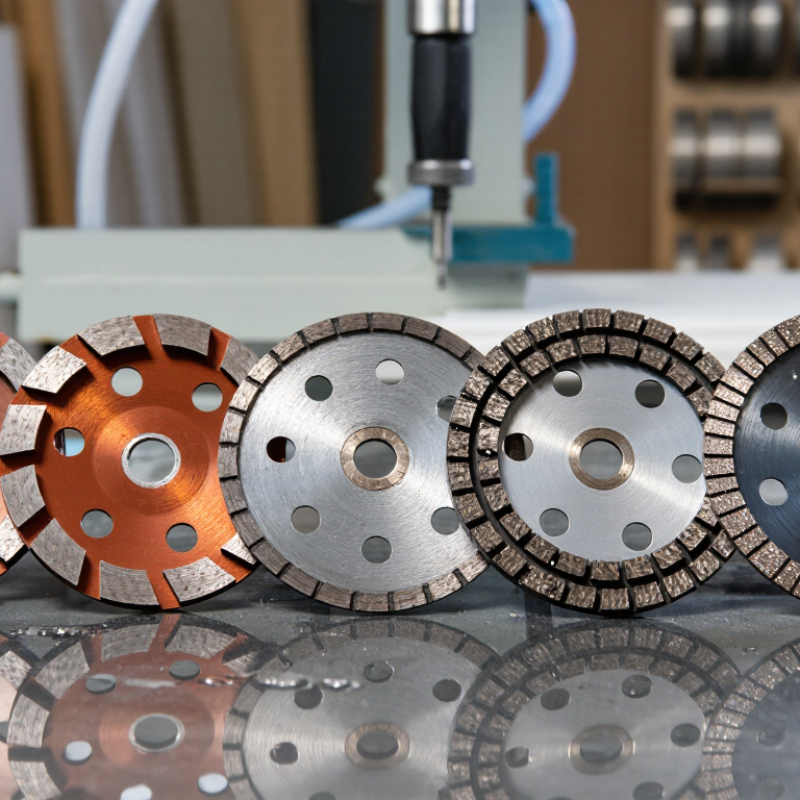
Table of Contents [Hide]
What Marble Cutting Discs Are and How They Work
Marble cutting discs are circular tools with a steel core and a diamond-bearing cutting rim. Industrial diamonds provide the abrasive action. They do not slice marble like a knife. They grind through it, crystal by crystal, while the bond releases worn diamonds and exposes sharper ones.
Disc design changes the cutting result. Continuous rims usually produce cleaner edges on polished marble. Segmented rims remove dust and heat faster during deeper cuts. Turbo rims balance speed and finish. Water cooling reduces friction, limits thermal cracking, and carries abrasive dust away. For dry cutting, short passes and pauses matter. A disc can look perfect and still cut poorly.
Demand remains substantial. The U.S. Geological Survey reported roughly two million metric tons of U.S. dimension-stone sales in 2023, including marble and related stones. Industry assessments from Grand View Research also identify construction and renovation as major applications for diamond tools. These figures do not measure marble discs alone, so direct comparisons can mislead. That limitation matters.
In practice, buyers should match diamond concentration, bond hardness, rim design, and disc diameter with the marble’s density. Softer marble may need a harder bond to prevent premature wear. Dense, crystalline marble often responds better to a faster-wearing bond. Cutting speed is not everything. Excessive pressure can cause chipping, vibration, or uneven kerfs. I have found that operator control often matters as much as disc specifications. Product sheets rarely show the whole cutting story.