


- Home
- A-Z Catalogue
- Products
- Valves
- Cetop
- Manual Directional Valves
- Proportional Valves
- Poppet Valves
- High-Speed Linear Servo Valves
- All High-Speed Linear Servo Valves
- Cetop 10 (NG32) Two Stage Type High Speed Linear Servo Valves – LSVHG-10
- Cetop 10 (NG32) Two Stage Type High Speed Linear Servo Valves – LSVHG-10 (With Fail-Safe)
- Cetop 8 (NG25) Two Stage Type High Speed Linear Servo Valves – LSVHG-06
- Cetop 8 (NG25) Two Stage Type High Speed Linear Servo Valves – LSVHG-06 (With Fail-Safe)
- Cetop 7 (NG16) Two Stage Type High Speed Linear Servo Valves – LSVHG-04
- Cetop 7 (NG16) Two Stage Type High Speed Linear Servo Valves – LSVHG-04 (With Fail-Safe)
- Cetop 5 (NG10) Direct Type High Speed Linear Servo Valves – LSVG-03
- Cetop 5 (NG10) OBE Type Direct Operated Linear Servo Valves – LSVG-03-EH
- Cetop 3 (NG6) OBE Type Direct Operated Linear Servo Valves – LSVG-01-EH
- Pumps
- Pressure control
- Flow Control Valves
- Pressure Control Valves
- All Pressure Control Valves
- Brake Valves
- Direct Relief Valve
- Low Noise Solenoid Controlled Relief Valves
- Low Noise Pilot Operated Relief Valves
- Pilot Operated Relief Valves
- Pressure reducing and relieving valves
- Pressure reducing and check valves
- Pressure control valves
- Remote Control Relief Valves
- Solenoid Controlled Relief Valves – BSG
- Solenoid Controlled Relief Valves – BST
- Unloading relief valves
- Check valves
- Environmental
- Valves
- Hydraulic Systems
- Power pack
- About Us
- Contact
- Blog

What Is an Arc MMA Welder and How Does It Work?
An Arc Mma Welder creates a strong joint by striking an electric arc between a flux-coated electrode and the workpiece. The arc’s heat melts both the electrode tip and the edges of the metal. As the weld cools, the flux forms a protective slag layer over the bead. It is a practical process for repairs, fabrication, and work outdoors.
The equipment is often called a stick welder or manual metal arc (MMA) welder. Its main parts are simple: a power source, an electrode holder, a work clamp, and a suitable electrode. Yet getting a clean weld takes practice. You must control the arc length, travel speed, and electrode angle while keeping a steady hand. Small changes matter.
This guide explains how the machine works, how current and electrodes affect the weld, and what to consider when choosing a setup. It also covers basic preparation and safe working habits, including eye protection, gloves, and good ventilation. Keep metal clean and secure before striking an arc. Expect some spatter. The first bead may look uneven, and that is useful feedback, not proof that the process has failed. MMA welding is dependable, but it is not effortless; results depend on the material, settings, and technique.
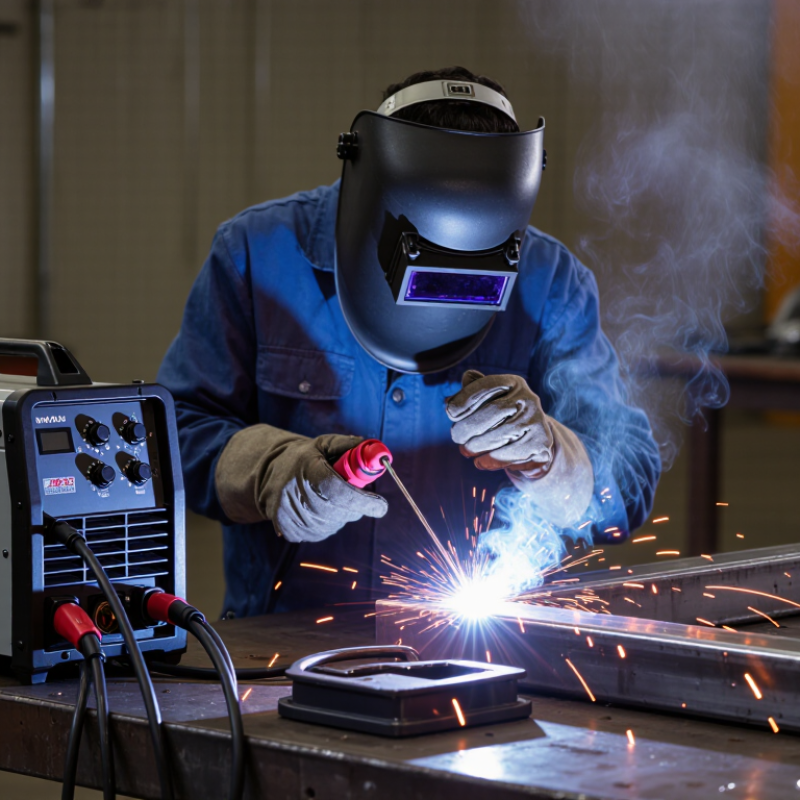
Table of Contents [Hide]
What an Arc MMA Welder Is
An arc MMA welder is a machine used for manual metal arc welding, often called stick welding. It creates an electric arc between a flux-coated metal electrode and the workpiece. Most machines provide a steady welding current, while the operator guides the electrode by hand. The arc’s heat melts both the electrode tip and a small area of the base metal, joining them as they cool.
The electrode coating releases shielding gases and forms a layer of slag over the weld pool. This helps protect hot metal from contamination; the cooled slag is chipped away afterward.
The explanation is neat; the actual bead often isn’t.
Arc length, travel speed, and electrode angle all affect the result, and small changes can leave uneven welds. MMA equipment is valued for its relatively simple setup and portability, but it still requires suitable protective clothing, eye protection, and good ventilation.