


- Home
- A-Z Catalogue
- Products
- Valves
- Cetop
- Manual Directional Valves
- Proportional Valves
- Poppet Valves
- High-Speed Linear Servo Valves
- All High-Speed Linear Servo Valves
- Cetop 10 (NG32) Two Stage Type High Speed Linear Servo Valves – LSVHG-10
- Cetop 10 (NG32) Two Stage Type High Speed Linear Servo Valves – LSVHG-10 (With Fail-Safe)
- Cetop 8 (NG25) Two Stage Type High Speed Linear Servo Valves – LSVHG-06
- Cetop 8 (NG25) Two Stage Type High Speed Linear Servo Valves – LSVHG-06 (With Fail-Safe)
- Cetop 7 (NG16) Two Stage Type High Speed Linear Servo Valves – LSVHG-04
- Cetop 7 (NG16) Two Stage Type High Speed Linear Servo Valves – LSVHG-04 (With Fail-Safe)
- Cetop 5 (NG10) Direct Type High Speed Linear Servo Valves – LSVG-03
- Cetop 5 (NG10) OBE Type Direct Operated Linear Servo Valves – LSVG-03-EH
- Cetop 3 (NG6) OBE Type Direct Operated Linear Servo Valves – LSVG-01-EH
- Pumps
- Pressure control
- Flow Control Valves
- Pressure Control Valves
- All Pressure Control Valves
- Brake Valves
- Direct Relief Valve
- Low Noise Solenoid Controlled Relief Valves
- Low Noise Pilot Operated Relief Valves
- Pilot Operated Relief Valves
- Pressure reducing and relieving valves
- Pressure reducing and check valves
- Pressure control valves
- Remote Control Relief Valves
- Solenoid Controlled Relief Valves – BSG
- Solenoid Controlled Relief Valves – BST
- Unloading relief valves
- Check valves
- Environmental
- Valves
- Hydraulic Systems
- Power pack
- About Us
- Contact
- Blog

China Best Analog Splitter 4 20mA for Buyers?
Choosing the China best Analog Splitter 4 20ma requires more than comparing prices and product photographs. Buyers must examine signal accuracy, electrical isolation, loop loading, response time, and long-term stability. A splitter may look excellent online yet fail when installed beside inverters, motors, or high-voltage cables.
The practical question is simple: can the device protect the control signal under real operating conditions? A reliable Analog Splitter 4 20ma should separate input and output circuits, preserve the 4–20 mA range, and provide clear wiring instructions. Check whether the manufacturer publishes accuracy data, insulation ratings, temperature limits, and testing procedures. Ask for sample reports, not vague promises.
Measurement expert W. Edwards Deming offered a useful warning: “In God we trust; all others must bring data.” That principle fits industrial purchasing. Request calibration records, load test results, and evidence from comparable installations. A supplier’s technical response often reveals more than its marketing language. Look for engineers who explain power requirements, terminal layout, grounding, and fault behavior in precise terms.
China has many capable manufacturers, but quality can vary between models and batches. That is easy to overlook. A lower-cost unit may become expensive after repeated signal faults, replacement labor, and production delays. Buyers should also consider communication speed, warranty support, spare availability, and compatibility with PLC or DCS systems. The best choice is not automatically the cheapest or most popular. It is the splitter that performs predictably, carries verifiable documentation, and matches the plant’s actual electrical environment. Even experienced buyers should leave room for doubt and test before committing to a large order.
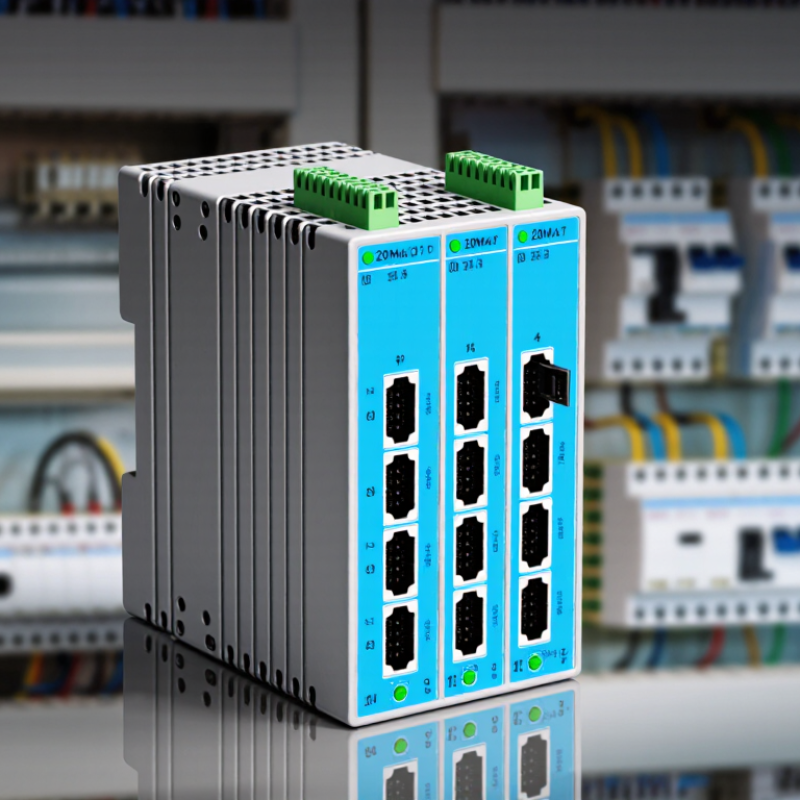
Table of Contents [Hide]
What Is a 4–20 mA Analog Splitter?
China Best Analog Splitter 4–20mA for Buyers?
What Is a 4–20 mA Analog Splitter?
A 4–20 mA analog splitter receives one current signal and creates two or more isolated outputs. One transmitter can then serve a controller, display, recorder, or safety monitor. The signal range uses a 4 mA live zero and a 16 mA measuring span. This design helps distinguish zero measurement from a broken wire.
It is not merely a passive wire junction. A reliable splitter normally includes input conditioning, galvanic isolation, and separate output drivers. IEC 60381-1 defines current transmission practices for industrial measurement systems. NAMUR NE 43 also identifies 3.6 mA and 21.0 mA as useful fault thresholds. These values support faster troubleshooting in control cabinets.
Field engineers should check loop power, burden resistance, accuracy, and response time. Many devices specify errors below 0.1% of span, but installation conditions can change performance. Long cables may add resistance. Ground loops may introduce unstable readings. An ARC Advisory Group process-automation outlook continues to emphasize reliable signal infrastructure as plants modernize legacy systems. That point is practical, not absolute. Buyers should still verify test data, isolation voltage, temperature range, and terminal quality before selection. Small specifications can cause large commissioning delays.





