


- Home
- A-Z Catalogue
- Products
- Valves
- Cetop
- Manual Directional Valves
- Proportional Valves
- Poppet Valves
- High-Speed Linear Servo Valves
- All High-Speed Linear Servo Valves
- Cetop 10 (NG32) Two Stage Type High Speed Linear Servo Valves – LSVHG-10
- Cetop 10 (NG32) Two Stage Type High Speed Linear Servo Valves – LSVHG-10 (With Fail-Safe)
- Cetop 8 (NG25) Two Stage Type High Speed Linear Servo Valves – LSVHG-06
- Cetop 8 (NG25) Two Stage Type High Speed Linear Servo Valves – LSVHG-06 (With Fail-Safe)
- Cetop 7 (NG16) Two Stage Type High Speed Linear Servo Valves – LSVHG-04
- Cetop 7 (NG16) Two Stage Type High Speed Linear Servo Valves – LSVHG-04 (With Fail-Safe)
- Cetop 5 (NG10) Direct Type High Speed Linear Servo Valves – LSVG-03
- Cetop 5 (NG10) OBE Type Direct Operated Linear Servo Valves – LSVG-03-EH
- Cetop 3 (NG6) OBE Type Direct Operated Linear Servo Valves – LSVG-01-EH
- Pumps
- Pressure control
- Flow Control Valves
- Pressure Control Valves
- All Pressure Control Valves
- Brake Valves
- Direct Relief Valve
- Low Noise Solenoid Controlled Relief Valves
- Low Noise Pilot Operated Relief Valves
- Pilot Operated Relief Valves
- Pressure reducing and relieving valves
- Pressure reducing and check valves
- Pressure control valves
- Remote Control Relief Valves
- Solenoid Controlled Relief Valves – BSG
- Solenoid Controlled Relief Valves – BST
- Unloading relief valves
- Check valves
- Environmental
- Valves
- Hydraulic Systems
- Power pack
- About Us
- Contact
- Blog

10 Best Drill HDD Tools for Global Buyers?
Choosing the 10 Best Drill Hdd Tools for Global Buyers requires more than comparing catalog prices. Ground conditions change dramatically across regions. A compact drill may perform well in dense clay, yet struggle in cobbles or fractured limestone. Buyers should examine thrust force, rotary torque, drilling depth, mud-pump capacity, locating accuracy, and transport dimensions. These details become practical concerns on a crowded road, beside a narrow trench, or under a busy railway.
John E. Hair, a recognized HDD trainer and author, has stated, “Good HDD practice begins with understanding the ground, not choosing the machine.” That principle guides this selection. Each featured Drill Hdd tool is considered through real operating needs, including operator visibility, control simplicity, spare-parts access, fuel efficiency, and after-sales support. A machine’s advertised power is only one part of its value.
Global buyers also need to check regional voltage, emissions requirements, language support, and local service coverage. A low purchase price can become expensive when a replacement pump waits six weeks at customs. That risk is easy to overlook. It should not be.
Still, no ranking can fit every project. Soil reports may be incomplete. Manufacturer data may use different testing conditions. Even experienced contractors can misjudge fluid performance during changing formations. This guide therefore balances technical specifications with field practicality, ownership cost, and supplier reliability. The strongest choice is not always the largest machine. Sometimes, a simpler rig delivers better results, fewer delays, and more predictable work.
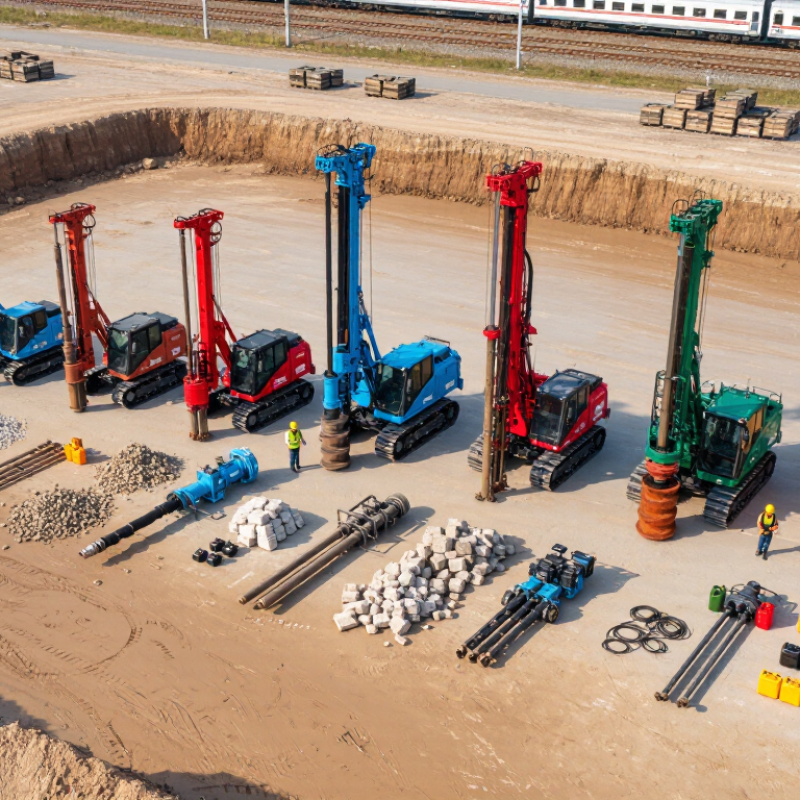
Table of Contents [Hide]
What Are Drill HDD Tools and Where Are They Used?
Horizontal directional drilling (HDD) tools install underground utilities with limited surface excavation. They are used beneath roads, rivers, railways, airports, and landscaped areas. A practical HDD toolkit includes drill rods, a pilot bit, transmitter housing, locating equipment, reamers, swivels, and drilling-fluid systems. Each part controls direction, hole size, or pullback stability.
The Global Infrastructure Hub’s Global Infrastructure Outlook projected about US$94 trillion in infrastructure investment needs through 2040. That demand supports HDD use in water, power, gas, and telecommunications projects. ITU’s Facts and Figures 2023 reported that 5.4 billion people were online, while 2.6 billion remained offline. Expanding broadband networks still require efficient underground routes. HDD tools help reduce traffic closures and surface restoration, but they are not universally suitable. Dense cobbles, unstable soil, unknown utilities, and groundwater can change the method completely.
Tips: Match the drill bit to soil conditions, not only pipe diameter. Confirm locating accuracy before drilling. Check rod strength, reamer wear, fluid compatibility, and pullback load. A smaller rig may look economical, yet weak torque can increase downtime. Ask for test data, service records, and operator training details. FHWA guidance on horizontal directional drilling emphasizes planning, utility investigation, drilling-fluid control, and monitoring. That matters more than attractive catalog specifications. Field conditions remain unpredictable, and even experienced teams can misjudge changing ground layers.
10 Best Drill HDD Tools for Global Buyers? - What Are Drill HDD Tools and Where Are They Used?
A practical comparison of horizontal directional drilling tools, applications, operating conditions, and selection factors
| No. | HDD Tool | What It Is | Primary Use | Suitable Ground | Typical Size or Range | Key Selection Factors |
|---|---|---|---|---|---|---|
| 1 | Steerable Pilot Bit | A cutting head with angled faces or a bent housing that allows the drill string to change direction. | Creates and guides the pilot bore along the planned underground alignment. | Soft clay, silt, sand, weathered soil, and mixed near-surface formations. | Commonly about 50–150 mm (2–6 in) pilot diameter, depending on the drill system. | Bit profile, fluid ports, steering response, cutter material, and compatibility with the locating system. |
| 2 | Rock Roller-Cone Bit | A bit using rotating toothed cones to crush and chip hard rock. | Drills pilot holes or advances through competent rock formations. | Limestone, sandstone, shale, cobbles, and other consolidated formations. | Often selected for pilot diameters of approximately 75–300 mm (3–12 in). | Tooth structure, bearing design, rock abrasiveness, required torque, and drilling-fluid circulation. |
| 3 | Downhole Mud Motor | A hydraulic motor powered by drilling fluid to rotate a bit independently of the drill string. | Improves rock penetration and enables controlled drilling in hard or fractured ground. | Hard rock, abrasive rock, cobbles, and formations where surface rotation is less effective. | Common tool diameters range from about 90–200 mm (3.5–8 in), subject to rig capacity. | Flow rate, pressure drop, motor output, bend angle, bit connection, and expected operating temperature. |
| 4 | Backreamer | A cutting or scraping tool pulled through the pilot bore to enlarge and condition the hole. | Prepares the bore for product pipe installation after pilot drilling. | Soil, clay, sand, gravel, and selected mixed-ground conditions. | Typical reaming diameters range from approximately 150–1,200 mm (6–48 in). | Cutter configuration, ground condition, fluid circulation, pullback load, and required bore enlargement. |
| 5 | Hole Opener | A heavy-duty enlargement tool with replaceable cutters for creating a larger, stable bore. | Performs high-volume hole enlargement for large utility, water, sewer, or pipeline crossings. | Hard rock, abrasive formations, cobbles, and large-diameter mixed ground. | Frequently used from about 300 mm to more than 1,500 mm (12–60+ in). | Cutter type, roller protection, centralization, torque requirement, and transport or assembly limits. |
| 6 | Barrel Reamer | A cylindrical reamer that combines cutting surfaces with a barrel-shaped body for bore stabilization. | Enlarges and smooths bores while helping maintain a consistent hole profile. | Clay, cohesive soils, soft rock, and formations requiring controlled cuttings removal. | Commonly available in approximately 200–900 mm (8–36 in) working diameters. | Body length, cutter arrangement, mud-flow capacity, gauge protection, and bore stability requirements. |
| 7 | Drill Pipe | Threaded steel pipe sections that transmit thrust, torque, and drilling fluid between the rig and downhole tool. | Builds the drill string and carries tools through the pilot bore and reaming stages. | Used in virtually all HDD ground conditions with the correct grade and connection. | Individual lengths are often about 3–10 m (10–33 ft); outside diameters vary by rig class. | Tensile capacity, allowable torque, fatigue resistance, connection design, bore radius, and fluid pressure rating. |
| 8 | Drill Stem Sub and Swivel | Connection components that adapt thread sizes, attach tooling, or allow product pipe to rotate independently during pullback. | Connects mismatched tools and reduces torsional stress on the product pipe. | Applicable across soil and rock projects, especially long or high-load installations. | Selected according to drill-pipe connection, product diameter, and pullback load. | Working load, torque rating, pressure rating, thread compatibility, sealing system, and bearing protection. |
| 9 | Drilling-Fluid Jet Nozzle | A replaceable nozzle or port that directs bentonite drilling fluid toward the cutting face. | Cools and lubricates tooling, transports cuttings, and helps stabilize the bore wall. | Most useful in unconsolidated soil, sand, clay, and mixed formations. | Orifice sizes are chosen for the pump, fluid properties, and required flow velocity. | Flow rate, pressure loss, abrasion resistance, plugging risk, nozzle angle, and drilling-fluid formulation. |
| 10 | Product-Pipe Pulling Head | A reinforced attachment that connects the installed pipe or cable bundle to the swivel and drill string. | Transfers pullback force while protecting the product connection during installation. | Used for polyethylene pipe, steel pipe, conduit, cable bundles, and other approved products. | Sized to the product outside diameter, wall thickness, connection method, and pulling force. | Safe working load, pipe grip, load distribution, bend radius, sealing, and compatibility with the swivel. |
Buyer’s Note: HDD tooling should be selected according to bore diameter, crossing length, soil or rock conditions, drilling-fluid capacity, allowable pullback force, and the rig’s torque and thrust ratings. The size ranges shown are typical planning references rather than universal specifications.