


- Home
- A-Z Catalogue
- Products
- Valves
- Cetop
- Manual Directional Valves
- Proportional Valves
- Poppet Valves
- High-Speed Linear Servo Valves
- All High-Speed Linear Servo Valves
- Cetop 10 (NG32) Two Stage Type High Speed Linear Servo Valves – LSVHG-10
- Cetop 10 (NG32) Two Stage Type High Speed Linear Servo Valves – LSVHG-10 (With Fail-Safe)
- Cetop 8 (NG25) Two Stage Type High Speed Linear Servo Valves – LSVHG-06
- Cetop 8 (NG25) Two Stage Type High Speed Linear Servo Valves – LSVHG-06 (With Fail-Safe)
- Cetop 7 (NG16) Two Stage Type High Speed Linear Servo Valves – LSVHG-04
- Cetop 7 (NG16) Two Stage Type High Speed Linear Servo Valves – LSVHG-04 (With Fail-Safe)
- Cetop 5 (NG10) Direct Type High Speed Linear Servo Valves – LSVG-03
- Cetop 5 (NG10) OBE Type Direct Operated Linear Servo Valves – LSVG-03-EH
- Cetop 3 (NG6) OBE Type Direct Operated Linear Servo Valves – LSVG-01-EH
- Pumps
- Pressure control
- Flow Control Valves
- Pressure Control Valves
- All Pressure Control Valves
- Brake Valves
- Direct Relief Valve
- Low Noise Solenoid Controlled Relief Valves
- Low Noise Pilot Operated Relief Valves
- Pilot Operated Relief Valves
- Pressure reducing and relieving valves
- Pressure reducing and check valves
- Pressure control valves
- Remote Control Relief Valves
- Solenoid Controlled Relief Valves – BSG
- Solenoid Controlled Relief Valves – BST
- Unloading relief valves
- Check valves
- Environmental
- Valves
- Hydraulic Systems
- Power pack
- About Us
- Contact
- Blog

Best Hydraulic Coupler Options for Global Buyers?
In the rapidly evolving landscape of hydraulic systems, the demand for high-quality Hydraulic Couplers is paramount. With an expected market growth of 5.7% annually, these components are critical for efficient operations in construction, agriculture, and manufacturing. Industry expert Dr. Jane Miller states, "The reliability of Hydraulic Couplers directly impacts overall machinery performance." This emphasizes the importance of selecting the right coupler for optimal system functionality.
Global buyers face a wide array of options when selecting Hydraulic Couplers, making informed choices essential. Understanding material specifications, pressure ratings, and coupling designs can be daunting. The choice is not merely about price but also performance and longevity. Reports indicate that 30% of equipment failures arise from improper coupler selection.
It's crucial to recognize that not all hydraulic systems are the same. Each application demands specific coupler features, which can lead to confusion. Striking the right balance between cost and reliability may not be straightforward. A thorough assessment of operational requirements is necessary for sustainable investment.
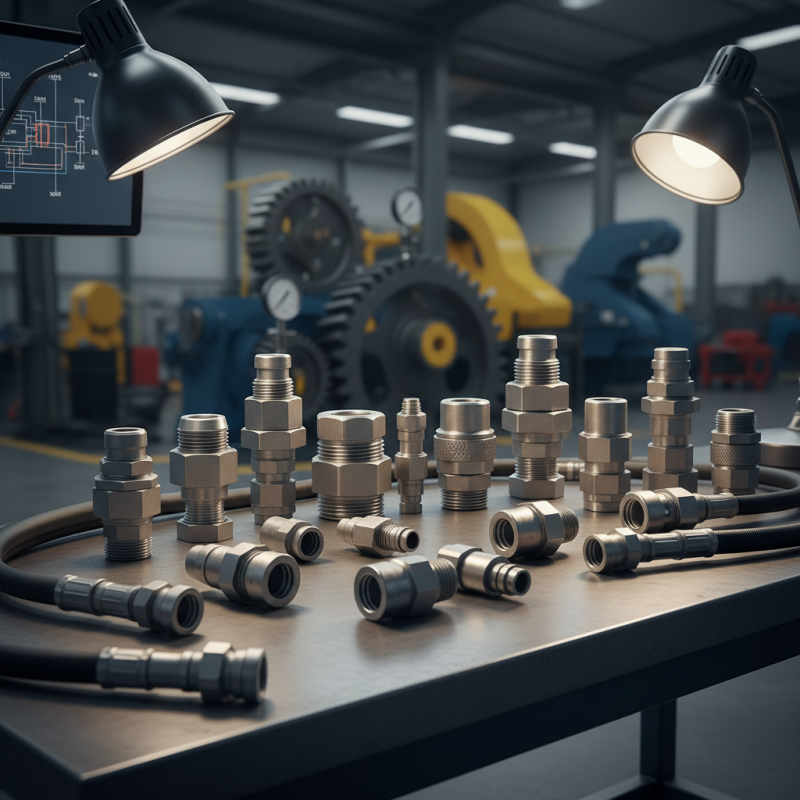
Table of Contents [Hide]
Overview of Hydraulic Couplers and Their Importance in Industry
Hydraulic couplers play a vital role in various industrial applications. They connect hydraulic components efficiently, ensuring a seamless flow of fluids. A report by MarketsandMarkets indicates that the hydraulic couplers market was valued at approximately $2.6 billion in 2021 and is expected to grow at a CAGR of 4.5% from 2022 to 2027. This growth reflects the increasing need for automation and improved efficiency across sectors.
Choosing the right hydraulic coupler is crucial for maximizing operational efficiency. These couplers must withstand high pressure and temperature variations, making quality paramount. Unfortunately, not all products on the market meet industry standards. A study revealed that about 25% of hydraulic failures are linked to improper coupler selection or installation. This statistic highlights the importance of training in proper application and installation practices to reduce risk.
Moreover, the diversity among hydraulic couplers means that buyers must navigate a complex landscape. Each design serves specific functions, from quick disconnects to specialized locking mechanisms. Assessing compatibility with existing systems is essential, and failure to do so can lead to significant downtime. Insights from experts emphasize the importance of thorough testing and validation before implementation. Many companies are still unaware of potential flaws in their selection processes, which can lead to costly mistakes in the long term.