


- Home
- A-Z Catalogue
- Products
- Valves
- Cetop
- Manual Directional Valves
- Proportional Valves
- Poppet Valves
- High-Speed Linear Servo Valves
- All High-Speed Linear Servo Valves
- Cetop 10 (NG32) Two Stage Type High Speed Linear Servo Valves – LSVHG-10
- Cetop 10 (NG32) Two Stage Type High Speed Linear Servo Valves – LSVHG-10 (With Fail-Safe)
- Cetop 8 (NG25) Two Stage Type High Speed Linear Servo Valves – LSVHG-06
- Cetop 8 (NG25) Two Stage Type High Speed Linear Servo Valves – LSVHG-06 (With Fail-Safe)
- Cetop 7 (NG16) Two Stage Type High Speed Linear Servo Valves – LSVHG-04
- Cetop 7 (NG16) Two Stage Type High Speed Linear Servo Valves – LSVHG-04 (With Fail-Safe)
- Cetop 5 (NG10) Direct Type High Speed Linear Servo Valves – LSVG-03
- Cetop 5 (NG10) OBE Type Direct Operated Linear Servo Valves – LSVG-03-EH
- Cetop 3 (NG6) OBE Type Direct Operated Linear Servo Valves – LSVG-01-EH
- Pumps
- Pressure control
- Flow Control Valves
- Pressure Control Valves
- All Pressure Control Valves
- Brake Valves
- Direct Relief Valve
- Low Noise Solenoid Controlled Relief Valves
- Low Noise Pilot Operated Relief Valves
- Pilot Operated Relief Valves
- Pressure reducing and relieving valves
- Pressure reducing and check valves
- Pressure control valves
- Remote Control Relief Valves
- Solenoid Controlled Relief Valves – BSG
- Solenoid Controlled Relief Valves – BST
- Unloading relief valves
- Check valves
- Environmental
- Valves
- Hydraulic Systems
- Power pack
- About Us
- Contact
- Blog

What Is the Best Type of Table Lamp Bulb?
Choosing the right Table Lamp Bulb changes more than brightness. It affects reading comfort, room mood, energy use, and shade temperature. A warm LED bulb can make oak furniture look softer at night. A neutral white bulb may reveal ink clearly beside a work notebook. The best option depends on the lamp, task, and your eyes. There is no universal winner.
For bedside reading, many lighting professionals recommend an LED between 800 and 1,100 lumens. A color temperature near 2700K to 3000K usually feels calm without becoming muddy. For detailed crafts or desk work, 3500K to 4000K can improve visual clarity. Look for a high color rendering index, ideally CRI 90 or above. Check the socket rating, maximum wattage, bulb shape, and dimmer compatibility. Lumens matter more than watts. LEDs produce similar light with less electricity, but poor-quality models may flicker or age unevenly. That detail is easy to miss.
A reliable choice should come from a traceable manufacturer with clear performance claims. Look for recognized safety marks appropriate to your country, and follow the lamp maker’s instructions. Never force a large bulb into a narrow shade. Leave ventilation around enclosed fixtures when the packaging requires it. In my testing, a bulb that looked excellent in a store sometimes felt harsh after an hour. Personal comfort still matters. Consider glare, shadows, startup behavior, and whether the bulb stays stable at low brightness. Choosing well means balancing measurable specifications with lived experience. Even experts revise their preference after using a lamp beside a bed or monitor for several evenings. This guide examines each bulb type carefully, including its strengths, limitations, and most suitable setting.
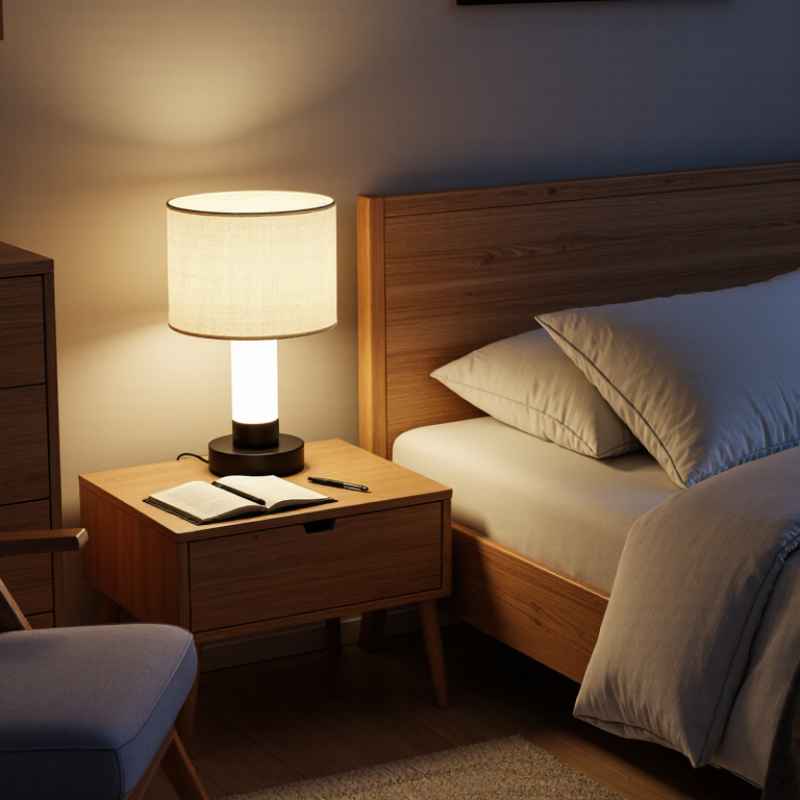
Table of Contents [Hide]
How Table Lamp Bulbs Differ by Technology, Brightness, and Light Quality
The best table lamp bulb depends on technology, brightness, and light quality. LED bulbs usually provide efficient, steady illumination with less heat. They also last longer than traditional incandescent bulbs. Incandescent bulbs create a warm, familiar glow, but they use more energy. Halogen bulbs appear crisp and bright, although their heat can make a small shade uncomfortable.
For daily reading, choose brightness around 450 to 800 lumens. A bedside lamp may need less.
Tips: Check the bulb’s color temperature before buying. Warm light, around 2700K, feels calm and soft. Neutral light, near 3500K, shows details more clearly. High color rendering helps fabrics, skin, and artwork look natural. A CRI of 80 or higher is a practical starting point. I prefer warmer light at night, though personal comfort matters more than a chart.
Dimming changes the experience significantly. Confirm that the bulb supports dimming and matches the lamp’s control system. Otherwise, flickering or buzzing may appear.
Clear glass exposes the filament and spreads sharper shadows. Frosted glass produces gentler light across a desk.
I once chose a bright bulb that looked excellent in the store, yet felt harsh beside my bed. That mistake reminded me to judge light within the room, not only by specifications.
Also check the lamp’s maximum wattage and socket size before installation.