


- Home
- A-Z Catalogue
- Products
- Valves
- Cetop
- Manual Directional Valves
- Proportional Valves
- Poppet Valves
- High-Speed Linear Servo Valves
- All High-Speed Linear Servo Valves
- Cetop 10 (NG32) Two Stage Type High Speed Linear Servo Valves – LSVHG-10
- Cetop 10 (NG32) Two Stage Type High Speed Linear Servo Valves – LSVHG-10 (With Fail-Safe)
- Cetop 8 (NG25) Two Stage Type High Speed Linear Servo Valves – LSVHG-06
- Cetop 8 (NG25) Two Stage Type High Speed Linear Servo Valves – LSVHG-06 (With Fail-Safe)
- Cetop 7 (NG16) Two Stage Type High Speed Linear Servo Valves – LSVHG-04
- Cetop 7 (NG16) Two Stage Type High Speed Linear Servo Valves – LSVHG-04 (With Fail-Safe)
- Cetop 5 (NG10) Direct Type High Speed Linear Servo Valves – LSVG-03
- Cetop 5 (NG10) OBE Type Direct Operated Linear Servo Valves – LSVG-03-EH
- Cetop 3 (NG6) OBE Type Direct Operated Linear Servo Valves – LSVG-01-EH
- Pumps
- Pressure control
- Flow Control Valves
- Pressure Control Valves
- All Pressure Control Valves
- Brake Valves
- Direct Relief Valve
- Low Noise Solenoid Controlled Relief Valves
- Low Noise Pilot Operated Relief Valves
- Pilot Operated Relief Valves
- Pressure reducing and relieving valves
- Pressure reducing and check valves
- Pressure control valves
- Remote Control Relief Valves
- Solenoid Controlled Relief Valves – BSG
- Solenoid Controlled Relief Valves – BST
- Unloading relief valves
- Check valves
- Environmental
- Valves
- Hydraulic Systems
- Power pack
- About Us
- Contact
- Blog

How to Choose the Right Circuit Breaker Board?
Choosing the right Circuit Breaker Board is not a matter of selecting the largest cabinet or the cheapest listing. It requires a careful match between electrical demand, protection requirements, installation conditions, and future expansion. A board must safely distribute power while allowing breakers to interrupt faults before damaged wiring becomes a serious hazard. That balance matters in a quiet apartment, a dusty workshop, or a commercial space with sensitive equipment.
Mike Holt, a respected electrical educator, offers a useful reminder: “Electricity must be respected, not feared.” His words fit this decision closely. A reliable Circuit Breaker Board begins with accurate load calculations, not guesswork. Check the system voltage, incoming supply rating, available fault current, breaker compatibility, enclosure rating, and number of circuits. Look for clear labeling, sturdy busbars, adequate neutral and grounding arrangements, and room for future circuits. Small details matter. A loose terminal can create heat behind a closed cover.
Experience also shows where decisions can go wrong. Some buyers focus only on brand reputation. Others choose a board that fits today’s appliances but leaves no space for tomorrow’s heat pump or workshop tools. That can become expensive.
Do not rely on appearance alone. Verify certification, installation instructions, and local electrical requirements with a qualified electrician. Product specifications may look simple, yet site conditions often are not. The best choice is the board that provides dependable protection, practical maintenance access, and a realistic margin for change. Safety comes before convenience.
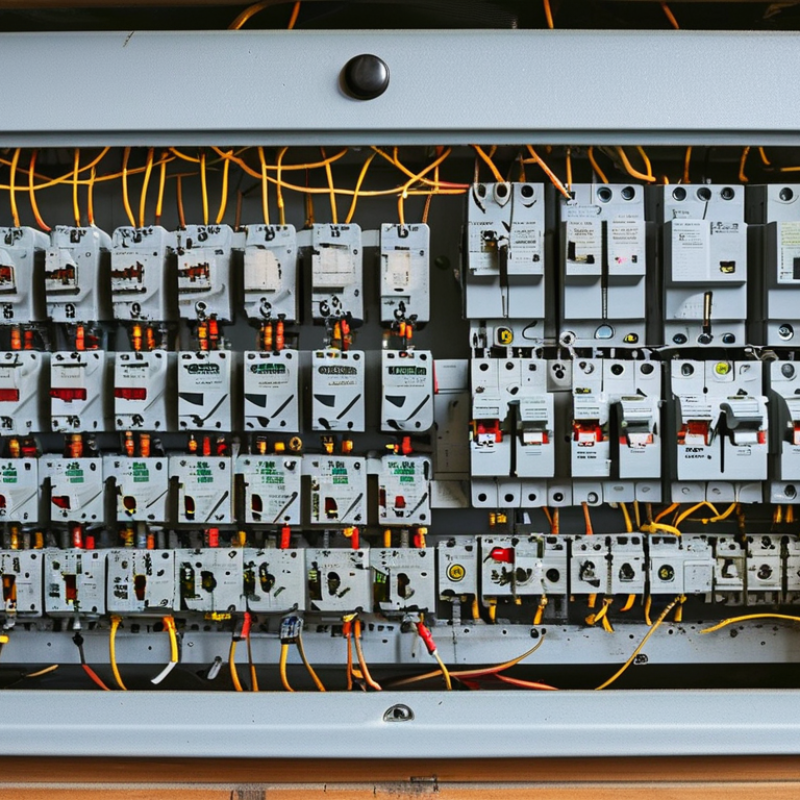
Table of Contents [Hide]
Understanding the Role and Types of Circuit Breaker Boards
How to Choose the Right Circuit Breaker Board?
A circuit breaker board distributes electrical power and protects each circuit from overloads and short circuits. It is the control point between the incoming supply and individual loads. When excessive current flows, a breaker opens the circuit and limits heat buildup in the wiring. Small residential systems often use a main breaker panel with branch breakers for lighting, sockets, and appliances. A subpanel adds capacity in a garage, workshop, or extension. Larger buildings may require panelboards or switchboards with higher ratings and more space.
Choosing the board means matching its voltage, current rating, interrupting capacity, and available breaker spaces. The enclosure also matters. A sealed cabinet suits damp locations better than a standard indoor enclosure. Leave room for future circuits. A crowded board makes inspection and maintenance harder. It is an easy detail to overlook.
In practical installations, the board should fit the service entrance, cable size, earthing method, and local electrical requirements. A qualified electrician should verify these points before installation. I have seen planning focus too heavily on the number of circuits and ignore heat, access, or labeling. That approach can create avoidable problems. Clear labels, firm terminations, and unobstructed working space improve reliability. Arc-fault and residual-current protection may also be appropriate, depending on the circuit and local rules. Never select a board by appearance alone. Safety depends on the complete system.