


- Home
- A-Z Catalogue
- Products
- Valves
- Cetop
- Manual Directional Valves
- Proportional Valves
- Poppet Valves
- High-Speed Linear Servo Valves
- All High-Speed Linear Servo Valves
- Cetop 10 (NG32) Two Stage Type High Speed Linear Servo Valves – LSVHG-10
- Cetop 10 (NG32) Two Stage Type High Speed Linear Servo Valves – LSVHG-10 (With Fail-Safe)
- Cetop 8 (NG25) Two Stage Type High Speed Linear Servo Valves – LSVHG-06
- Cetop 8 (NG25) Two Stage Type High Speed Linear Servo Valves – LSVHG-06 (With Fail-Safe)
- Cetop 7 (NG16) Two Stage Type High Speed Linear Servo Valves – LSVHG-04
- Cetop 7 (NG16) Two Stage Type High Speed Linear Servo Valves – LSVHG-04 (With Fail-Safe)
- Cetop 5 (NG10) Direct Type High Speed Linear Servo Valves – LSVG-03
- Cetop 5 (NG10) OBE Type Direct Operated Linear Servo Valves – LSVG-03-EH
- Cetop 3 (NG6) OBE Type Direct Operated Linear Servo Valves – LSVG-01-EH
- Pumps
- Pressure control
- Flow Control Valves
- Pressure Control Valves
- All Pressure Control Valves
- Brake Valves
- Direct Relief Valve
- Low Noise Solenoid Controlled Relief Valves
- Low Noise Pilot Operated Relief Valves
- Pilot Operated Relief Valves
- Pressure reducing and relieving valves
- Pressure reducing and check valves
- Pressure control valves
- Remote Control Relief Valves
- Solenoid Controlled Relief Valves – BSG
- Solenoid Controlled Relief Valves – BST
- Unloading relief valves
- Check valves
- Environmental
- Valves
- Hydraulic Systems
- Power pack
- About Us
- Contact
- Blog

How to Choose a Chipboard Slotting Machine in 2026?
Choosing a Chipboard Slotting Machine in 2026 requires more than comparing prices and motor power. The right machine must match your board thickness, slot dimensions, production speed, and finishing expectations. A workshop cutting lightweight display panels needs different equipment from a factory producing heavy-duty furniture components. Small details matter. A weak dust-extraction system can leave rough edges, blocked guides, and unhealthy working conditions. Poorly aligned blades may also create uneven slots, even when the machine appears modern.
This guide examines practical selection criteria based on manufacturing experience, technical specifications, and dependable supplier support. It considers cutting accuracy, adjustable slotting depth, tooling quality, automation, safety features, maintenance access, and long-term operating costs. A clear comparison should include real production samples, not only catalogue photographs. Ask suppliers for test cuts using your actual chipboard. That step often reveals vibration, chipping, or inaccurate positioning.
Some assumptions may fail.
A higher purchase price does not always guarantee better output. Likewise, a compact machine may outperform a larger model in a carefully controlled workshop. Buyers should record hourly capacity, blade replacement intervals, power consumption, and operator training needs. Warranty terms and spare-parts availability deserve equal attention. In 2026, connected controls and automated settings may improve consistency, but they can also increase repair complexity. The best decision balances proven performance with future flexibility. It should support safe, repeatable work rather than impressive specifications alone.
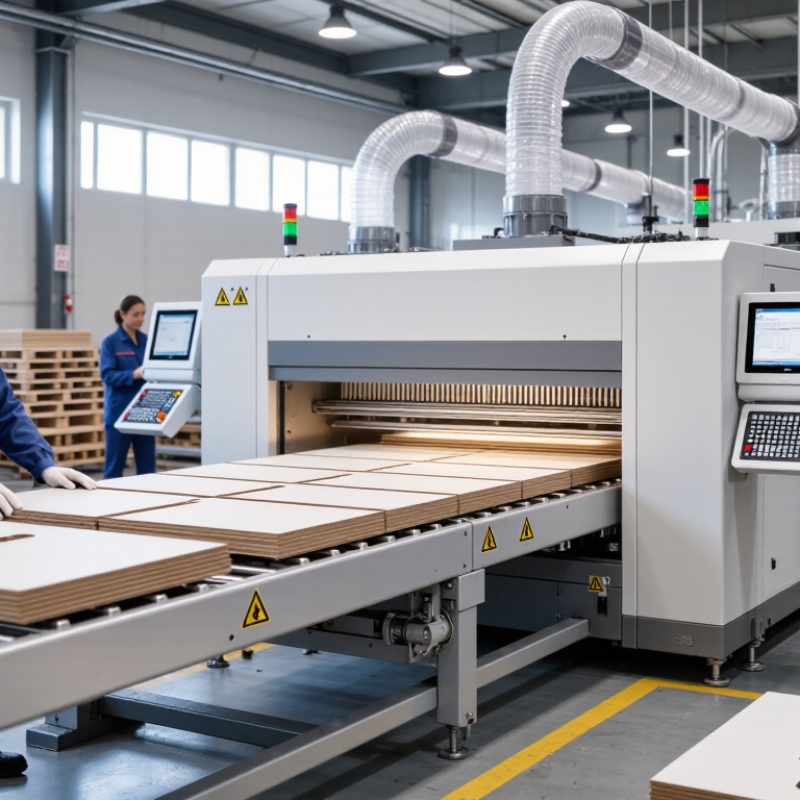
Table of Contents [Hide]
Understanding Chipboard Slotting Machine Types and Applications
Choosing a chipboard slotting machine in 2026 starts with the product, not the machine’s advertised speed. Folding cartons, drawer boxes, rigid covers, partitions, and retail displays require different slot widths and crease control. A rotary slotter suits stable, high-volume work. A CNC or servo slotter handles frequent size changes with better repeatability. Manual and semi-automatic models remain practical for samples and short runs.
The material also matters. Chipboard thickness, coating, moisture, and grain direction can change cutting pressure and edge quality. FAO’s Yearbook of Forest Products reported global paper and paperboard production at about 416 million tonnes in 2022, showing the scale of the wider fiber-based packaging sector. Smithers’ folding-carton research also highlights shorter runs, more product versions, and premium finishes as important market pressures. Your machine should therefore support quick tooling changes, accurate registration, dust extraction, and simple operator adjustment. Measure real setup time, not only hourly output. That detail is often missed. In my experience, an impressive speed figure can hide unstable feeding or excessive waste. A sensible trial should use your actual chipboard, slot pattern, and smallest batch size. No machine is perfect. Small errors become expensive when every carton must fold cleanly.