


- Home
- A-Z Catalogue
- Products
- Valves
- Cetop
- Manual Directional Valves
- Proportional Valves
- Poppet Valves
- High-Speed Linear Servo Valves
- All High-Speed Linear Servo Valves
- Cetop 10 (NG32) Two Stage Type High Speed Linear Servo Valves – LSVHG-10
- Cetop 10 (NG32) Two Stage Type High Speed Linear Servo Valves – LSVHG-10 (With Fail-Safe)
- Cetop 8 (NG25) Two Stage Type High Speed Linear Servo Valves – LSVHG-06
- Cetop 8 (NG25) Two Stage Type High Speed Linear Servo Valves – LSVHG-06 (With Fail-Safe)
- Cetop 7 (NG16) Two Stage Type High Speed Linear Servo Valves – LSVHG-04
- Cetop 7 (NG16) Two Stage Type High Speed Linear Servo Valves – LSVHG-04 (With Fail-Safe)
- Cetop 5 (NG10) Direct Type High Speed Linear Servo Valves – LSVG-03
- Cetop 5 (NG10) OBE Type Direct Operated Linear Servo Valves – LSVG-03-EH
- Cetop 3 (NG6) OBE Type Direct Operated Linear Servo Valves – LSVG-01-EH
- Pumps
- Pressure control
- Flow Control Valves
- Pressure Control Valves
- All Pressure Control Valves
- Brake Valves
- Direct Relief Valve
- Low Noise Solenoid Controlled Relief Valves
- Low Noise Pilot Operated Relief Valves
- Pilot Operated Relief Valves
- Pressure reducing and relieving valves
- Pressure reducing and check valves
- Pressure control valves
- Remote Control Relief Valves
- Solenoid Controlled Relief Valves – BSG
- Solenoid Controlled Relief Valves – BST
- Unloading relief valves
- Check valves
- Environmental
- Valves
- Hydraulic Systems
- Power pack
- About Us
- Contact
- Blog

How to Choose the Best Drone Detector?
Choosing the best Drone Detector is rarely a simple matter of comparing prices and advertised range. A reliable decision begins with the site itself. A busy airport, a private warehouse, and a public event create different detection challenges. Buildings can block radio signals. Trees can weaken radar performance. Wi-Fi traffic can also create confusing alerts.
Arthur Holland Michel, a respected counter-drone researcher, has often emphasized a practical reality: “There is no silver bullet.” His observation remains valuable because every Drone Detector has limits. Radio-frequency systems may identify control links, while radar can notice movement patterns. Cameras may confirm visual details, but darkness, glare, and weather can reduce their usefulness. Strong systems often combine several detection methods.
Experience matters here.
A responsible buyer should examine detection range, false-alarm rates, update support, installation requirements, and data security. Ask whether the device has been tested in conditions resembling the actual site. A brochure cannot reveal everything. Request independent performance evidence, clear warranty terms, and transparent maintenance costs. The best choice may not be the system with the longest advertised range. It may be the one that gives operators understandable alerts beside a loading dock at night.
There is room for doubt. Marketing claims can sound more precise than field results. Human review still matters, especially when birds, machinery, or nearby wireless devices trigger warnings. Select equipment only for lawful, authorized monitoring and safety purposes. A thoughtful Drone Detector protects people, supports informed decisions, and respects privacy without promising perfect visibility.
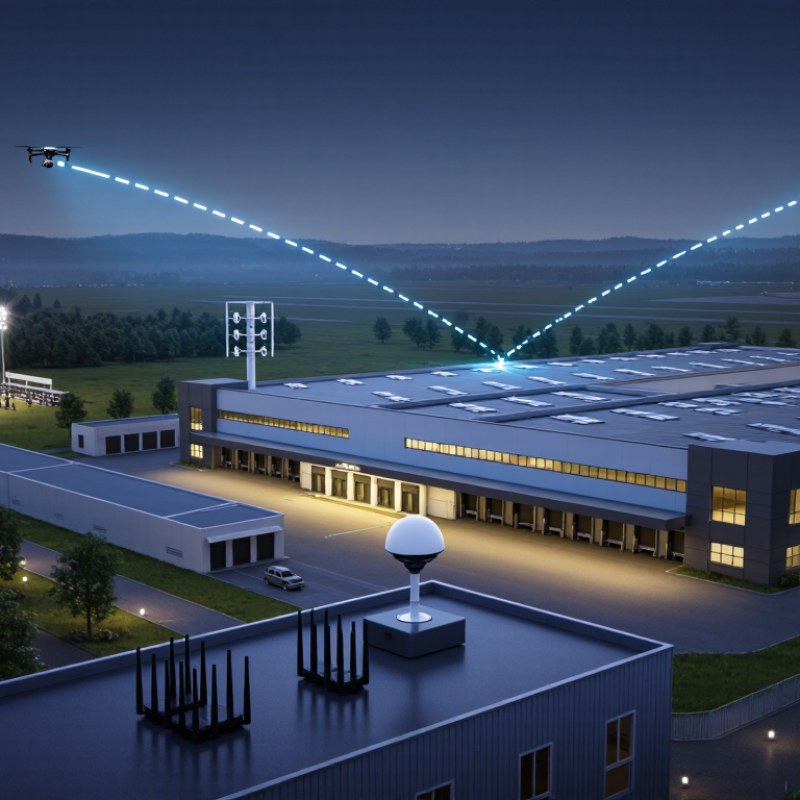
Table of Contents [Hide]
What Is a Drone Detector and How Does It Work?
A drone detector is a security system that identifies unmanned aircraft near a protected area. It does not automatically remove or control the aircraft. Instead, it observes signals, movement, sound, or visual shapes.
Radio-frequency sensors listen for communication links between a drone and its controller. Radar tracks small flying objects and measures their distance, speed, and direction. Cameras can confirm shape and movement, while acoustic sensors analyze rotor noise.
Each method has weaknesses. Buildings can block radio signals. Birds may confuse radar. Wind can reduce acoustic accuracy. Night conditions challenge ordinary cameras.
Sensor fusion improves confidence. The system compares several clues before creating an alert. According to the Federal Aviation Administration’s Aerospace Forecast 2024–2044, the United States had more than 835,000 registered drones in early 2024. That growing aircraft population increases the value of reliable detection, especially around airports, public venues, and industrial sites. The 2024 MarketsandMarkets Counter-UAS Market report also identifies radar, radio-frequency detection, electro-optical systems, and acoustic sensing as major technology categories.
When choosing a detector, examine its detection range, update speed, false-alarm rate, environmental rating, and evidence quality. A clear map and time-stamped alert can matter more than an impressive range claim. Ask for independent testing data, not only laboratory figures. Also check whether the system can operate with local privacy and aviation requirements.
No detector is perfect. A quiet aircraft may be missed. A flock of birds may trigger uncertainty. The best choice is usually a layered system, installed by trained professionals and reviewed regularly.





