


- Home
- A-Z Catalogue
- Products
- Valves
- Cetop
- Manual Directional Valves
- Proportional Valves
- Poppet Valves
- High-Speed Linear Servo Valves
- All High-Speed Linear Servo Valves
- Cetop 10 (NG32) Two Stage Type High Speed Linear Servo Valves – LSVHG-10
- Cetop 10 (NG32) Two Stage Type High Speed Linear Servo Valves – LSVHG-10 (With Fail-Safe)
- Cetop 8 (NG25) Two Stage Type High Speed Linear Servo Valves – LSVHG-06
- Cetop 8 (NG25) Two Stage Type High Speed Linear Servo Valves – LSVHG-06 (With Fail-Safe)
- Cetop 7 (NG16) Two Stage Type High Speed Linear Servo Valves – LSVHG-04
- Cetop 7 (NG16) Two Stage Type High Speed Linear Servo Valves – LSVHG-04 (With Fail-Safe)
- Cetop 5 (NG10) Direct Type High Speed Linear Servo Valves – LSVG-03
- Cetop 5 (NG10) OBE Type Direct Operated Linear Servo Valves – LSVG-03-EH
- Cetop 3 (NG6) OBE Type Direct Operated Linear Servo Valves – LSVG-01-EH
- Pumps
- Pressure control
- Flow Control Valves
- Pressure Control Valves
- All Pressure Control Valves
- Brake Valves
- Direct Relief Valve
- Low Noise Solenoid Controlled Relief Valves
- Low Noise Pilot Operated Relief Valves
- Pilot Operated Relief Valves
- Pressure reducing and relieving valves
- Pressure reducing and check valves
- Pressure control valves
- Remote Control Relief Valves
- Solenoid Controlled Relief Valves – BSG
- Solenoid Controlled Relief Valves – BST
- Unloading relief valves
- Check valves
- Environmental
- Valves
- Hydraulic Systems
- Power pack
- About Us
- Contact
- Blog

How to Choose the Best Sewer Cleaning Equipment?
Choosing Sewer Cleaning Equipment is not simply a matter of buying the strongest machine. Pipe diameter, blockage type, access conditions, water supply, and crew experience all affect the result. A compact jetter may clear grease from a narrow service line, while a combination truck handles heavy deposits and vacuum recovery. The details matter.
The U.S. Environmental Protection Agency’s Report to Congress estimated 23,000 to 75,000 sanitary sewer overflows occur annually in the United States. That figure shows why dependable cleaning and preventive maintenance deserve serious planning. EPA collection-system guidance also emphasizes proper operation, maintenance, and capacity management. Industry research from Grand View Research and MarketsandMarkets indicates continued investment in municipal water and wastewater infrastructure, although market forecasts vary by methodology. Numbers alone cannot choose a machine.
“Match the equipment to the work, not the other way around,” says sewer-maintenance specialist Steve Allred. His point is practical. A high-pressure pump may look impressive, but poor nozzle selection can waste water, damage fragile lines, or leave sediment behind. Sometimes, smaller equipment performs better.
This guide examines pressure ratings, hose length, nozzle design, vacuum capacity, mobility, maintenance, operator safety, and lifecycle cost. It also considers real working conditions, such as muddy access roads, limited hydrant flow, and repeated emergency callouts. No buying guide removes every uncertainty. Even experienced crews can underestimate disposal costs or overlook local service support. The best choice is usually balanced, measurable, and suitable for the people using it daily.
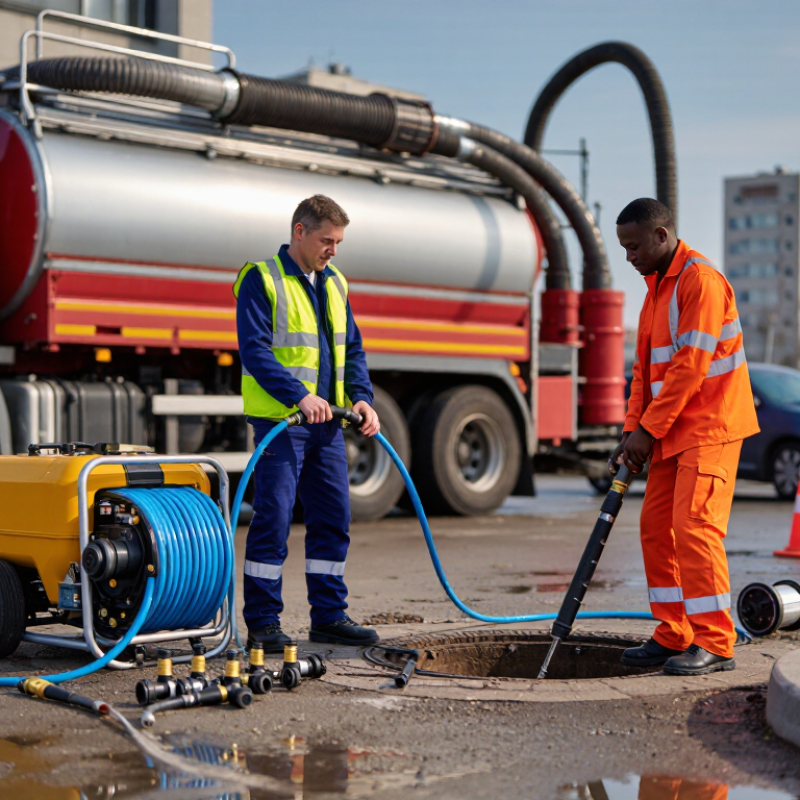
Table of Contents [Hide]
Define Pipe Conditions with CCTV, Diameter, Flow, and Blockage Data
When choosing sewer cleaning equipment, define pipe conditions before selecting power, tooling, or water volume. CCTV inspection shows roots, grease, displaced joints, cracks, and standing water. A camera image also reveals access limits and changes in pipe shape. Record the location, depth, and severity of every defect. Small clues matter.
Measure the pipe diameter at each relevant section, not only at the manhole. A six-inch line may connect to a larger chamber or a damaged oval section. Flow data adds context. Note water level, velocity, and whether flow changes after nearby users discharge. High flow can reduce cleaning control and create sudden surges. Low flow may hide sediment buildup. Use calibrated instruments and repeat readings when conditions change. Measure twice.
Blockage data should describe material, length, density, and position. A soft grease plug needs a different approach from hardened scale or invading roots. CCTV can confirm whether the passage is open after cleaning, while flow testing checks practical performance. Do not rely on one snapshot. I have seen a clear image create false confidence when debris remained below the waterline. Recheck the line from both directions when visibility is poor. Equipment selection becomes more reliable when inspection records, measurements, and operator experience agree. Sometimes they do not. That disagreement deserves investigation, not guesswork.
| Inspection Profile | Typical Pipe Diameter | CCTV Findings | Estimated Flow Condition | Blockage Type and Severity | Recommended Cleaning Method | Equipment Configuration | Key Operating Considerations |
|---|---|---|---|---|---|---|---|
| Small residential lateral | 100–150 mm | Clear pipe wall with light grease film; minor sediment at the invert; short access distance. | Low to moderate flow, typically less than 10 L/s during inspection. | Low Soft grease, soap residue, and loose sediment. | High-pressure water jetting with a controlled forward jet and standard flushing pass. | Compact jetting unit; 13–16 mm hose; small-diameter nozzle with rear-facing jets. | Use moderate pressure and confirm that the hose and nozzle are rated for the pipe diameter. Avoid excessive thrust in fragile or older laterals. |
| Residential branch with recurring grease | 150–200 mm | Grease coating covers approximately 25–50% of the internal circumference; camera image becomes hazy near the deposit. | Moderate flow with visible turbulence around the restriction. | Medium Adherent grease and organic buildup. | Progressive water jetting followed by a flushing pass; repeat inspection after cleaning. | Medium-capacity jetter; penetrating or rotating nozzle; hose sized for the access point. | Begin with lower pressure to open a passage, then increase cleaning force gradually. Collect and dispose of dislodged solids properly. |
| Municipal collector with sediment accumulation | 200–300 mm | Granular sediment occupies about 20–40% of the pipe height; the pipe crown remains visible on CCTV. | Moderate to high flow; flow depth may increase during wet weather. | Medium Sand, gravel, and settled inorganic deposits. | Water jetting with a flushing nozzle; use vacuum removal if sediment volume is substantial. | High-flow jetting unit; heavy-duty hose; flushing or sand-cleaning nozzle; downstream debris control. | Check downstream capacity before mobilization. Cleaning efficiency depends on sufficient water volume, not pressure alone. |
| Large collector with heavy silt | 300–600 mm | Deposits cover 40–60% of the invert; CCTV shows reduced hydraulic cross-section and intermittent standing water. | High flow or variable flow; bypass pumping may be required for safe access. | High Heavy silt, sand, and compacted deposits. | Hydro-mechanical cleaning with high-volume flushing and vacuum extraction. | High-capacity combination sewer cleaner or equivalent jet-vacuum setup; large-diameter flushing nozzle. | Plan for debris storage and disposal. Control flow before cleaning to prevent resuspension and downstream flooding. |
| Root intrusion in a jointed pipe | 150–300 mm | Fine or dense roots enter through joints; CCTV may show restricted visibility and repeated intrusion points. | Low to moderate flow, with localized turbulence at the root mass. | High Fibrous or woody root intrusion reducing the opening by 25–75%. | Root-cutting water jetting or mechanical root cutting, followed by a verification survey. | Rotating root-cutting nozzle or compatible mechanical cutter; debris-flushing capability. | Use only equipment suitable for the pipe material and condition. Cleaning removes roots temporarily; structural repair or lining may be needed. |
| Fat, oil, and grease blockage | 200–450 mm | Thick, uneven coating with reduced internal diameter; deposits may appear waxy or layered on the lower half of the pipe. | Low flow upstream of the blockage and increased velocity through the remaining opening. | High Adherent FOG buildup, sometimes mixed with paper and solids. | Hot-water or high-temperature-compatible jetting where permitted, followed by high-volume flushing. | High-flow jetter; grease-removal or rotating nozzle; temperature-rated hose and fittings. | Confirm local discharge requirements and material compatibility. Prevent loosened grease from reforming downstream. |
| Collapsed or severely deformed pipe | 150–600 mm | CCTV shows a flattened profile, offset joint, fracture, or obstruction that prevents the camera from passing. | Restricted or backing-up flow; hydraulic conditions may change rapidly. | High Structural obstruction rather than a removable deposit. | Limited probing or low-force flushing only when safe; prioritize structural assessment and repair planning. | Small inspection nozzle or controlled jetting equipment; locating and excavation equipment if required. | Do not use aggressive cutting or high thrust against an unstable structure. Record the obstruction distance and condition for repair design. |
| Construction debris and hardened deposits | 200–400 mm | Concrete, mortar, grout, or hardened scale forms a fixed protrusion; CCTV shows a sharp-edged or irregular obstruction. | Moderate flow with localized acceleration through the reduced opening. | High Hard obstruction that resists conventional flushing. | Specialized mechanical cutting, milling, or controlled water-assisted removal after risk assessment. | Cutting or milling head sized to the pipe; debris retrieval system; post-cleaning CCTV. | Verify pipe material and wall condition before cutting. Use staged removal to avoid damaging joints or creating a larger obstruction. |
| Deep sewer or long cleaning reach | 300–900 mm | CCTV identifies deposits over a long reach, with access points spaced widely or located in deep structures. | Moderate to high flow; access depth and flow variability are major constraints. | Medium to High Mixed sediment, grease, and settled solids. | High-volume jetting with vacuum recovery; sectional cleaning from both directions when practical. | Long-reach hose system; high-capacity water pump; vacuum recovery; traffic and confined-space controls. | Confirm hose length, pumping capacity, access geometry, and safe working limits. Use flow monitoring to select the cleaning window. |
| Post-cleaning verification | All diameters | CCTV is used to confirm a clear passage, restored visibility, open joints, and removal of targeted deposits. | Flow should be stable enough to observe the pipe wall and invert. | Low Residual film or isolated minor deposits only. | Final flushing if needed, followed by documented CCTV inspection and condition coding. | CCTV crawler or push camera matched to pipe diameter; flow-control equipment where necessary. | Compare pre- and post-cleaning footage. Document chainage, blockage length, remaining defects, and any recommendation for repair. |