


- Home
- A-Z Catalogue
- Products
- Valves
- Cetop
- Manual Directional Valves
- Proportional Valves
- Poppet Valves
- High-Speed Linear Servo Valves
- All High-Speed Linear Servo Valves
- Cetop 10 (NG32) Two Stage Type High Speed Linear Servo Valves – LSVHG-10
- Cetop 10 (NG32) Two Stage Type High Speed Linear Servo Valves – LSVHG-10 (With Fail-Safe)
- Cetop 8 (NG25) Two Stage Type High Speed Linear Servo Valves – LSVHG-06
- Cetop 8 (NG25) Two Stage Type High Speed Linear Servo Valves – LSVHG-06 (With Fail-Safe)
- Cetop 7 (NG16) Two Stage Type High Speed Linear Servo Valves – LSVHG-04
- Cetop 7 (NG16) Two Stage Type High Speed Linear Servo Valves – LSVHG-04 (With Fail-Safe)
- Cetop 5 (NG10) Direct Type High Speed Linear Servo Valves – LSVG-03
- Cetop 5 (NG10) OBE Type Direct Operated Linear Servo Valves – LSVG-03-EH
- Cetop 3 (NG6) OBE Type Direct Operated Linear Servo Valves – LSVG-01-EH
- Pumps
- Pressure control
- Flow Control Valves
- Pressure Control Valves
- All Pressure Control Valves
- Brake Valves
- Direct Relief Valve
- Low Noise Solenoid Controlled Relief Valves
- Low Noise Pilot Operated Relief Valves
- Pilot Operated Relief Valves
- Pressure reducing and relieving valves
- Pressure reducing and check valves
- Pressure control valves
- Remote Control Relief Valves
- Solenoid Controlled Relief Valves – BSG
- Solenoid Controlled Relief Valves – BST
- Unloading relief valves
- Check valves
- Environmental
- Valves
- Hydraulic Systems
- Power pack
- About Us
- Contact
- Blog

How to Choose the Right Light Bar Brackets?
Choosing the right Light Bar Brackets is more than finding a piece of metal that fits your vehicle. The bracket must support the light bar, protect its wiring, and remain stable when the vehicle meets vibration, dust, rain, or uneven ground. A poor match may create glare, rattling, paint damage, or premature hardware failure.
Automotive lighting specialist Daniel Harper explains, “A light bar is only as reliable as the bracket holding it.” That simple observation deserves attention. Before buying, measure the light bar’s mounting width, bolt diameter, and available installation space. Then inspect the vehicle’s roof, bumper, grille, or roll cage. Every surface creates different demands. Roof mounts may need aerodynamic shaping. Bumper mounts often require stronger steel. Some plastic panels look convenient but cannot carry much weight.
Material matters. Powder-coated steel offers strength and impact resistance. Aluminum reduces weight but may need careful reinforcement. Stainless hardware helps resist corrosion, especially near coastal roads or winter salt. Check whether the kit includes washers, locking nuts, spacers, and clear instructions. It often does not.
Fitment claims can also be imperfect. A bracket labeled “universal” may still require drilling, shimming, or minor adjustment. That is not automatically a defect, but it should be expected. Review load capacity, hole alignment, finish quality, and customer feedback before installation. After tightening, test the assembly by hand. Recheck it after the first drive. Small movement today can become expensive damage tomorrow.
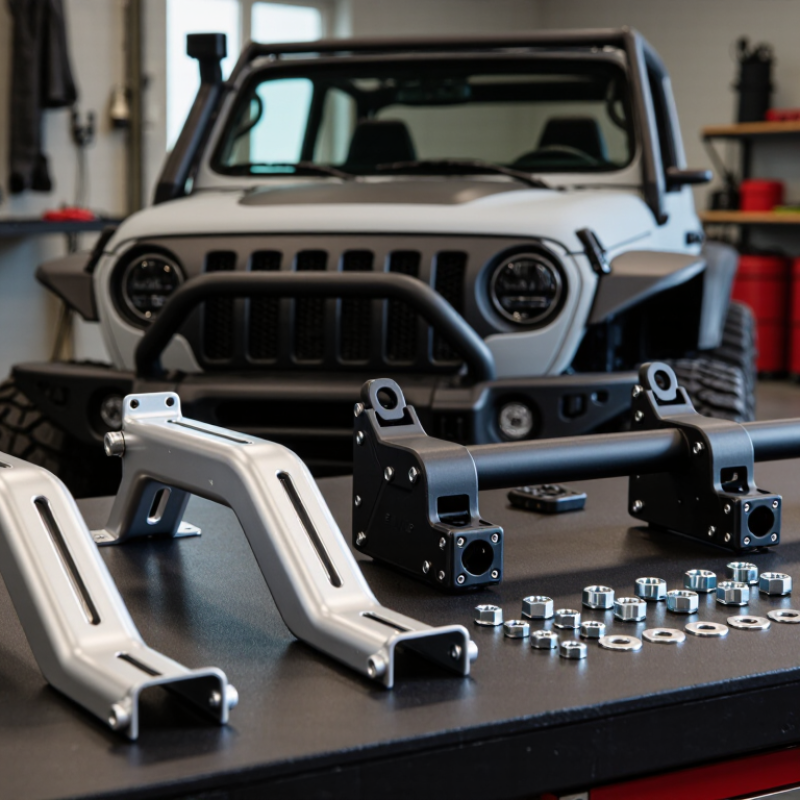
Table of Contents [Hide]
Understanding Light Bar Bracket Types and Their Applications
How to Choose the Right Light Bar Brackets?
Understanding Light Bar Bracket Types and Their Applications
Light bar brackets control more than mounting position. They affect vibration, beam direction, and vehicle clearance. Fixed brackets suit stable installations on flat roof rails or rigid platforms. Adjustable brackets allow vertical aiming, which helps when terrain changes. Side-mount brackets work well on front bars or protective frames. Top-mount brackets keep the light above the mounting surface. Fit matters.
Clamp-style brackets attach to tubular rails without drilling. They are practical for temporary setups, but they require careful tightening. A loose clamp can rotate during rough travel. Universal brackets offer flexibility, although their extra adjustment points may create movement. Check the bar width, bolt spacing, thread size, and available clearance before ordering. Small gaps matter. The bracket should not touch the lens, cable, hood, or roof edge.
Material selection also matters. Coated steel handles heavy loads and frequent vibration. Aluminum reduces weight but needs careful inspection around bolt holes. In field installations, I check for paint compression after the first drive. Then I retighten fasteners to the specified torque. I also test the beam angle at night, not only in a workshop. That step often reveals glare, shadows, or an uneven mount. Weather exposure deserves attention too. Drainage holes, corrosion-resistant hardware, and protected wiring can prevent early failures. I have sometimes chosen a strong bracket that was simply too tall, so measuring twice remains worthwhile. Check local lighting and road-use requirements before final installation.