


- Home
- A-Z Catalogue
- Products
- Valves
- Cetop
- Manual Directional Valves
- Proportional Valves
- Poppet Valves
- High-Speed Linear Servo Valves
- All High-Speed Linear Servo Valves
- Cetop 10 (NG32) Two Stage Type High Speed Linear Servo Valves – LSVHG-10
- Cetop 10 (NG32) Two Stage Type High Speed Linear Servo Valves – LSVHG-10 (With Fail-Safe)
- Cetop 8 (NG25) Two Stage Type High Speed Linear Servo Valves – LSVHG-06
- Cetop 8 (NG25) Two Stage Type High Speed Linear Servo Valves – LSVHG-06 (With Fail-Safe)
- Cetop 7 (NG16) Two Stage Type High Speed Linear Servo Valves – LSVHG-04
- Cetop 7 (NG16) Two Stage Type High Speed Linear Servo Valves – LSVHG-04 (With Fail-Safe)
- Cetop 5 (NG10) Direct Type High Speed Linear Servo Valves – LSVG-03
- Cetop 5 (NG10) OBE Type Direct Operated Linear Servo Valves – LSVG-03-EH
- Cetop 3 (NG6) OBE Type Direct Operated Linear Servo Valves – LSVG-01-EH
- Pumps
- Pressure control
- Flow Control Valves
- Pressure Control Valves
- All Pressure Control Valves
- Brake Valves
- Direct Relief Valve
- Low Noise Solenoid Controlled Relief Valves
- Low Noise Pilot Operated Relief Valves
- Pilot Operated Relief Valves
- Pressure reducing and relieving valves
- Pressure reducing and check valves
- Pressure control valves
- Remote Control Relief Valves
- Solenoid Controlled Relief Valves – BSG
- Solenoid Controlled Relief Valves – BST
- Unloading relief valves
- Check valves
- Environmental
- Valves
- Hydraulic Systems
- Power pack
- About Us
- Contact
- Blog

How to Choose Water Treatment Equipment for Your Needs?
Choosing Water Treatment Equipment is not a matter of selecting the largest filter or the newest technology. It begins with understanding the water itself. A private well, hotel, factory, and municipal facility may require completely different solutions. Testing should identify hardness, turbidity, iron, pathogens, salinity, organic compounds, and other relevant contaminants. Without reliable laboratory results, equipment selection becomes guesswork.
Dr. Peter H. Gleick, co-founder of the Pacific Institute, stated, “Water is a basic human right, and access to clean water is a basic human need.” This principle gives equipment decisions a practical purpose: protecting health while using energy, chemicals, space, and money responsibly. Flow rate, peak demand, pressure, maintenance skills, available power, and wastewater disposal also deserve careful review. A reverse osmosis system may reduce dissolved salts, but it can waste water and require membrane replacement. A multimedia filter may clarify cloudy water, yet it cannot solve every chemical problem.
The right choice is rarely perfect. It is usually a balanced choice. Ask what must be removed, how consistently it must be removed, and who will maintain the system. Request performance data, certifications, service records, and total lifecycle costs from qualified suppliers. Check applicable local requirements before installation. Small details matter. A neglected prefilter can shorten the life of expensive equipment. An oversized system can increase operating costs without improving water quality. This guide offers a practical starting point, but professional testing and site-specific engineering remain essential. Mistakes happen. The goal is to identify them early, measure results honestly, and improve the system over time.
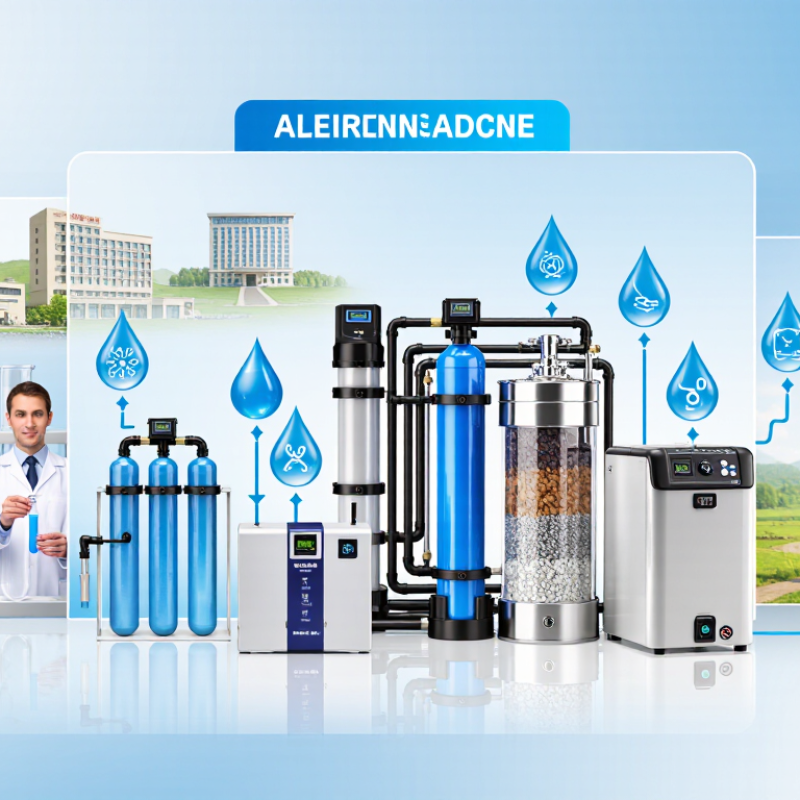
Table of Contents [Hide]
Define Your Water Quality and Treatment Objectives
Before choosing water treatment equipment, define what “better water” means for your property. A drinking-water plan differs from a process-water plan. Begin with a recent analysis from an accredited laboratory. Test hardness, iron, manganese, pH, dissolved solids, chlorine, and microbial indicators when relevant. Test the source water, not only the kitchen tap. Note odors, cloudiness, staining, and scale on fixtures. One sample can mislead. If the source changes seasonally, collect samples during different conditions.
Set measurable treatment objectives. For household use, you might reduce hardness, protect appliances, or improve taste. For commercial use, you may need a specific pH range, conductivity limit, or contaminant threshold. Write these targets down.
Flow rate matters. Calculate average demand, peak demand, and available pressure before selecting equipment. A system that treats slowly may fail during showers, cleaning, or production.
Do not choose equipment by contaminant name alone. Match the process to concentration, peak flow, contact time, maintenance needs, and waste-handling requirements. This is where many plans fail.
I would also inspect the installation space, drainage, electrical supply, and access for filter replacement. Leave room for testing and repairs.
No treatment system stays accurate without monitoring. Keep laboratory reports and maintenance records together. Recheck the water after installation.
If readings conflict with daily observations, pause and investigate. That pause is valuable.





