


- Home
- A-Z Catalogue
- Products
- Valves
- Cetop
- Manual Directional Valves
- Proportional Valves
- Poppet Valves
- High-Speed Linear Servo Valves
- All High-Speed Linear Servo Valves
- Cetop 10 (NG32) Two Stage Type High Speed Linear Servo Valves – LSVHG-10
- Cetop 10 (NG32) Two Stage Type High Speed Linear Servo Valves – LSVHG-10 (With Fail-Safe)
- Cetop 8 (NG25) Two Stage Type High Speed Linear Servo Valves – LSVHG-06
- Cetop 8 (NG25) Two Stage Type High Speed Linear Servo Valves – LSVHG-06 (With Fail-Safe)
- Cetop 7 (NG16) Two Stage Type High Speed Linear Servo Valves – LSVHG-04
- Cetop 7 (NG16) Two Stage Type High Speed Linear Servo Valves – LSVHG-04 (With Fail-Safe)
- Cetop 5 (NG10) Direct Type High Speed Linear Servo Valves – LSVG-03
- Cetop 5 (NG10) OBE Type Direct Operated Linear Servo Valves – LSVG-03-EH
- Cetop 3 (NG6) OBE Type Direct Operated Linear Servo Valves – LSVG-01-EH
- Pumps
- Pressure control
- Flow Control Valves
- Pressure Control Valves
- All Pressure Control Valves
- Brake Valves
- Direct Relief Valve
- Low Noise Solenoid Controlled Relief Valves
- Low Noise Pilot Operated Relief Valves
- Pilot Operated Relief Valves
- Pressure reducing and relieving valves
- Pressure reducing and check valves
- Pressure control valves
- Remote Control Relief Valves
- Solenoid Controlled Relief Valves – BSG
- Solenoid Controlled Relief Valves – BST
- Unloading relief valves
- Check valves
- Environmental
- Valves
- Hydraulic Systems
- Power pack
- About Us
- Contact
- Blog

What is Control Products and How They Enhance Efficiency in Industrial Applications
Control products have become a cornerstone of modern industrial applications, playing an essential role in enhancing operational efficiency across various sectors. According to a recent report by MarketsandMarkets, the global control products market is projected to reach $135 billion by 2025, growing at a CAGR of 6.3% from 2020. This growth underscores the increasing reliance of industries on advanced control systems to optimize processes and reduce costs.
Industry experts assert that the integration of these control products not only streamlines operations but also significantly boosts productivity. Dr. Jane Holloway, a leading figure in industrial automation, remarked, "The effective implementation of control products provides companies with the agility to adapt to market changes, thus ensuring sustained growth and competitiveness.” As sectors such as manufacturing, energy, and logistics continue to evolve, the demand for sophisticated control solutions has never been more pronounced.
In this context, companies that leverage innovative control products are positioned to gain a substantial edge. As we explore the top 10 control products of 2025 and their impact on industrial efficiency, it becomes clear that these technologies are not merely enhancements but integral components necessary for success in today's dynamic market landscape.

Table of Contents
[Hide]
Understanding Control Products and Their Role in Industry
Control products are essential components in industrial applications, significantly contributing to operational efficiency and effectiveness. These products, which include sensors, controllers, and automation systems, play a crucial role in monitoring and regulating various processes. According to a report by MarketsandMarkets, the global industrial automation market is projected to reach USD 296.70 billion by 2026, growing at a CAGR of 9.2% from 2021. This growth underscores the increasing reliance on control products for optimizing workflows and enhancing productivity in various sectors, including manufacturing, oil and gas, and food and beverage.
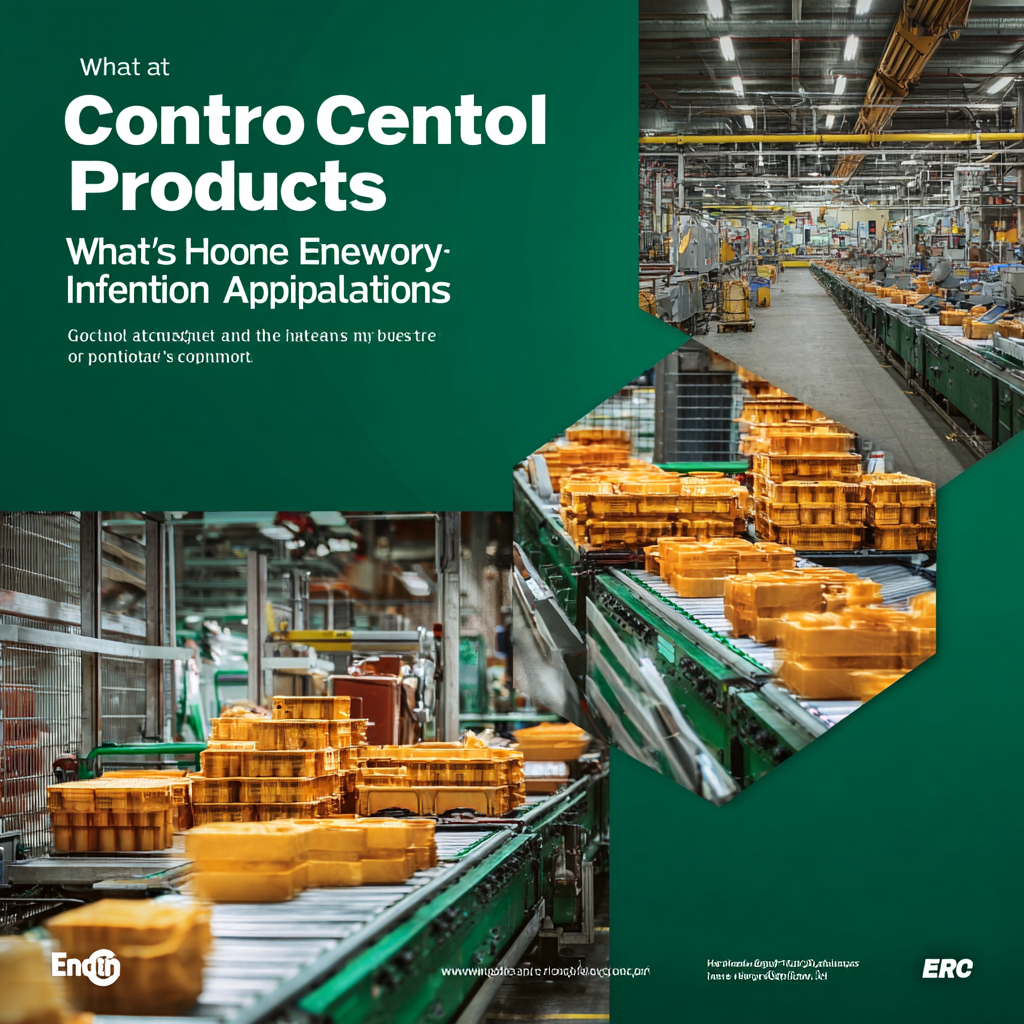
Moreover, control products enhance efficiency by enabling real-time data collection and analysis, which allows industries to make informed decisions rapidly. For instance, a McKinsey report indicates that organizations that effectively leverage automation and control systems can improve their operational efficiencies by up to 30%. This capacity not only lowers operational costs but also minimizes downtime, facilitating a more agile response to market demands. As industries continue to face challenges in resource management and supply chains, the role of control products becomes increasingly vital in driving innovation and sustaining competitive advantage.

Related Posts
-

Exploring Innovative Control Products: Transforming Industries with Smart Technology
-
Maximizing Efficiency: How Directional Control Valves Transform Hydraulic Systems
-
The Essential Guide to Understanding Hydraulic Power Packs in Industrial Applications
-

Exploring the Benefits of Advanced Hydraulic Directional Valves for Efficient Fluid Control
-

Understanding the Importance of Hydraulic Flow Control Valves in Modern Industrial Applications
-
What is a Pilot Operated Check Valve and How Does It Work in Hydraulic Systems