


- Home
- A-Z Catalogue
- Products
- Valves
- Cetop
- Manual Directional Valves
- Proportional Valves
- Poppet Valves
- High-Speed Linear Servo Valves
- All High-Speed Linear Servo Valves
- Cetop 10 (NG32) Two Stage Type High Speed Linear Servo Valves – LSVHG-10
- Cetop 10 (NG32) Two Stage Type High Speed Linear Servo Valves – LSVHG-10 (With Fail-Safe)
- Cetop 8 (NG25) Two Stage Type High Speed Linear Servo Valves – LSVHG-06
- Cetop 8 (NG25) Two Stage Type High Speed Linear Servo Valves – LSVHG-06 (With Fail-Safe)
- Cetop 7 (NG16) Two Stage Type High Speed Linear Servo Valves – LSVHG-04
- Cetop 7 (NG16) Two Stage Type High Speed Linear Servo Valves – LSVHG-04 (With Fail-Safe)
- Cetop 5 (NG10) Direct Type High Speed Linear Servo Valves – LSVG-03
- Cetop 5 (NG10) OBE Type Direct Operated Linear Servo Valves – LSVG-03-EH
- Cetop 3 (NG6) OBE Type Direct Operated Linear Servo Valves – LSVG-01-EH
- Pumps
- Pressure control
- Flow Control Valves
- Pressure Control Valves
- All Pressure Control Valves
- Brake Valves
- Direct Relief Valve
- Low Noise Solenoid Controlled Relief Valves
- Low Noise Pilot Operated Relief Valves
- Pilot Operated Relief Valves
- Pressure reducing and relieving valves
- Pressure reducing and check valves
- Pressure control valves
- Remote Control Relief Valves
- Solenoid Controlled Relief Valves – BSG
- Solenoid Controlled Relief Valves – BST
- Unloading relief valves
- Check valves
- Environmental
- Valves
- Hydraulic Systems
- Power pack
- About Us
- Contact
- Blog

Why Flow Control Valve is Essential for Effective System Performance
In today's increasingly complex industrial landscape, maintaining optimal system performance has become paramount. One of the critical components that facilitate this performance is the flow control valve. According to a report by Research and Markets, the global flow control valve market is projected to reach USD 9.7 billion by 2026, highlighting its significant role across various sectors, including oil and gas, water treatment, and manufacturing. These valves are vital for regulating fluid flow, ensuring efficiency, and enhancing the reliability of systems that rely on precise control of fluid dynamics.
The importance of flow control valves extends beyond mere functionality; they significantly contribute to energy efficiency and operational cost savings. A study from the International Energy Agency indicates that optimizing fluid flow in industrial processes can reduce energy consumption by up to 30%. This not only leads to substantial economic benefits but also aligns with global sustainability goals by minimizing the carbon footprint associated with excessive energy use. As industries strive for greater efficiency while adhering to stricter environmental regulations, the role of flow control valves becomes increasingly indispensable, serving as a cornerstone for effective system performance.

Table of Contents
[Hide]
What is a Flow Control Valve and its Function in Fluid Systems

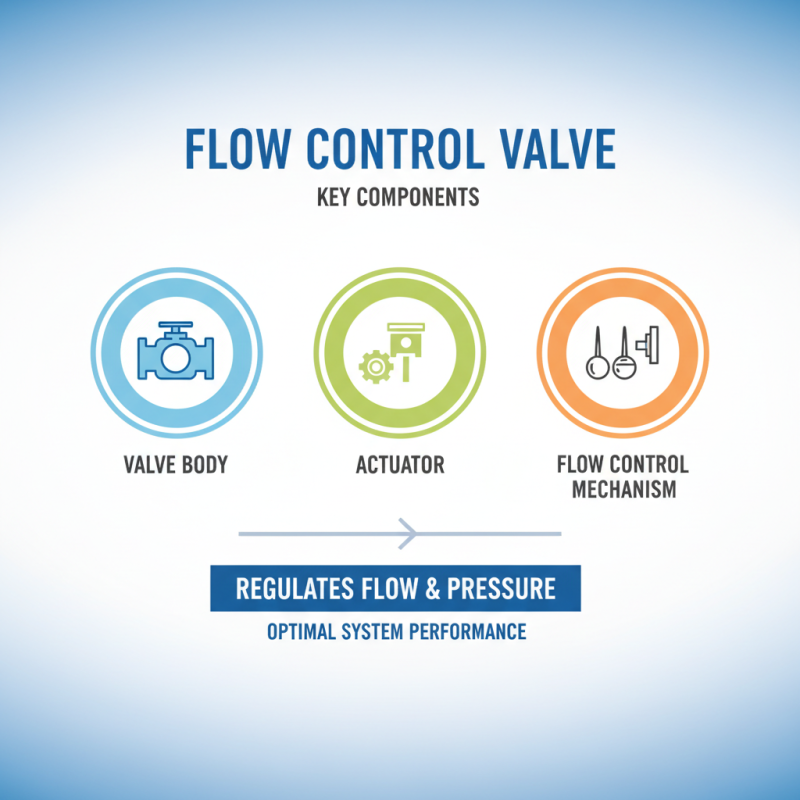
A flow control valve is a crucial component in fluid systems, serving to regulate the flow rate and pressure of liquids or gases within a system. By adjusting the valve position, operators can control the amount of fluid passing through, ensuring that it meets specific system requirements. This function is vital for maintaining the efficiency and stability of various industrial applications, including hydraulic systems, pneumatic systems, and water supply networks.
The primary purpose of a flow control valve is to provide precise management of fluid dynamics. This is achieved through different mechanisms such as throttling, where the valve partially obstructs the flow to reduce the volume or speed. By optimizing the flow rate, the valve helps in preventing issues such as cavitation, excess pressure, and system overload, which can compromise performance and lead to potential failures. In summary, flow control valves are integral to the efficient operation of fluid systems, ensuring that resources are utilized effectively while maintaining safe operational standards.
Related Posts
-
Understanding the Role of Hydraulic Valves in Modern Industrial Applications
-

Unlocking Efficiency: The Vital Role of Hydraulic Pressure Relief Valves in Industrial Systems
-
What is a Pilot Operated Check Valve and How Does It Work in Hydraulic Systems
-

Exploring the Benefits of Yuken Directional Valves for Enhanced Hydraulic Performance
-
Understanding the Role of Check Valves in Modern Industrial Systems
-
2025 Top 5 Proportional Valves to Enhance Your Industrial Efficiency