


- Home
- A-Z Catalogue
- Products
- Valves
- Cetop
- Manual Directional Valves
- Proportional Valves
- Poppet Valves
- High-Speed Linear Servo Valves
- All High-Speed Linear Servo Valves
- Cetop 10 (NG32) Two Stage Type High Speed Linear Servo Valves – LSVHG-10
- Cetop 10 (NG32) Two Stage Type High Speed Linear Servo Valves – LSVHG-10 (With Fail-Safe)
- Cetop 8 (NG25) Two Stage Type High Speed Linear Servo Valves – LSVHG-06
- Cetop 8 (NG25) Two Stage Type High Speed Linear Servo Valves – LSVHG-06 (With Fail-Safe)
- Cetop 7 (NG16) Two Stage Type High Speed Linear Servo Valves – LSVHG-04
- Cetop 7 (NG16) Two Stage Type High Speed Linear Servo Valves – LSVHG-04 (With Fail-Safe)
- Cetop 5 (NG10) Direct Type High Speed Linear Servo Valves – LSVG-03
- Cetop 5 (NG10) OBE Type Direct Operated Linear Servo Valves – LSVG-03-EH
- Cetop 3 (NG6) OBE Type Direct Operated Linear Servo Valves – LSVG-01-EH
- Pumps
- Pressure control
- Flow Control Valves
- Pressure Control Valves
- All Pressure Control Valves
- Brake Valves
- Direct Relief Valve
- Low Noise Solenoid Controlled Relief Valves
- Low Noise Pilot Operated Relief Valves
- Pilot Operated Relief Valves
- Pressure reducing and relieving valves
- Pressure reducing and check valves
- Pressure control valves
- Remote Control Relief Valves
- Solenoid Controlled Relief Valves – BSG
- Solenoid Controlled Relief Valves – BST
- Unloading relief valves
- Check valves
- Environmental
- Valves
- Hydraulic Systems
- Power pack
- About Us
- Contact
- Blog

How to Choose the Best Stator Tester for Your Needs?
Choosing the best Stator tester is not simply a matter of selecting the highest voltage or most expensive model. The right instrument must match your motor types, production volume, test standards, and maintenance goals. A small repair workshop may need a portable tester with clear pass-or-fail results. A manufacturing line may require automated sequencing, data storage, barcode tracking, and integration with existing systems.
Howard W. Penrose, PE, a recognized motor reliability specialist, has stated, “You cannot test quality into a motor; you have to build it in.” His point remains practical. Testing should support good design and workmanship, not disguise weak insulation or poor winding practices. A dependable Stator tester can reveal insulation resistance problems, winding imbalance, turn-to-turn faults, and unexpected leakage. Yet no tester is perfect. Operator training, clean connections, correct test settings, and regular calibration still matter.
Think about the actual work area. Will technicians test a warm motor beside noisy machinery? Will the equipment handle long cables, different frame sizes, and repeated daily tests? These details often matter more than a colorful touchscreen. Safety features deserve close attention, including automatic discharge, guarded terminals, emergency stops, and clear warning signals. Some buyers also overlook software usability. Complicated reports can slow decisions and create avoidable mistakes.
This guide examines the main Stator tester functions, practical selection criteria, and common purchasing errors. It also considers budget limits, measurement accuracy, service support, and future expansion. The best choice is not always the most advanced one. It is the tester your team can use correctly, consistently, and confidently.
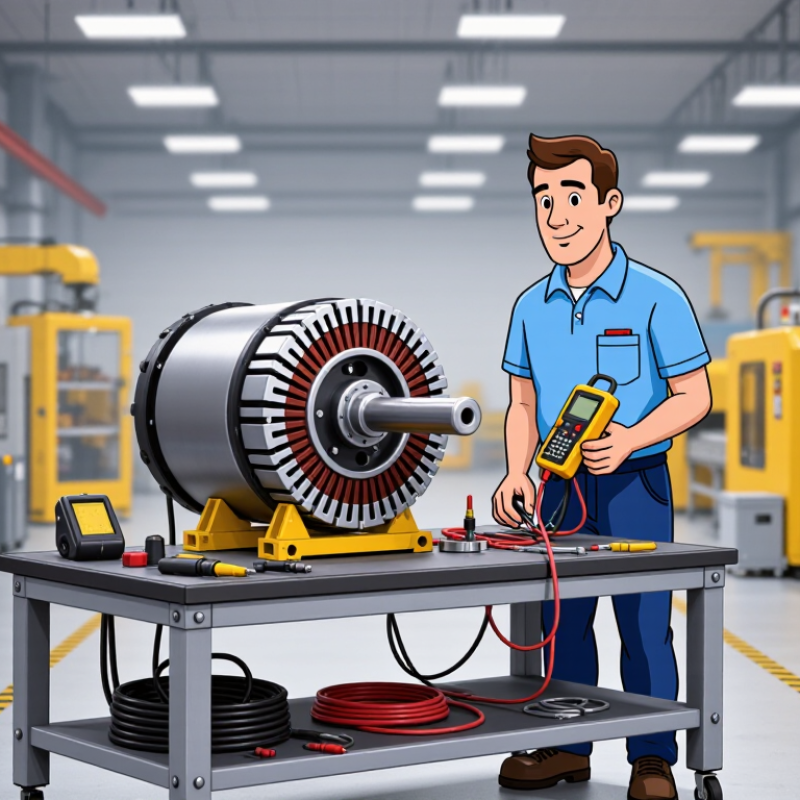
Table of Contents [Hide]
Understanding What a Stator Tester Measures
How to Choose the Best Stator Tester for Your Needs?
Understanding What a Stator Tester Measures
A stator tester checks the electrical health of motor windings. It commonly measures resistance between winding phases. Balanced readings usually indicate consistent coil condition. Unequal readings may suggest damaged windings, loose connections, or internal corrosion.
Many testers also perform insulation resistance tests. This measurement identifies unwanted leakage between the windings and the stator core. A weak insulation result can cause overheating or unstable motor performance. Some advanced testers evaluate turn-to-turn faults, inductance, phase balance, and dielectric strength. These measurements reveal problems that a basic multimeter may miss.
In practical workshop testing, I compare readings with the manufacturer’s specifications whenever available. Temperature matters because copper resistance changes as the stator warms. Testing only one phase is not enough. A reliable assessment needs repeated measurements and clean contact points. It is easy to trust one number too quickly. That can be a mistake.
Tips: Choose a tester that matches your motor type and testing environment. Check whether it measures resistance, insulation, and phase balance. Use suitable test leads and inspect terminals before testing. Record readings over time, not just once. A simple log can reveal gradual deterioration. Also, confirm the tester’s accuracy through regular calibration, because even good equipment can drift.





