


- Home
- A-Z Catalogue
- Products
- Valves
- Cetop
- Manual Directional Valves
- Proportional Valves
- Poppet Valves
- High-Speed Linear Servo Valves
- All High-Speed Linear Servo Valves
- Cetop 10 (NG32) Two Stage Type High Speed Linear Servo Valves – LSVHG-10
- Cetop 10 (NG32) Two Stage Type High Speed Linear Servo Valves – LSVHG-10 (With Fail-Safe)
- Cetop 8 (NG25) Two Stage Type High Speed Linear Servo Valves – LSVHG-06
- Cetop 8 (NG25) Two Stage Type High Speed Linear Servo Valves – LSVHG-06 (With Fail-Safe)
- Cetop 7 (NG16) Two Stage Type High Speed Linear Servo Valves – LSVHG-04
- Cetop 7 (NG16) Two Stage Type High Speed Linear Servo Valves – LSVHG-04 (With Fail-Safe)
- Cetop 5 (NG10) Direct Type High Speed Linear Servo Valves – LSVG-03
- Cetop 5 (NG10) OBE Type Direct Operated Linear Servo Valves – LSVG-03-EH
- Cetop 3 (NG6) OBE Type Direct Operated Linear Servo Valves – LSVG-01-EH
- Pumps
- Pressure control
- Flow Control Valves
- Pressure Control Valves
- All Pressure Control Valves
- Brake Valves
- Direct Relief Valve
- Low Noise Solenoid Controlled Relief Valves
- Low Noise Pilot Operated Relief Valves
- Pilot Operated Relief Valves
- Pressure reducing and relieving valves
- Pressure reducing and check valves
- Pressure control valves
- Remote Control Relief Valves
- Solenoid Controlled Relief Valves – BSG
- Solenoid Controlled Relief Valves – BST
- Unloading relief valves
- Check valves
- Environmental
- Valves
- Hydraulic Systems
- Power pack
- About Us
- Contact
- Blog

Top Hydraulic Unit Trends to Watch in 2025 for Optimal Performance
In the evolving landscape of industrial applications, hydraulic units continue to play a pivotal role in enhancing operational efficiency and performance. As we look towards 2025, several trends are emerging that promise to redefine the capabilities and functionalities of hydraulic units across various sectors. Engaging with these trends not only allows businesses to stay ahead of the curve but also optimizes the overall performance of their hydraulic systems.
The integration of advanced technologies, such as IoT and AI, is significantly transforming how hydraulic units operate, leading to smarter, more responsive systems. Furthermore, a growing emphasis on sustainability is driving innovations in hydraulic unit design and operation, which focus on reducing energy consumption while maintaining peak performance. By understanding and adapting to these trends, companies can enhance their equipment's reliability and efficiency, ultimately resulting in better service delivery and cost savings. The coming years will prove crucial for those looking to harness the full potential of hydraulic units in their operations, making it essential for industry stakeholders to stay informed and proactive.

Table of Contents
[Hide]
Emerging Technologies in Hydraulic Units for Enhanced Efficiency
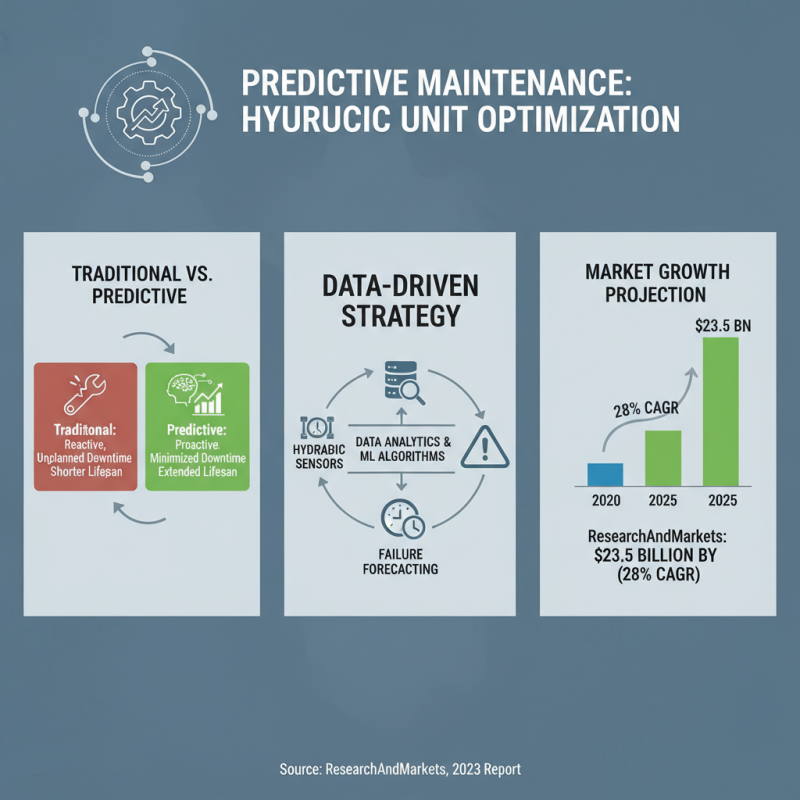
As the hydraulic unit industry evolves, emerging technologies continue to enhance efficiency and performance. One notable trend is the integration of IoT (Internet of Things) capabilities into hydraulic systems, allowing for real-time data monitoring and predictive maintenance. According to a recent report by Market Research Future, the IoT-enabled hydraulic systems are projected to substantially increase operational efficiency, reducing downtime by up to 25%. This shift towards smart hydraulics not only minimizes maintenance costs but also maximizes productivity across various applications.
Another significant development is the adoption of advanced materials such as lightweight composites and high-strength alloys in hydraulic unit manufacturing. The utilization of these materials can lead to significant weight reductions, improving fuel efficiency and overall system performance. Data from the International Journal of Engineering Research shows that hydraulic units built with these innovative materials can achieve up to a 15% increase in performance metrics compared to traditional designs.
Tips: When considering upgrades or new installations of hydraulic units, focus on IoT integration capabilities to leverage real-time data analytics. Moreover, investing in advanced materials can dramatically enhance the longevity and efficiency of systems. Regularly reviewing the latest industry reports can also help in making informed decisions about technology trends and innovations that may impact performance.
Top Hydraulic Unit Trends to Watch in 2025 for Optimal Performance
| Trend | Description | Impact on Efficiency | Projected Growth (2025) |
|---|---|---|---|
| Smart Sensors | Integration of IoT sensors for real-time monitoring and data analysis. | Significantly reduces downtime and enhances system responsiveness. | 30% increase in demand. |
| Eco-Friendly Fluids | Adoption of biodegradable hydraulic fluids to reduce environmental impact. | Improves sustainability ratings and compliance with regulations. | 25% increase in market adoption. |
| Electric Actuation | Shift from traditional hydraulic systems to electric actuation technologies. | Enhances precision and reduces energy consumption. | 40% growth in related modules. |
| Modular Design | Development of modular hydraulic units for easier maintenance and scalability. | Increases adaptability and reduces maintenance costs. | 35% increase in demand. |
| Advanced Simulation Tools | Utilization of simulation software for hydraulic system design optimization. | Boosts design efficiency and reduces prototype costs. | 20% increase in usage. |
Related Posts
-
How to Choose the Right Hydraulic Unit for Your Industrial Needs
-
The Essential Guide to Understanding Hydraulic Power Packs in Industrial Applications
-

10 Essential Tips for Maintaining an Efficient Hydraulic System
-

2025 Top 10 Check Valves Trends Innovations and Market Statistics
-
Understanding the Role of Check Valves in Modern Industrial Systems
-

Exploring Innovative Control Products: Transforming Industries with Smart Technology