


- Home
- A-Z Catalogue
- Products
- Valves
- Cetop
- Manual Directional Valves
- Proportional Valves
- Poppet Valves
- High-Speed Linear Servo Valves
- All High-Speed Linear Servo Valves
- Cetop 10 (NG32) Two Stage Type High Speed Linear Servo Valves – LSVHG-10
- Cetop 10 (NG32) Two Stage Type High Speed Linear Servo Valves – LSVHG-10 (With Fail-Safe)
- Cetop 8 (NG25) Two Stage Type High Speed Linear Servo Valves – LSVHG-06
- Cetop 8 (NG25) Two Stage Type High Speed Linear Servo Valves – LSVHG-06 (With Fail-Safe)
- Cetop 7 (NG16) Two Stage Type High Speed Linear Servo Valves – LSVHG-04
- Cetop 7 (NG16) Two Stage Type High Speed Linear Servo Valves – LSVHG-04 (With Fail-Safe)
- Cetop 5 (NG10) Direct Type High Speed Linear Servo Valves – LSVG-03
- Cetop 5 (NG10) OBE Type Direct Operated Linear Servo Valves – LSVG-03-EH
- Cetop 3 (NG6) OBE Type Direct Operated Linear Servo Valves – LSVG-01-EH
- Pumps
- Pressure control
- Flow Control Valves
- Pressure Control Valves
- All Pressure Control Valves
- Brake Valves
- Direct Relief Valve
- Low Noise Solenoid Controlled Relief Valves
- Low Noise Pilot Operated Relief Valves
- Pilot Operated Relief Valves
- Pressure reducing and relieving valves
- Pressure reducing and check valves
- Pressure control valves
- Remote Control Relief Valves
- Solenoid Controlled Relief Valves – BSG
- Solenoid Controlled Relief Valves – BST
- Unloading relief valves
- Check valves
- Environmental
- Valves
- Hydraulic Systems
- Power pack
- About Us
- Contact
- Blog

Top Square Pipe Making Machine Manufacturers?
Choosing the top Square Pipe Making Machine manufacturers requires more than comparing advertised production speeds. Buyers must examine forming accuracy, weld stability, energy use, maintenance access, and after-sales support. The machine should produce consistent corners, smooth seams, and dependable dimensions across multiple steel grades.
Industry demand provides important context. The World Steel Association’s Short Range Outlook continues to place global steel demand above 1.7 billion tonnes annually. Meanwhile, reports from Grand View Research and Mordor Intelligence identify construction, infrastructure, automotive, and furniture manufacturing as major drivers for steel tube consumption. Their market estimates differ, however. Definitions, regions, and forecasting methods are not identical. That distinction matters.
Small errors matter.
A weak forming stand can leave visible corner marks on a 40-millimeter square tube. Poorly controlled welding may create discoloration, rework, or premature downtime. Edwin Basson, Director General of the World Steel Association, has described steel as “a vital material for the future of our society.” His observation supports a practical point: equipment quality affects more than factory output. It influences material efficiency, product reliability, and long-term operating costs.
This guide compares leading Square Pipe Making Machine manufacturers through measurable criteria. These include line speed, tube-size range, automatic control systems, roll durability, electrical consumption, installation support, and spare-parts availability. Experience still matters, but it should be documented through factory references and verified performance data. Some rankings remain imperfect. Supplier claims deserve careful checking.
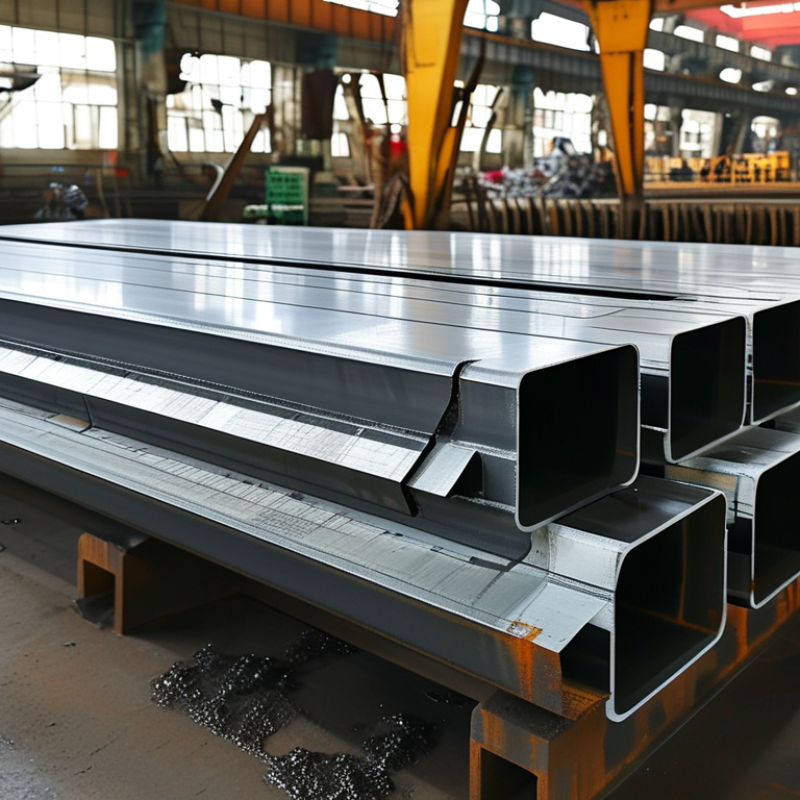
Table of Contents [Hide]
What Is a Square Pipe Making Machine?
What Is a Square Pipe Making Machine?
A square pipe making machine converts coiled steel strip into hollow, square-section tubing. The line usually includes a decoiler, straightener, roll-forming stands, welding unit, sizing section, and flying saw. Rollers gradually bend the flat strip, rather than forcing it into shape in one step. That detail matters. Uneven forming can create corner cracks, twisting, or inconsistent wall thickness.
High-frequency welding joins the formed edges before sizing rollers refine the outside dimensions. Operators adjust forming pressure, welding power, line speed, and cutting length for each specification. Typical outputs include structural tubes for frames, guardrails, machinery, and construction supports. Relevant requirements may reference ASTM A500 or EN 10219, depending on the market and intended use. A machine is not automatically suitable for every steel grade.
Industry demand supports continued investment in tube production. The World Steel Association reported approximately 1.84 billion tonnes of crude steel production worldwide in 2024. Grand View Research has estimated the global steel pipes market at more than 100 billion U.S. dollars in the mid-2020s, although reported values differ by scope and methodology. These figures indicate scale, not guaranteed machine performance. In practice, weld stability and dimensional accuracy depend heavily on tooling design, maintenance, and operator skill. I would inspect sample tubes under real production conditions, not trust a brochure alone. Even a small alignment error can become visible along a six-metre pipe.