


- Home
- A-Z Catalogue
- Products
- Valves
- Cetop
- Manual Directional Valves
- Proportional Valves
- Poppet Valves
- High-Speed Linear Servo Valves
- All High-Speed Linear Servo Valves
- Cetop 10 (NG32) Two Stage Type High Speed Linear Servo Valves – LSVHG-10
- Cetop 10 (NG32) Two Stage Type High Speed Linear Servo Valves – LSVHG-10 (With Fail-Safe)
- Cetop 8 (NG25) Two Stage Type High Speed Linear Servo Valves – LSVHG-06
- Cetop 8 (NG25) Two Stage Type High Speed Linear Servo Valves – LSVHG-06 (With Fail-Safe)
- Cetop 7 (NG16) Two Stage Type High Speed Linear Servo Valves – LSVHG-04
- Cetop 7 (NG16) Two Stage Type High Speed Linear Servo Valves – LSVHG-04 (With Fail-Safe)
- Cetop 5 (NG10) Direct Type High Speed Linear Servo Valves – LSVG-03
- Cetop 5 (NG10) OBE Type Direct Operated Linear Servo Valves – LSVG-03-EH
- Cetop 3 (NG6) OBE Type Direct Operated Linear Servo Valves – LSVG-01-EH
- Pumps
- Pressure control
- Flow Control Valves
- Pressure Control Valves
- All Pressure Control Valves
- Brake Valves
- Direct Relief Valve
- Low Noise Solenoid Controlled Relief Valves
- Low Noise Pilot Operated Relief Valves
- Pilot Operated Relief Valves
- Pressure reducing and relieving valves
- Pressure reducing and check valves
- Pressure control valves
- Remote Control Relief Valves
- Solenoid Controlled Relief Valves – BSG
- Solenoid Controlled Relief Valves – BST
- Unloading relief valves
- Check valves
- Environmental
- Valves
- Hydraulic Systems
- Power pack
- About Us
- Contact
- Blog

What Is a Panoramic Lift and How Does It Work?
A Panoramic Lift is an elevator designed to make the journey visible. Glass panels reveal the surrounding space, whether it is a hotel atrium, a shopping center, or an outdoor tower. Passengers may see floors slide past and notice daylight changing across the cabin. The view is the feature people remember. Yet appearance is only part of the design. A panoramic lift must still move smoothly, carry its rated load, and protect passengers during normal use and unexpected stops.
Its basic operation is similar to that of many conventional elevators. A motor moves the cabin through a shaft, while a controller responds to floor buttons and calls. Depending on the design, the lift may use traction equipment with ropes or a hydraulic system. Sensors monitor doors, position, and other operating conditions. Glass panels are selected and installed as part of an engineered enclosure; they are not simply decorative windows. The exact arrangement varies by building and manufacturer.
Details matter. A clear view should not distract from safe access, reliable controls, or suitable maintenance. The glass can also make fingerprints, reflections, and heat more noticeable than expected. That is easy to overlook. Architects, building owners, and lift professionals need to consider the site, passenger capacity, accessibility, and service requirements together. This guide explains what a panoramic lift is, how its main components work, and which practical questions deserve attention before installation. It cannot replace project-specific engineering advice, but it can make the discussion more informed.
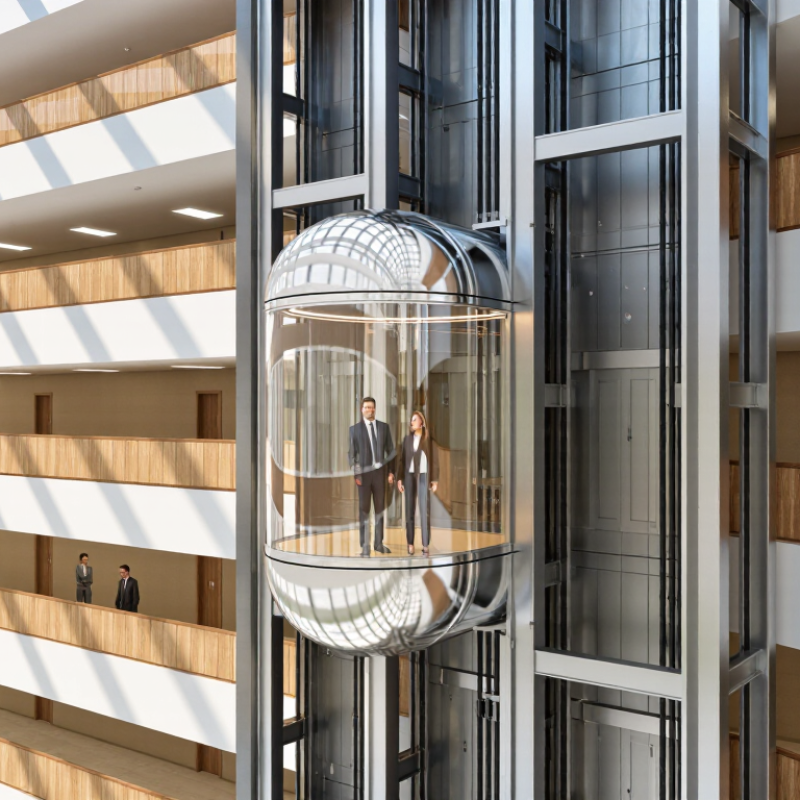
Table of Contents [Hide]
What Is a Panoramic Lift?
A panoramic lift is an elevator designed to offer a view through transparent or partly glazed walls. It may travel inside a building atrium or along an exterior shaft. Unlike a conventional enclosed car, it lets passengers see floors, structural details, or the surrounding landscape during the ride. The glass is typically safety-rated and supported by a metal frame. It is not simply a sightseeing cabin with a motor attached.
Its main parts include the car, guide rails, drive system, doors, controls, and safety equipment. The drive moves the car along the rails, while sensors and braking systems help manage travel and respond to faults. The exact arrangement depends on the building’s height, layout, and intended passenger load. That matters. A lift beside a busy hotel lobby may need different door timing and capacity than one serving a small office. Clear glass also needs regular cleaning, and glare or reflections can make a view less impressive than expected. An architect and lift engineer should assess structural support, ventilation, accessibility, and maintenance access before installation. Glass can feel open, but some passengers may still find the ride uncomfortable. That is worth considering.