


- Home
- A-Z Catalogue
- Products
- Valves
- Cetop
- Manual Directional Valves
- Proportional Valves
- Poppet Valves
- High-Speed Linear Servo Valves
- All High-Speed Linear Servo Valves
- Cetop 10 (NG32) Two Stage Type High Speed Linear Servo Valves – LSVHG-10
- Cetop 10 (NG32) Two Stage Type High Speed Linear Servo Valves – LSVHG-10 (With Fail-Safe)
- Cetop 8 (NG25) Two Stage Type High Speed Linear Servo Valves – LSVHG-06
- Cetop 8 (NG25) Two Stage Type High Speed Linear Servo Valves – LSVHG-06 (With Fail-Safe)
- Cetop 7 (NG16) Two Stage Type High Speed Linear Servo Valves – LSVHG-04
- Cetop 7 (NG16) Two Stage Type High Speed Linear Servo Valves – LSVHG-04 (With Fail-Safe)
- Cetop 5 (NG10) Direct Type High Speed Linear Servo Valves – LSVG-03
- Cetop 5 (NG10) OBE Type Direct Operated Linear Servo Valves – LSVG-03-EH
- Cetop 3 (NG6) OBE Type Direct Operated Linear Servo Valves – LSVG-01-EH
- Pumps
- Pressure control
- Flow Control Valves
- Pressure Control Valves
- All Pressure Control Valves
- Brake Valves
- Direct Relief Valve
- Low Noise Solenoid Controlled Relief Valves
- Low Noise Pilot Operated Relief Valves
- Pilot Operated Relief Valves
- Pressure reducing and relieving valves
- Pressure reducing and check valves
- Pressure control valves
- Remote Control Relief Valves
- Solenoid Controlled Relief Valves – BSG
- Solenoid Controlled Relief Valves – BST
- Unloading relief valves
- Check valves
- Environmental
- Valves
- Hydraulic Systems
- Power pack
- About Us
- Contact
- Blog

Top 10 Tips for Choosing the Right Tapping Screw?
Choosing the right Tapping Screw is crucial for various applications in construction and manufacturing. Tapping screws create their own threads in materials, making them versatile. According to a recent industry report, the tapping screw market is projected to grow by 5% annually, emphasizing their importance across sectors.
Understanding material compatibility is key. Different materials require specific screw types for optimal performance. For instance, some screws work best with metal, while others excel in wood or plastic. An expert in fasteners highlights that failure to choose correctly can lead to machinery issues and costly repairs.
Additionally, quality matters. Poorly made tapping screws can strip or break under pressure. A detailed analysis revealed that 20% of screws fail due to manufacturing defects. This statistic challenges engineers to prioritize quality over cost. When selecting, always consider the intended application and material requirements, ensuring that the chosen tapping screw performs reliably.
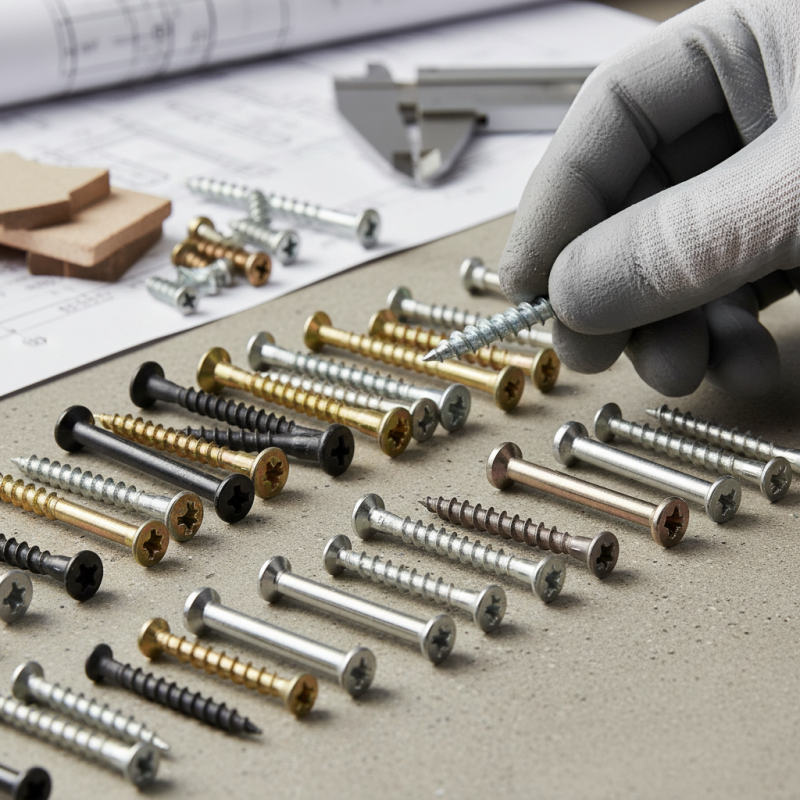
Table of Contents [Hide]
Understanding the Different Types of Tapping Screws Available
Tapping screws play a crucial role in construction and manufacturing. Understanding the various types can help you make informed decisions. Common tapping screws include self-tapping, thread-cutting, and thread-forming varieties. Each serves specific purposes depending on material and application. For instance, self-tapping screws create their own hole in softer materials, while thread-cutting types are designed for harder substances.
Data from industry reports indicate that around 70% of fastening failures stem from improper screw selection. This highlights the importance of choosing the right screw for your project. Tapping screw materials vary, with options like stainless steel, zinc-plated, and carbon steel. The choice of material impacts corrosion resistance and strength. A recent survey noted that 60% of engineers prioritize material quality when selecting screws.
When choosing, consider the screw's diameter and length. These factors influence load-bearing capabilities. It's essential to understand the norms and specifications applicable in your region. Misalignments can lead to structural issues. Many professionals overlook these essential details, further complicating the fastening process. An informed decision can save costs in the long run and prevent project delays.