


- Home
- A-Z Catalogue
- Products
- Valves
- Cetop
- Manual Directional Valves
- Proportional Valves
- Poppet Valves
- High-Speed Linear Servo Valves
- All High-Speed Linear Servo Valves
- Cetop 10 (NG32) Two Stage Type High Speed Linear Servo Valves – LSVHG-10
- Cetop 10 (NG32) Two Stage Type High Speed Linear Servo Valves – LSVHG-10 (With Fail-Safe)
- Cetop 8 (NG25) Two Stage Type High Speed Linear Servo Valves – LSVHG-06
- Cetop 8 (NG25) Two Stage Type High Speed Linear Servo Valves – LSVHG-06 (With Fail-Safe)
- Cetop 7 (NG16) Two Stage Type High Speed Linear Servo Valves – LSVHG-04
- Cetop 7 (NG16) Two Stage Type High Speed Linear Servo Valves – LSVHG-04 (With Fail-Safe)
- Cetop 5 (NG10) Direct Type High Speed Linear Servo Valves – LSVG-03
- Cetop 5 (NG10) OBE Type Direct Operated Linear Servo Valves – LSVG-03-EH
- Cetop 3 (NG6) OBE Type Direct Operated Linear Servo Valves – LSVG-01-EH
- Pumps
- Pressure control
- Flow Control Valves
- Pressure Control Valves
- All Pressure Control Valves
- Brake Valves
- Direct Relief Valve
- Low Noise Solenoid Controlled Relief Valves
- Low Noise Pilot Operated Relief Valves
- Pilot Operated Relief Valves
- Pressure reducing and relieving valves
- Pressure reducing and check valves
- Pressure control valves
- Remote Control Relief Valves
- Solenoid Controlled Relief Valves – BSG
- Solenoid Controlled Relief Valves – BST
- Unloading relief valves
- Check valves
- Environmental
- Valves
- Hydraulic Systems
- Power pack
- About Us
- Contact
- Blog

China Top 10 Air Conditioner Making Machine Manufacturers?
Air conditioning is becoming basic infrastructure, not a seasonal luxury. The IEA’s The Future of Cooling report projects global air-conditioner stock could reach 5.6 billion units by 2050. Its baseline counted about 1.6 billion units. This expansion places pressure on factories, especially automation, testing, and energy performance. China remains a central manufacturing base. Reports from the China Household Electrical Appliances Association and China’s National Bureau of Statistics show annual room-air-conditioner output exceeding 200 million units in recent years. These figures explain why buyers increasingly study the equipment behind production lines.
This guide examines China’s top ten Air Conditioner Making Machine manufacturers through practical purchasing criteria. The review considers fin-press accuracy, tube-expansion consistency, refrigerant leak testing, line integration, spare-parts support, and delivery experience. It also checks public company records, product evidence, factory capabilities, and relevant certifications where available. A polished showroom proves little. A machine may still struggle with thin aluminum fins, high-speed brazing, or unstable PLC data. Those details matter on a busy production floor.
The ranking is not an official government league table. Private-company disclosures can be incomplete, and advertised capacity may differ from verified output. We compare available evidence instead of repeating promotional claims. Buyers should confirm local safety rules, electrical requirements, refrigerant regulations, and after-sales coverage before signing contracts. The cheapest supplier is rarely the strongest choice. Reliable value means repeatable quality, measurable uptime, and responsive technical support. This method also has limits, and future market data may change the order.
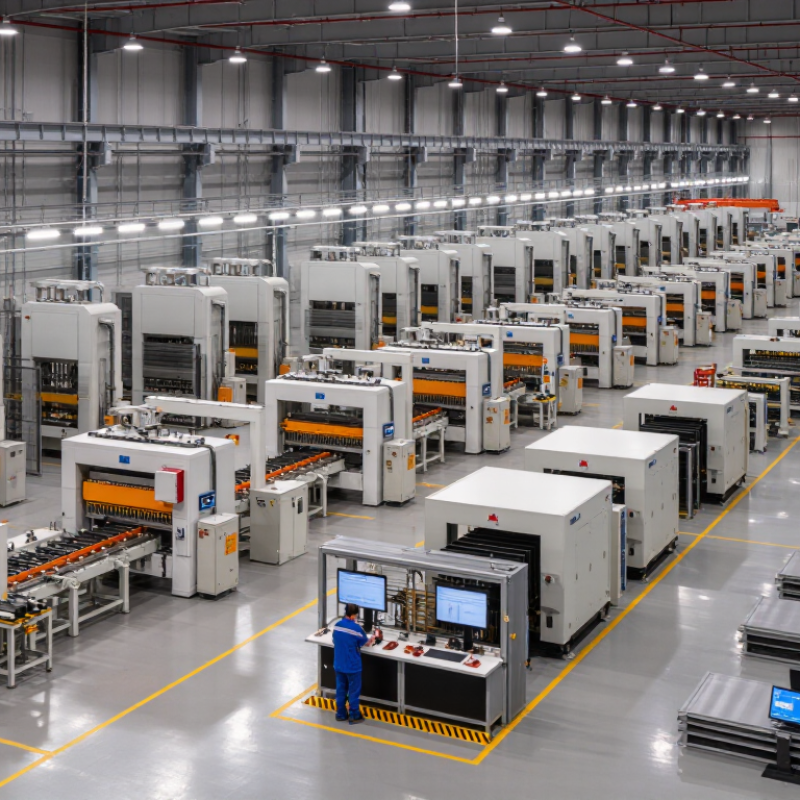
Table of Contents [Hide]
Industry Overview of Air Conditioner Making Machines in China
China’s air conditioner making machine industry supports a broad manufacturing chain, from copper tube processing to final assembly. Manufacturers commonly supply tube benders, fin stamping presses, coil winding systems, brazing equipment, leak testers, and automated inspection lines. Many factories serve both domestic producers and overseas equipment buyers. Their strengths often include flexible customization, practical automation, and strong component supply networks.
Selecting a reliable manufacturer requires more than comparing prices. Check machine accuracy, cycle time, energy use, maintenance access, and operator safety. Ask for test records and sample production results. A stable supplier should explain tooling life, spare-part availability, installation support, and training clearly. No factory is perfect. Some low-cost systems may require more manual adjustment than expected.
Tips: Request a complete production trial before signing a contract. Inspect weld quality, sensor placement, control-system response, and noise levels. Confirm whether the machine handles your tube sizes and refrigerant-related testing requirements. Visiting a working factory can reveal details that brochures hide. Consider total operating cost, not only the initial quotation. A slightly slower machine may prove more reliable and easier to maintain over several years.
China Top 10 Air Conditioner Making Machine Manufacturers? - Industry Overview of Air Conditioner Making Machines in China
| No. | Machine Category | Main Manufacturing Process | Typical Equipment Capacity or Accuracy | Common Air-Conditioner Applications | Relevant Quality or Safety Reference |
|---|---|---|---|---|---|
| 1 | Sheet-Metal Stamping Press | Blanking, piercing, bending, and forming of cabinet panels and brackets | Typical nominal force: 25–250 tonnes; production speed depends on die design and part geometry | Indoor units, outdoor-unit panels, mounting brackets, and structural components | ISO 12100 for machinery risk assessment; press guarding and two-hand controls are commonly applied |
| 2 | Tube-Bending Machine | Controlled bending of copper and aluminum refrigeration tubing | Typical tube diameter range: approximately 4–22 mm; programmable bend angle commonly reaches ±0.1° to ±0.5° | Evaporator, condenser, suction, discharge, and liquid-line assemblies | Dimensional inspection and prevention of tube flattening or unacceptable bend radius |
| 3 | Tube-End Forming and Expansion Machine | Expanding, flaring, reducing, and shaping tube ends for heat-exchanger assembly | Typical tooling is designed for copper or aluminum tubes from about 5–16 mm; cycle time varies by forming sequence | Heat-exchanger headers, return bends, and connection points | Joint dimensional control is essential for brazing quality and refrigerant tightness |
| 4 | Fin-Press and Heat-Exchanger Assembly Line | High-speed fin stamping followed by tube insertion, expansion, and header assembly | Typical fin thickness: about 0.08–0.20 mm; tube pitch commonly falls within approximately 19–32 mm | Evaporators and condensers for split, packaged, and commercial systems | Leak testing, fin-spacing inspection, and heat-transfer surface consistency |
| 5 | Automatic Brazing and Welding System | Joining copper tubing, steel components, and refrigeration circuit connections | Controlled gas flow, temperature, and torch position; inert-gas purging is commonly used for copper tube brazing | Refrigeration circuits, compressor connections, valves, and heat exchangers | ISO 13585 for brazing personnel qualification; joint strength and cleanliness are key controls |
| 6 | Vacuum Evacuation and Refrigerant Charging Station | Moisture removal, deep evacuation, refrigerant charging, and electronic weighing | Typical weighing resolution: 1–10 g; target vacuum levels depend on system volume and process specification | Residential and light-commercial air-conditioning production lines | IEC 60335-2-40 and applicable refrigerant-handling requirements; recovery and ventilation controls may be required |
| 7 | Refrigerant Leak-Test System | Helium, hydrogen-nitrogen, pressure-decay, or tracer-gas testing of sealed circuits | Detection capability depends on the method; helium systems can reach very low leak-rate thresholds under controlled conditions | Completed indoor units, outdoor units, compressors, and brazed assemblies | ISO 14903 provides methods for assessing leakage of refrigerating components and joints |
| 8 | Electrical Safety and Performance Test Bench | Insulation resistance, dielectric withstand, grounding continuity, input power, and functional testing | Test voltage, current, and timing are configured according to the product design and applicable market standard | Room air conditioners, heat pumps, inverter units, and packaged systems | IEC 60335-1 and IEC 60335-2-40 are widely used references for household and similar air-conditioning equipment |
| 9 | Functional Performance Test Chamber | Cooling, heating, airflow, power-consumption, noise, and control-function verification | Temperature and humidity ranges are selected to reproduce rated and extreme operating conditions; chamber size depends on unit type | Split systems, variable-speed units, heat pumps, and commercial air conditioners | ISO 5151 is a commonly referenced standard for non-ducted air conditioners and heat pumps |
| 10 | End-of-Line Assembly and Traceability System | Final assembly, screw fastening, labeling, barcode recording, packaging, and production-data collection | Torque-controlled fastening commonly uses programmable tools; traceability can record serial number, test results, and operator data | All air-conditioner product families and mixed-model production lines | ISO 9001 quality-management practices and documented calibration of measurement equipment |
Note: Capacity, accuracy, dimensions, and cycle times shown above are typical industry ranges rather than specifications of any individual manufacturer. Actual values vary according to machine configuration, product size, refrigerant type, automation level, and applicable market regulations.