


- Home
- A-Z Catalogue
- Products
- Valves
- Cetop
- Manual Directional Valves
- Proportional Valves
- Poppet Valves
- High-Speed Linear Servo Valves
- All High-Speed Linear Servo Valves
- Cetop 10 (NG32) Two Stage Type High Speed Linear Servo Valves – LSVHG-10
- Cetop 10 (NG32) Two Stage Type High Speed Linear Servo Valves – LSVHG-10 (With Fail-Safe)
- Cetop 8 (NG25) Two Stage Type High Speed Linear Servo Valves – LSVHG-06
- Cetop 8 (NG25) Two Stage Type High Speed Linear Servo Valves – LSVHG-06 (With Fail-Safe)
- Cetop 7 (NG16) Two Stage Type High Speed Linear Servo Valves – LSVHG-04
- Cetop 7 (NG16) Two Stage Type High Speed Linear Servo Valves – LSVHG-04 (With Fail-Safe)
- Cetop 5 (NG10) Direct Type High Speed Linear Servo Valves – LSVG-03
- Cetop 5 (NG10) OBE Type Direct Operated Linear Servo Valves – LSVG-03-EH
- Cetop 3 (NG6) OBE Type Direct Operated Linear Servo Valves – LSVG-01-EH
- Pumps
- Pressure control
- Flow Control Valves
- Pressure Control Valves
- All Pressure Control Valves
- Brake Valves
- Direct Relief Valve
- Low Noise Solenoid Controlled Relief Valves
- Low Noise Pilot Operated Relief Valves
- Pilot Operated Relief Valves
- Pressure reducing and relieving valves
- Pressure reducing and check valves
- Pressure control valves
- Remote Control Relief Valves
- Solenoid Controlled Relief Valves – BSG
- Solenoid Controlled Relief Valves – BST
- Unloading relief valves
- Check valves
- Environmental
- Valves
- Hydraulic Systems
- Power pack
- About Us
- Contact
- Blog

China Top 10 High Quality Pipe Machine Equipment Suppliers?
China’s pipe machinery sector combines large-scale manufacturing with increasingly precise automation. The China Statistical Yearbook 2024 reported that manufacturing contributed about 26% of China’s GDP in 2023. This industrial depth supports strong supply chains for steel tube mills, extrusion lines, laser cutting systems, and pipe finishing equipment.
Demand is also shaped by infrastructure, energy, construction, and fluid transportation projects. Reports from the International Energy Agency and the World Steel Association show continued investment in networks requiring durable steel products. However, market size alone does not prove equipment quality. A reliable supplier must demonstrate stable forming accuracy, controlled welding performance, and measurable production output.
This guide examines China’s Top 10 High Quality Pipe Machine Equipment Suppliers through practical purchasing criteria. These include factory experience, technical documentation, machine testing, certification, spare-parts availability, and overseas service. Buyers should inspect sample pipes, not only polished showroom videos. A production trial can reveal ovality, weld marks, surface scratches, or unstable feeding. Small details matter.
The selected companies may serve different applications, from small-diameter stainless steel tubes to heavy-duty structural pipes. Some suppliers excel in customization, while others offer stronger standardization. No ranking is perfect. Supplier capabilities can change after installation, staffing changes, or material upgrades. Therefore, this overview should support due diligence, not replace it. Factory audits, reference calls, and written performance guarantees remain essential when evaluating High Quality Pipe Machine Equipment for long-term production.
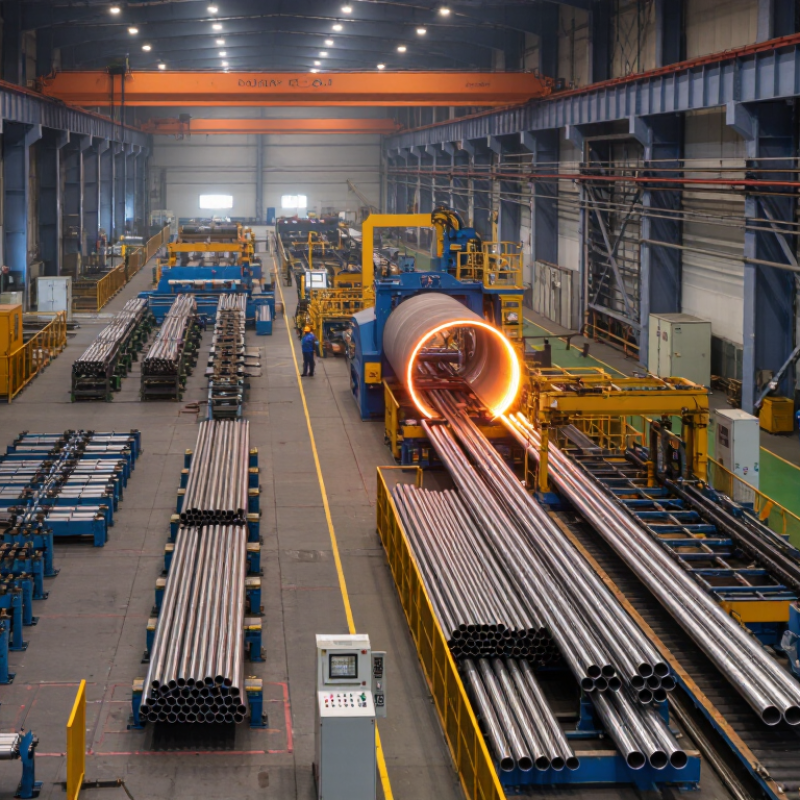
Table of Contents [Hide]
What Defines a High-Quality Pipe Machine Equipment Supplier in China?
What Defines a High-Quality Pipe Machine Equipment Supplier in China?
A high-quality pipe machine equipment supplier offers more than polished catalogs and attractive prices. Their engineers should understand pipe diameter, wall thickness, material grade, forming speed, and welding requirements. During factory visits, buyers should inspect machining areas, assembly lines, and finished equipment. Clean workspaces help, but they never prove everything. Ask for production records, dimensional inspection reports, and material traceability documents. Reliable suppliers explain tolerances clearly instead of hiding behind general promises.
Equipment quality also depends on testing and after-sales support. A responsible supplier should run trial production with the buyer’s actual material or a close equivalent. Check forming accuracy, weld stability, cutting length, noise, and energy use. Ask how quickly technicians respond when a sensor fails or calibration drifts. Spare parts lists, training plans, maintenance schedules, and clear warranty terms reveal practical experience. Some suppliers may still have weaknesses. Honest communication matters more than pretending perfection.
Tips: Request sample pipes before signing. Compare measured results with promised tolerances. Review recent project references, but verify them independently. Ask whether software, electrical parts, and tooling can be replaced locally. Keep every technical requirement in the contract. A short video call with the production engineer may reveal more than a long sales presentation. Pay attention to small details. Loose cables and unclear labels can become expensive problems later.