


- Home
- A-Z Catalogue
- Products
- Valves
- Cetop
- Manual Directional Valves
- Proportional Valves
- Poppet Valves
- High-Speed Linear Servo Valves
- All High-Speed Linear Servo Valves
- Cetop 10 (NG32) Two Stage Type High Speed Linear Servo Valves – LSVHG-10
- Cetop 10 (NG32) Two Stage Type High Speed Linear Servo Valves – LSVHG-10 (With Fail-Safe)
- Cetop 8 (NG25) Two Stage Type High Speed Linear Servo Valves – LSVHG-06
- Cetop 8 (NG25) Two Stage Type High Speed Linear Servo Valves – LSVHG-06 (With Fail-Safe)
- Cetop 7 (NG16) Two Stage Type High Speed Linear Servo Valves – LSVHG-04
- Cetop 7 (NG16) Two Stage Type High Speed Linear Servo Valves – LSVHG-04 (With Fail-Safe)
- Cetop 5 (NG10) Direct Type High Speed Linear Servo Valves – LSVG-03
- Cetop 5 (NG10) OBE Type Direct Operated Linear Servo Valves – LSVG-03-EH
- Cetop 3 (NG6) OBE Type Direct Operated Linear Servo Valves – LSVG-01-EH
- Pumps
- Pressure control
- Flow Control Valves
- Pressure Control Valves
- All Pressure Control Valves
- Brake Valves
- Direct Relief Valve
- Low Noise Solenoid Controlled Relief Valves
- Low Noise Pilot Operated Relief Valves
- Pilot Operated Relief Valves
- Pressure reducing and relieving valves
- Pressure reducing and check valves
- Pressure control valves
- Remote Control Relief Valves
- Solenoid Controlled Relief Valves – BSG
- Solenoid Controlled Relief Valves – BST
- Unloading relief valves
- Check valves
- Environmental
- Valves
- Hydraulic Systems
- Power pack
- About Us
- Contact
- Blog

Top 200x1800mm Graphite Electrode Suppliers
The 200*1800mm Graphite Electrode is a specific procurement choice, not merely a line on a supplier’s catalogue. Its performance depends on more than diameter and length. Buyers should compare grade, bulk density, electrical resistivity, flexural strength, nipple fit, and dimensional tolerances. Ask for recent test results and traceable batch documentation. Small details matter.
Demand has a wider industrial context. World Steel Association’s World Steel in Figures 2024 reports global crude steel production of 1,892.2 million tonnes in 2023; electric-arc-furnace production accounted for about 28.6%. EAF steelmaking uses graphite electrodes to conduct current and sustain the furnace’s intense heat. This does not mean every electrode supplier serves the same furnace conditions. It does explain why consistent quality and dependable delivery deserve close attention.
A useful name in the wider steel sector is Dr. Edwin Basson, Director General of worldsteel. However, I could not verify a public statement from him specifically about the 200*1800mm Graphite Electrode. So I will not invent a quotation. That restraint matters. Supplier claims can sound polished, while a certificate or production record may reveal more. Check what is documented, confirm the dimensions, and ask how the electrode performs under your operating conditions. The specification is only a starting point. Real results can vary.
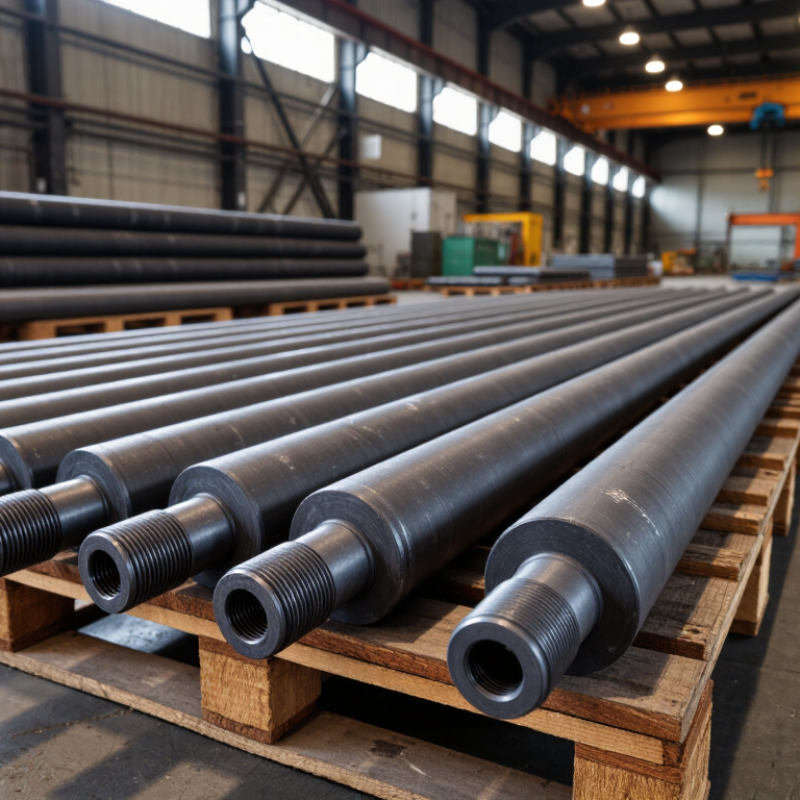
Table of Contents [Hide]
Understanding the 200 × 1800 mm Graphite Electrode Specification
A 200 × 1800 mm graphite electrode is generally described by its nominal diameter and length: 200 mm across and 1800 mm long. Confirm the supplier’s drawing, because listed dimensions may refer to the electrode body and not include its connection details. Small differences in diameter or end preparation can affect how the electrode fits an existing holder.
The number alone is not enough. Ask for the grade, dimensional tolerances, electrical resistivity, bulk density, and mechanical-strength data, then compare them with your furnace conditions. These properties influence current-carrying performance, wear, and resistance to handling damage. Check whether the product uses a threaded nipple, and verify the thread specification separately. Keep electrodes dry and protect their ends during transport; a chipped connection can cause problems even when the main body looks sound. A useful specification should state how measurements were taken and identify acceptable tolerances. I would not select by size alone. The nominal dimensions are a starting point, not a performance guarantee.