


- Home
- A-Z Catalogue
- Products
- Valves
- Cetop
- Manual Directional Valves
- Proportional Valves
- Poppet Valves
- High-Speed Linear Servo Valves
- All High-Speed Linear Servo Valves
- Cetop 10 (NG32) Two Stage Type High Speed Linear Servo Valves – LSVHG-10
- Cetop 10 (NG32) Two Stage Type High Speed Linear Servo Valves – LSVHG-10 (With Fail-Safe)
- Cetop 8 (NG25) Two Stage Type High Speed Linear Servo Valves – LSVHG-06
- Cetop 8 (NG25) Two Stage Type High Speed Linear Servo Valves – LSVHG-06 (With Fail-Safe)
- Cetop 7 (NG16) Two Stage Type High Speed Linear Servo Valves – LSVHG-04
- Cetop 7 (NG16) Two Stage Type High Speed Linear Servo Valves – LSVHG-04 (With Fail-Safe)
- Cetop 5 (NG10) Direct Type High Speed Linear Servo Valves – LSVG-03
- Cetop 5 (NG10) OBE Type Direct Operated Linear Servo Valves – LSVG-03-EH
- Cetop 3 (NG6) OBE Type Direct Operated Linear Servo Valves – LSVG-01-EH
- Pumps
- Pressure control
- Flow Control Valves
- Pressure Control Valves
- All Pressure Control Valves
- Brake Valves
- Direct Relief Valve
- Low Noise Solenoid Controlled Relief Valves
- Low Noise Pilot Operated Relief Valves
- Pilot Operated Relief Valves
- Pressure reducing and relieving valves
- Pressure reducing and check valves
- Pressure control valves
- Remote Control Relief Valves
- Solenoid Controlled Relief Valves – BSG
- Solenoid Controlled Relief Valves – BST
- Unloading relief valves
- Check valves
- Environmental
- Valves
- Hydraulic Systems
- Power pack
- About Us
- Contact
- Blog

Top Chemical Mechanical Seals Suppliers Worldwide?
Choosing the right Chemical Mechanical Seals supplier requires more than comparing prices or browsing attractive product catalogs. In chemical processing, a seal may face corrosive acids, abrasive crystals, high temperatures, pressure changes, and continuous shaft movement. A small material mismatch can create leakage, unplanned downtime, or damaged equipment. The details matter: carbon faces, silicon carbide, tungsten carbide, elastomer compatibility, spring design, and flush arrangements all influence performance.
Robert Flitney, author of Seals and Sealing Handbook, offers a useful principle: “A seal is not an isolated component; it is part of a sealing system.” This idea guides our review of leading suppliers worldwide. We examine engineering experience, manufacturing consistency, testing practices, technical support, customization, and compliance with recognized industry standards. Suppliers serving refineries may differ from those supporting pharmaceutical, food-processing, or wastewater facilities. There is no universal winner.
A company can appear impressive on paper, yet provide weak installation guidance. Another may offer excellent prototypes but limited global service. That contradiction deserves attention. Reliable suppliers usually explain operating limits clearly, recommend suitable materials, and provide documentation before problems occur. They also understand pumps, mixers, reactors, and the process conditions surrounding the seal. Our comparison focuses on practical value, not promotional language. It considers proven performance, response capability, and long-term maintenance needs. The ranking may still require reflection, because supplier quality can vary by region, product line, and application.
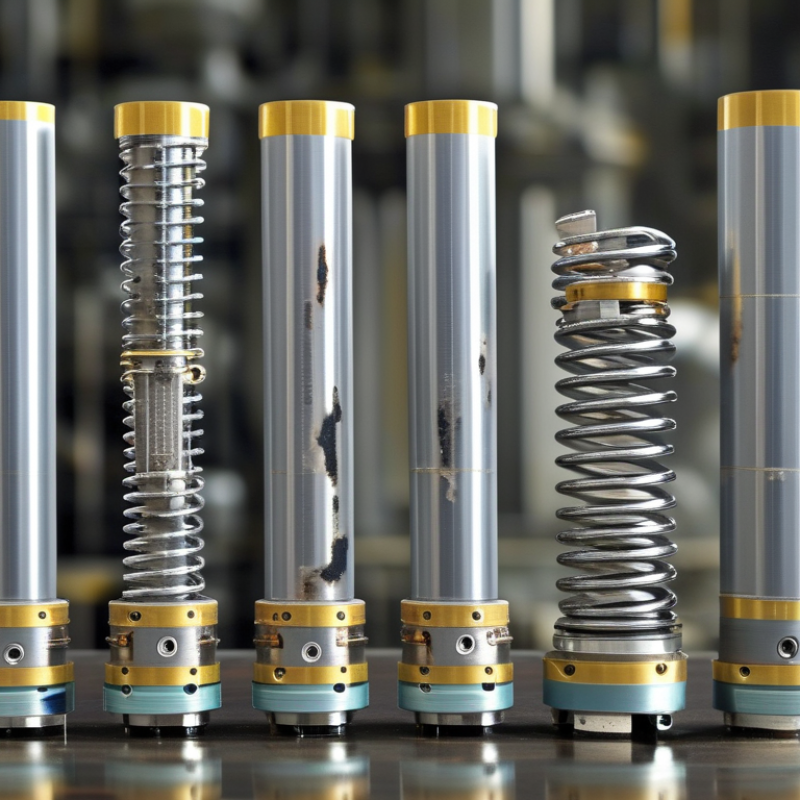
Table of Contents [Hide]
Chemical Mechanical Seals: Definition, Functions, and Industry Applications
Chemical mechanical seals prevent fluid leakage where rotating shafts enter pumps, mixers, and reactors. Their faces press together with controlled force. A thin lubricant film reduces friction, heat, and wear. Secondary elastomers protect the shaft and housing from chemical contact.
The seal material must match the process. Silicon carbide handles abrasive slurries, while corrosion-resistant alloys suit many acidic services. Temperature, pressure, shaft speed, and dry-running risk also influence the design. The U.S. Department of Energy identifies pumping systems as major industrial energy users, making leakage control and efficient sealing practical maintenance priorities. Small failures can create large production losses.
Applications include chemical reactors, solvent-transfer pumps, wastewater equipment, fertilizer units, and pharmaceutical mixing systems. Fortune Business Insights valued the global mechanical seals market at approximately USD 3.9 billion in 2023, with continued growth projected through the decade. Suppliers worldwide increasingly provide cartridge seals, split seals, and engineered systems for demanding fluids. However, market reports often combine chemical, oil, water, and general industrial data. Their categories are not perfectly comparable. In field inspections, incorrect face materials and poor shaft alignment remain common causes of early failure. Selection should therefore involve operating records, seal-face inspection, and documented compatibility testing rather than catalogue matching alone.