


- Home
- A-Z Catalogue
- Products
- Valves
- Cetop
- Manual Directional Valves
- Proportional Valves
- Poppet Valves
- High-Speed Linear Servo Valves
- All High-Speed Linear Servo Valves
- Cetop 10 (NG32) Two Stage Type High Speed Linear Servo Valves – LSVHG-10
- Cetop 10 (NG32) Two Stage Type High Speed Linear Servo Valves – LSVHG-10 (With Fail-Safe)
- Cetop 8 (NG25) Two Stage Type High Speed Linear Servo Valves – LSVHG-06
- Cetop 8 (NG25) Two Stage Type High Speed Linear Servo Valves – LSVHG-06 (With Fail-Safe)
- Cetop 7 (NG16) Two Stage Type High Speed Linear Servo Valves – LSVHG-04
- Cetop 7 (NG16) Two Stage Type High Speed Linear Servo Valves – LSVHG-04 (With Fail-Safe)
- Cetop 5 (NG10) Direct Type High Speed Linear Servo Valves – LSVG-03
- Cetop 5 (NG10) OBE Type Direct Operated Linear Servo Valves – LSVG-03-EH
- Cetop 3 (NG6) OBE Type Direct Operated Linear Servo Valves – LSVG-01-EH
- Pumps
- Pressure control
- Flow Control Valves
- Pressure Control Valves
- All Pressure Control Valves
- Brake Valves
- Direct Relief Valve
- Low Noise Solenoid Controlled Relief Valves
- Low Noise Pilot Operated Relief Valves
- Pilot Operated Relief Valves
- Pressure reducing and relieving valves
- Pressure reducing and check valves
- Pressure control valves
- Remote Control Relief Valves
- Solenoid Controlled Relief Valves – BSG
- Solenoid Controlled Relief Valves – BST
- Unloading relief valves
- Check valves
- Environmental
- Valves
- Hydraulic Systems
- Power pack
- About Us
- Contact
- Blog

Top 10 Cordless Impact Drill Types for Global Buyers
Choosing the right Cordless Impact Drill is not simply a matter of comparing voltage, speed, or price. Global buyers face different working conditions, supply channels, battery platforms, and service expectations. A compact 12V model may suit cabinet installation, while a high-torque 20V or 24V tool may perform better on construction sites.
This guide examines the Top 10 Cordless Impact Drill Types for Global Buyers through practical use cases. It considers torque control, impact rate, chuck design, battery capacity, weight, heat management, and charging compatibility. These details matter when a tool is used on steel frames, wooden decking, automotive fasteners, or remote maintenance jobs. A drill that feels balanced for five minutes may become tiring after several hours.
Real-world experience also reveals compromises. More power can increase weight and vibration. Larger batteries may improve runtime but reduce maneuverability. Brushless motors often offer better efficiency, yet their replacement cost can be higher. Marketing claims should not replace verified specifications, warranty terms, or local after-sales support.
Not every type fits every buyer.
The comparisons are designed to help importers, contractors, distributors, and serious DIY users make more reliable decisions. They also highlight points that are easy to overlook, including regional voltage systems, battery availability, accessory standards, noise, and operator comfort. Product performance can vary between brands and working materials, so testing remains valuable. This guide is informative, not a substitute for manufacturer instructions or workplace safety procedures.
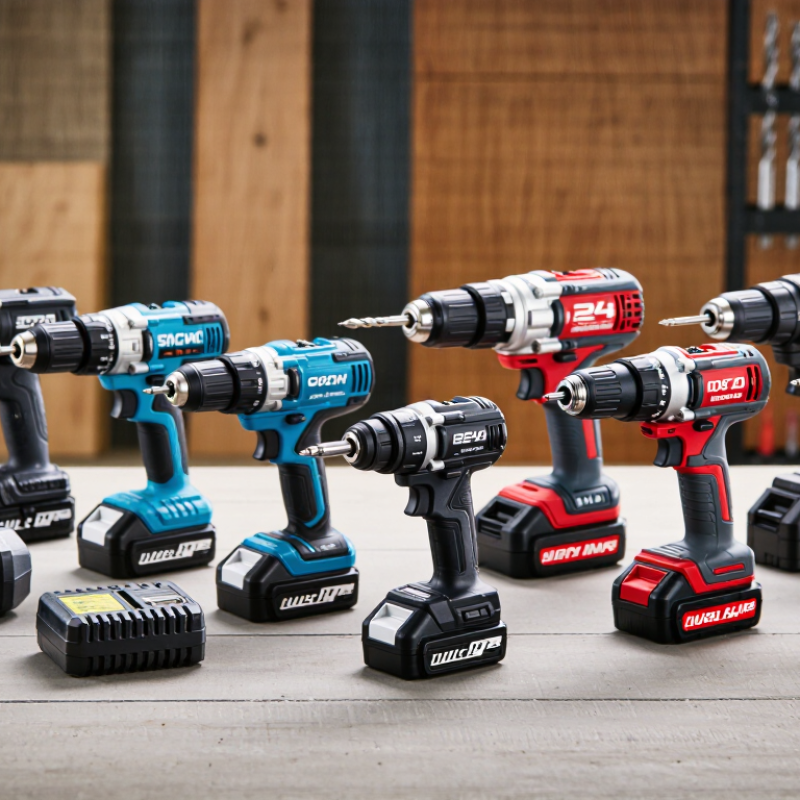
Table of Contents [Hide]
Cordless Impact Drill Basics and Classification Criteria
Cordless impact drills combine rotational force with short, repeated impacts. This action helps loosen tight fasteners and drive screws into dense materials. Their cordless design improves movement on construction sites, farms, workshops, and maintenance jobs. However, “impact drill” can describe different tools in global catalogs. Some models are impact drivers, while others include hammer-drill functions. Buyers should confirm the mechanism before comparing specifications.
Tips: Hold the tool firmly, but do not fight its torque with excessive wrist force. Match the bit to the fastener head and material. Check the battery platform, charger voltage, and included accessories. Test trigger control at low speed. I have seen users choose maximum torque, then damage small screws. More power is not always better.
A practical top-ten classification can use function and construction. Categories include compact impact drivers, standard impact drivers, high-torque models, brushless models, brushed models, hammer-impact hybrids, right-angle units, extended-shaft units, low-voltage tools, and heavy-duty high-voltage tools. Classification should also consider torque range, impacts per minute, speed settings, chuck or hex holder size, battery capacity, weight, noise, and vibration. For masonry work, impact action alone may be insufficient; a dedicated hammer function is often safer and more effective. For repetitive fastening, brushless motors usually offer better efficiency, though real results depend on load and maintenance. Specs can mislead. A controlled field test remains valuable.