


- Home
- A-Z Catalogue
- Products
- Valves
- Cetop
- Manual Directional Valves
- Proportional Valves
- Poppet Valves
- High-Speed Linear Servo Valves
- All High-Speed Linear Servo Valves
- Cetop 10 (NG32) Two Stage Type High Speed Linear Servo Valves – LSVHG-10
- Cetop 10 (NG32) Two Stage Type High Speed Linear Servo Valves – LSVHG-10 (With Fail-Safe)
- Cetop 8 (NG25) Two Stage Type High Speed Linear Servo Valves – LSVHG-06
- Cetop 8 (NG25) Two Stage Type High Speed Linear Servo Valves – LSVHG-06 (With Fail-Safe)
- Cetop 7 (NG16) Two Stage Type High Speed Linear Servo Valves – LSVHG-04
- Cetop 7 (NG16) Two Stage Type High Speed Linear Servo Valves – LSVHG-04 (With Fail-Safe)
- Cetop 5 (NG10) Direct Type High Speed Linear Servo Valves – LSVG-03
- Cetop 5 (NG10) OBE Type Direct Operated Linear Servo Valves – LSVG-03-EH
- Cetop 3 (NG6) OBE Type Direct Operated Linear Servo Valves – LSVG-01-EH
- Pumps
- Pressure control
- Flow Control Valves
- Pressure Control Valves
- All Pressure Control Valves
- Brake Valves
- Direct Relief Valve
- Low Noise Solenoid Controlled Relief Valves
- Low Noise Pilot Operated Relief Valves
- Pilot Operated Relief Valves
- Pressure reducing and relieving valves
- Pressure reducing and check valves
- Pressure control valves
- Remote Control Relief Valves
- Solenoid Controlled Relief Valves – BSG
- Solenoid Controlled Relief Valves – BST
- Unloading relief valves
- Check valves
- Environmental
- Valves
- Hydraulic Systems
- Power pack
- About Us
- Contact
- Blog

Top Flow Control Techniques for Efficient Process Management?
Efficient process management is crucial in today's fast-paced world. Organizations strive to optimize their workflows. This is where flow control techniques come into play. Flow control regulates the movement of materials, information, and resources in a system. It ensures that processes run smoothly and efficiently.
Adopting effective flow control strategies can reduce bottlenecks. However, not every approach works for every scenario. Some methods may create unexpected challenges. For example, automating a process may increase complexity. Simple flow control measures, such as visual management tools, can also be overlooked. These tools can significantly enhance clarity and productivity.
In this article, we explore top flow control techniques. We will discuss how they aid in creating a balanced process environment. Challenges will be highlighted, encouraging reflection on their implementation. Efficient flow control is not just about speed. It’s about achieving the right balance in a dynamic operational landscape.

Table of Contents
[Hide]
Overview of Flow Control in Process Management
Flow control plays a crucial role in process management. It helps ensure that tasks flow smoothly. Effective flow control minimizes delays and maximizes productivity. Understanding key techniques is essential for any process manager.
One common technique is the use of visual management tools. These tools make processes more transparent. For instance, Kanban boards show task status visually. Teams can quickly identify bottlenecks. This clarity fosters better communication among team members.
Tip: Regularly review and update your visual tools. This keeps everyone aligned and aware of changes.
Another technique involves standardizing processes. Standardization reduces variability. It leads to predictable results. By having clear, repeatable steps, teams become more efficient. However, one must be cautious of becoming too rigid. Flexibility can be just as important.
Tip: Encourage team feedback on standardized processes. Adapt them based on real-world experiences.
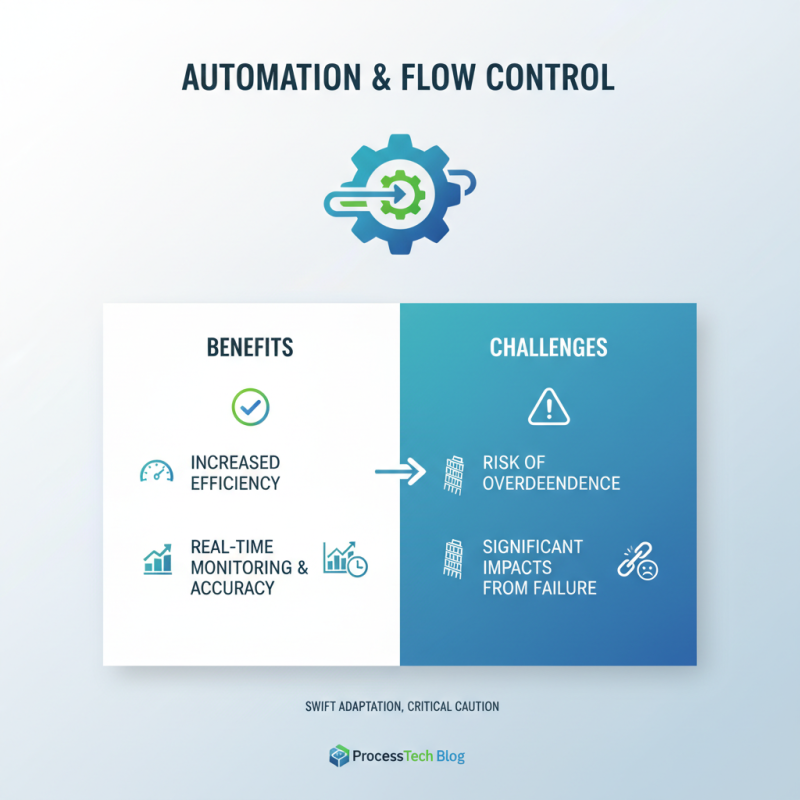
Lastly, utilizing automated systems can greatly enhance flow control. Automation reduces human error. It speeds up repetitive tasks, allowing staff to focus on critical activities. Yet, not every task can or should be automated.
Tip: Identify tasks that are best suited for automation, but leave room for human oversight. Balancing both is key to success.
Related Posts
-

2025 How to Effectively Repair Hydraulic Valves for Optimal Performance
-

Why You Should Invest in a Hydraulic Unit for Efficient Machinery Operation
-

Top 10 Reasons You Need a Hydraulic Power Unit for Your Business Operations
-

2025 Top 10 Check Valves Trends Innovations and Market Statistics
-

2026 Top Hydraulic Directional Valve Trends and Innovations?
-
What is a Yuken Directional Valve and How Does It Work?