


- Home
- A-Z Catalogue
- Products
- Valves
- Cetop
- Manual Directional Valves
- Proportional Valves
- Poppet Valves
- High-Speed Linear Servo Valves
- All High-Speed Linear Servo Valves
- Cetop 10 (NG32) Two Stage Type High Speed Linear Servo Valves – LSVHG-10
- Cetop 10 (NG32) Two Stage Type High Speed Linear Servo Valves – LSVHG-10 (With Fail-Safe)
- Cetop 8 (NG25) Two Stage Type High Speed Linear Servo Valves – LSVHG-06
- Cetop 8 (NG25) Two Stage Type High Speed Linear Servo Valves – LSVHG-06 (With Fail-Safe)
- Cetop 7 (NG16) Two Stage Type High Speed Linear Servo Valves – LSVHG-04
- Cetop 7 (NG16) Two Stage Type High Speed Linear Servo Valves – LSVHG-04 (With Fail-Safe)
- Cetop 5 (NG10) Direct Type High Speed Linear Servo Valves – LSVG-03
- Cetop 5 (NG10) OBE Type Direct Operated Linear Servo Valves – LSVG-03-EH
- Cetop 3 (NG6) OBE Type Direct Operated Linear Servo Valves – LSVG-01-EH
- Pumps
- Pressure control
- Flow Control Valves
- Pressure Control Valves
- All Pressure Control Valves
- Brake Valves
- Direct Relief Valve
- Low Noise Solenoid Controlled Relief Valves
- Low Noise Pilot Operated Relief Valves
- Pilot Operated Relief Valves
- Pressure reducing and relieving valves
- Pressure reducing and check valves
- Pressure control valves
- Remote Control Relief Valves
- Solenoid Controlled Relief Valves – BSG
- Solenoid Controlled Relief Valves – BST
- Unloading relief valves
- Check valves
- Environmental
- Valves
- Hydraulic Systems
- Power pack
- About Us
- Contact
- Blog

Top 10 Types of Grain Silos for Global Buyers?
Choosing the right grain silo affects storage quality, handling costs, maintenance, and long-term farm performance. Global buyers often compare steel silos, concrete silos, hopper-bottom models, flat-bottom units, and flexible grain bags. Each design responds to different climates, capacities, loading systems, and operating budgets. A small farm near a humid coastline faces different risks than a large grain terminal in a dry inland region.
This guide examines the top 10 types of grain silos through practical buying criteria. These include moisture control, aeration, discharge speed, corrosion resistance, foundation requirements, and cleaning access. Experience from grain storage projects shows that a low purchase price can hide expensive installation or maintenance challenges. Small details matter. A blocked aeration duct can damage stored grain within days. A weak access ladder can complicate routine inspections. Reliable suppliers should provide capacity calculations, material specifications, safety information, and clear warranty terms. Independent testing and local engineering review also deserve attention.
The phrase grain sild may appear in online searches, although grain silo is the accepted industry term. Buyers should verify product descriptions carefully. Not every advertised capacity represents usable storage. Some figures exclude roof space, cone volume, or required operating clearance. This guide offers a practical comparison, but no single silo fits every site. Conditions change. Weather records, grain type, turnover frequency, and future expansion plans should shape the final decision. Mistakes are possible, especially when technical data remains incomplete. Careful questions usually prevent costly surprises.
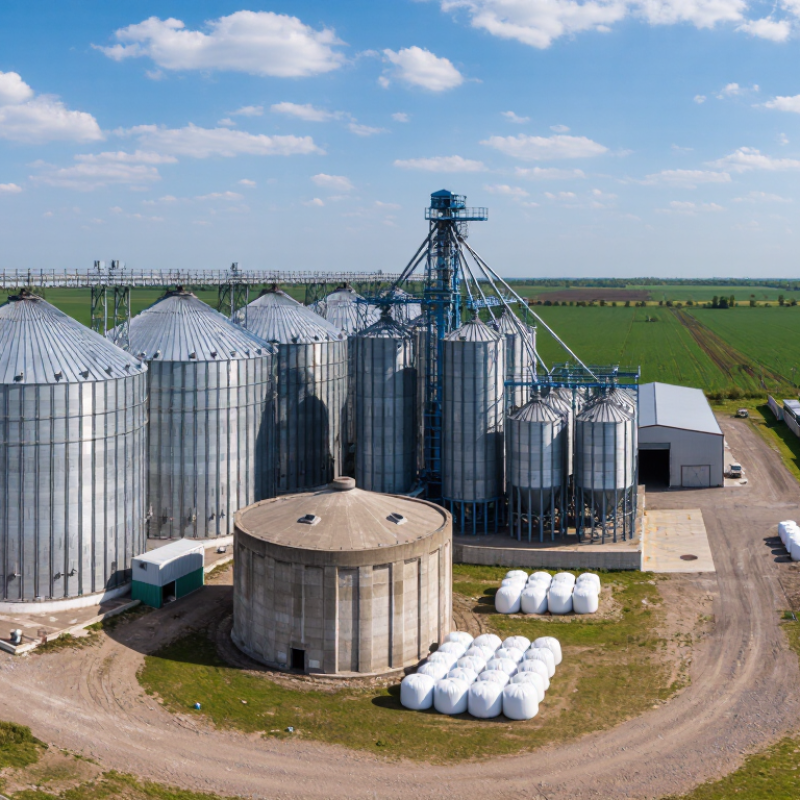
Table of Contents [Hide]
Grain Silo Basics: Purpose, Design, and Storage Principles
Grain silos protect harvested grain from moisture, pests, heat, and contamination.
Their main purpose is simple: preserve quality until processing, sale, or export. Common options include flat-bottom silos, hopper-bottom silos, and grain bags. Each suits different storage volumes, handling systems, and site conditions.
A reliable silo needs more than strong walls. Engineers assess local wind, snow, seismic activity, soil strength, and grain pressure. Galvanized steel supports fast installation and flexible capacity. Concrete offers thermal stability and long service life.
Hopper bottoms improve unloading, while flat bottoms often reduce construction costs. Aeration fans move controlled air through perforated floors. Temperature cables can reveal hot spots before spoilage spreads. Small design details matter.
During site inspections, I check drainage, access routes, roof vents, ladders, and discharge equipment.
Water around the foundation remains a serious warning. Operators should clean residual grain between storage cycles. They should also monitor moisture, temperature, insects, and airflow records.
Overloading is risky, even when the structure appears sound. No design is perfect. A system may meet specifications yet perform poorly with careless loading or weak maintenance. Buyers should compare capacity, cleaning access, safety features, local climate demands, and expected operating habits before choosing a silo type.