


- Home
- A-Z Catalogue
- Products
- Valves
- Cetop
- Manual Directional Valves
- Proportional Valves
- Poppet Valves
- High-Speed Linear Servo Valves
- All High-Speed Linear Servo Valves
- Cetop 10 (NG32) Two Stage Type High Speed Linear Servo Valves – LSVHG-10
- Cetop 10 (NG32) Two Stage Type High Speed Linear Servo Valves – LSVHG-10 (With Fail-Safe)
- Cetop 8 (NG25) Two Stage Type High Speed Linear Servo Valves – LSVHG-06
- Cetop 8 (NG25) Two Stage Type High Speed Linear Servo Valves – LSVHG-06 (With Fail-Safe)
- Cetop 7 (NG16) Two Stage Type High Speed Linear Servo Valves – LSVHG-04
- Cetop 7 (NG16) Two Stage Type High Speed Linear Servo Valves – LSVHG-04 (With Fail-Safe)
- Cetop 5 (NG10) Direct Type High Speed Linear Servo Valves – LSVG-03
- Cetop 5 (NG10) OBE Type Direct Operated Linear Servo Valves – LSVG-03-EH
- Cetop 3 (NG6) OBE Type Direct Operated Linear Servo Valves – LSVG-01-EH
- Pumps
- Pressure control
- Flow Control Valves
- Pressure Control Valves
- All Pressure Control Valves
- Brake Valves
- Direct Relief Valve
- Low Noise Solenoid Controlled Relief Valves
- Low Noise Pilot Operated Relief Valves
- Pilot Operated Relief Valves
- Pressure reducing and relieving valves
- Pressure reducing and check valves
- Pressure control valves
- Remote Control Relief Valves
- Solenoid Controlled Relief Valves – BSG
- Solenoid Controlled Relief Valves – BST
- Unloading relief valves
- Check valves
- Environmental
- Valves
- Hydraulic Systems
- Power pack
- About Us
- Contact
- Blog

Top HDD Horizontal Drilling Machine Manufacturers?
Choosing among Top HDD Horizontal Drilling Machine Manufacturers requires more than comparing horsepower or catalog prices. Hdd Horizontal Drilling projects face changing soil, tight work zones, and demanding pullback loads. A machine that performs well in open ground may struggle near existing utilities or on a compact urban site. Fit matters.
Dr. Sam Ariaratnam, a recognized trenchless technology researcher, offers a useful technical lens. The following line is an editorial summary, not a verbatim quotation: “Match the machine to the ground, pullback demand, and crew capability.” That principle helps buyers compare manufacturers on practical evidence, not polished brochures alone. Look at documented thrust and pullback ratings, torque, fluid-system capacity, transport dimensions, and access to parts. Ask how controls respond when ground conditions change. Request service references from operators with similar projects. Details count.
This guide will examine established manufacturers and the differences that matter in daily work. It will consider machine range, operator comfort, dealer support, training, and maintenance access. A well-designed rig still needs a capable crew and sound planning. Manufacturer claims should be checked against specifications and field references. No brand fits every job. Some comparisons also depend on local support, which can be difficult to judge from a product page. That deserves a closer look. The goal is a grounded shortlist, not a universal winner.
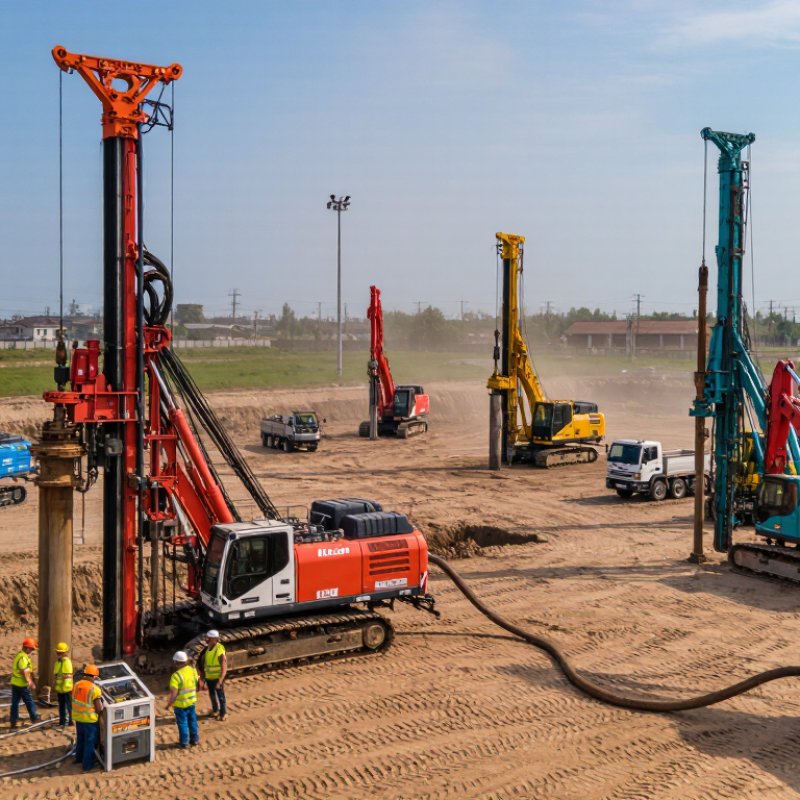
Table of Contents [Hide]
What Is an HDD Horizontal Drilling Machine?
An HDD horizontal drilling machine is a trenchless rig that installs underground pipes, conduits, or cables with limited surface disruption. HDD means horizontal directional drilling. Instead of digging a continuous trench, the machine guides a drill beneath roads, landscaped areas, or other obstacles. The bore path can curve, but it must be planned around soil conditions and known underground utilities.
A typical rig uses a powered carriage to push and rotate drill rods. A steerable drill head cuts the pilot bore, while a locating system helps the crew track its position and depth from the surface. After the pilot hole reaches its exit point, workers may attach a reamer to enlarge the bore. The product pipe is then pulled back through. Mud pumps circulate drilling fluid, which helps carry cuttings out and support the bore. Details matter.
Rig size is only one consideration. Pullback capacity, torque, rod length, fluid-system performance, and available locating tools should match the job. A compact machine may suit a short service crossing, while a longer installation needs greater capacity and careful planning. The ground rarely behaves like a neat diagram. Rock, loose soil, or unexpected obstacles can change the plan, so operator skill and site assessment remain essential. Comparing manufacturers means checking technical specifications, training, parts availability, and service support—not just the machine’s stated capacity.