


- Home
- A-Z Catalogue
- Products
- Valves
- Cetop
- Manual Directional Valves
- Proportional Valves
- Poppet Valves
- High-Speed Linear Servo Valves
- All High-Speed Linear Servo Valves
- Cetop 10 (NG32) Two Stage Type High Speed Linear Servo Valves – LSVHG-10
- Cetop 10 (NG32) Two Stage Type High Speed Linear Servo Valves – LSVHG-10 (With Fail-Safe)
- Cetop 8 (NG25) Two Stage Type High Speed Linear Servo Valves – LSVHG-06
- Cetop 8 (NG25) Two Stage Type High Speed Linear Servo Valves – LSVHG-06 (With Fail-Safe)
- Cetop 7 (NG16) Two Stage Type High Speed Linear Servo Valves – LSVHG-04
- Cetop 7 (NG16) Two Stage Type High Speed Linear Servo Valves – LSVHG-04 (With Fail-Safe)
- Cetop 5 (NG10) Direct Type High Speed Linear Servo Valves – LSVG-03
- Cetop 5 (NG10) OBE Type Direct Operated Linear Servo Valves – LSVG-03-EH
- Cetop 3 (NG6) OBE Type Direct Operated Linear Servo Valves – LSVG-01-EH
- Pumps
- Pressure control
- Flow Control Valves
- Pressure Control Valves
- All Pressure Control Valves
- Brake Valves
- Direct Relief Valve
- Low Noise Solenoid Controlled Relief Valves
- Low Noise Pilot Operated Relief Valves
- Pilot Operated Relief Valves
- Pressure reducing and relieving valves
- Pressure reducing and check valves
- Pressure control valves
- Remote Control Relief Valves
- Solenoid Controlled Relief Valves – BSG
- Solenoid Controlled Relief Valves – BST
- Unloading relief valves
- Check valves
- Environmental
- Valves
- Hydraulic Systems
- Power pack
- About Us
- Contact
- Blog

Top Welded Metal Suppliers for Global Buyers
Global buyers are reassessing Welded Metal sourcing as infrastructure, energy, and manufacturing projects expand across regions. The World Steel Association reported 1,888.2 million tonnes of crude steel production in 2023. This scale shows the market’s depth, but it also reveals its complexity. Large output does not automatically mean consistent welding quality.
Reliable supplier selection requires more than comparing quoted prices. Buyers should examine welding procedures, material certificates, traceability records, inspection capacity, and delivery performance. ISO 3834 provides an internationally recognized quality framework for fusion welding. AWS D1.1 remains widely referenced for structural steel welding in many engineering projects. These standards help create a common technical language between factories, inspectors, and purchasing teams.
Details matter.
A qualified Welded Metal supplier should explain its welding processes clearly. Look for documented WPS and PQR records, trained welders, calibrated equipment, and non-destructive testing options. Visual inspection alone may miss internal defects. Ultrasonic or radiographic testing can provide stronger evidence when project risks justify the added cost.
The OECD’s latest steel outlooks continue to highlight global capacity pressure and uneven market conditions. Buyers therefore need to assess financial stability, production flexibility, and regional logistics together. A factory with modern machines may still struggle during peak demand. This is easy to overlook.
This guide identifies leading Welded Metal suppliers for global buyers by comparing manufacturing experience, certifications, product range, quality controls, customization capability, and export reliability. The ranking cannot fit every project. A supplier suitable for bridge components may not suit thin industrial enclosures. Careful technical review remains essential.
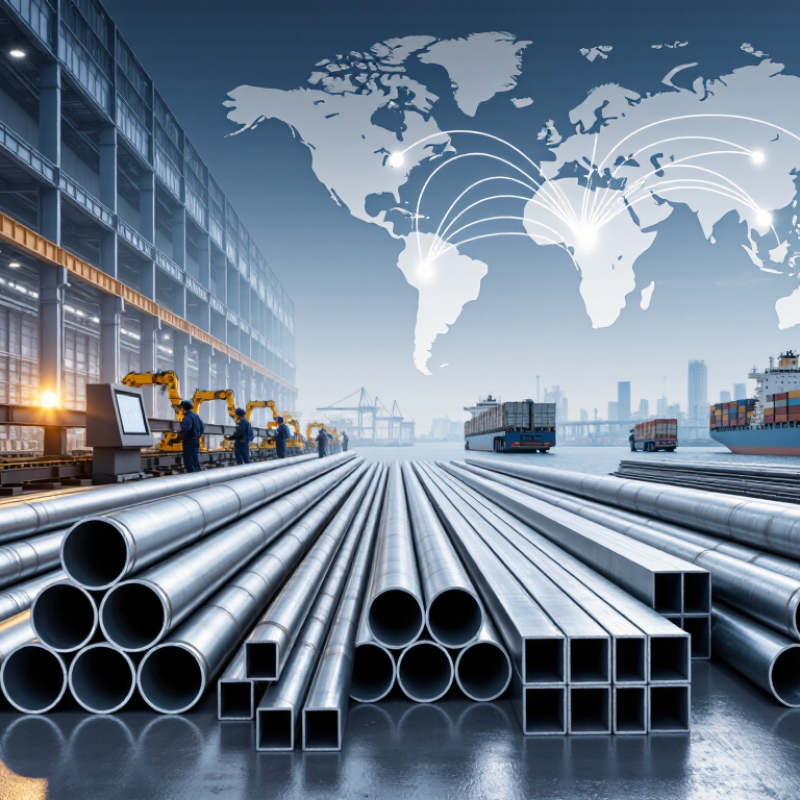
Table of Contents [Hide]
What Defines a Top Welded Metal Supplier
Top Welded Metal Suppliers for Global Buyers
What Defines a Top Welded Metal Supplier
A top welded metal supplier is defined by controlled performance, not polished marketing. Experienced buyers inspect how a supplier handles drawings, material grades, joint design, and changing production demands. A capable team asks practical questions before welding begins. What load will the joint carry? How will distortion be measured? Which surfaces require protection? These questions reveal engineering judgment. Site visits can add useful evidence. Look for clean work areas, calibrated equipment, qualified welders, and documented inspection points. Still, a tidy workshop proves little without consistent records.
Reliable suppliers provide material certificates, weld procedure qualifications, welder records, and inspection reports when requested. They explain whether visual inspection, dimensional checks, dye penetrant testing, ultrasonic testing, or radiography suits the part. The method should match the risk. Traceability matters after shipment. Heat numbers, batch records, and repair logs help buyers investigate problems without guesswork. A strong supplier also manages subcontractors openly, especially for cutting, coating, or stress relief. Hidden handoffs create avoidable uncertainty.
Delivery performance depends on more than machine capacity. Suppliers should show realistic lead times, packing methods, production samples, and corrective-action practices. Ask for evidence from similar projects, not perfect promises. No workshop is flawless. Even skilled teams can miss a small distortion or misread a revision. What matters is honest reporting, root-cause analysis, and verified correction. In production reviews, regular technical communication often prevents more defects than final inspection alone. That belief should remain open to challenge. Their limits should be visible before your shipment leaves the floor.