


- Home
- A-Z Catalogue
- Products
- Valves
- Cetop
- Manual Directional Valves
- Proportional Valves
- Poppet Valves
- High-Speed Linear Servo Valves
- All High-Speed Linear Servo Valves
- Cetop 10 (NG32) Two Stage Type High Speed Linear Servo Valves – LSVHG-10
- Cetop 10 (NG32) Two Stage Type High Speed Linear Servo Valves – LSVHG-10 (With Fail-Safe)
- Cetop 8 (NG25) Two Stage Type High Speed Linear Servo Valves – LSVHG-06
- Cetop 8 (NG25) Two Stage Type High Speed Linear Servo Valves – LSVHG-06 (With Fail-Safe)
- Cetop 7 (NG16) Two Stage Type High Speed Linear Servo Valves – LSVHG-04
- Cetop 7 (NG16) Two Stage Type High Speed Linear Servo Valves – LSVHG-04 (With Fail-Safe)
- Cetop 5 (NG10) Direct Type High Speed Linear Servo Valves – LSVG-03
- Cetop 5 (NG10) OBE Type Direct Operated Linear Servo Valves – LSVG-03-EH
- Cetop 3 (NG6) OBE Type Direct Operated Linear Servo Valves – LSVG-01-EH
- Pumps
- Pressure control
- Flow Control Valves
- Pressure Control Valves
- All Pressure Control Valves
- Brake Valves
- Direct Relief Valve
- Low Noise Solenoid Controlled Relief Valves
- Low Noise Pilot Operated Relief Valves
- Pilot Operated Relief Valves
- Pressure reducing and relieving valves
- Pressure reducing and check valves
- Pressure control valves
- Remote Control Relief Valves
- Solenoid Controlled Relief Valves – BSG
- Solenoid Controlled Relief Valves – BST
- Unloading relief valves
- Check valves
- Environmental
- Valves
- Hydraulic Systems
- Power pack
- About Us
- Contact
- Blog

What Is a Vane Pump and How Does It Work?
A Vane Pump is a compact hydraulic machine that converts shaft rotation into controlled fluid flow. It appears in mobile equipment, manufacturing systems, power steering units, and industrial lubrication circuits. Inside its housing, a rotor turns inside a carefully shaped cam ring. Sliding vanes move through rotor slots. They maintain contact with the ring while creating expanding and contracting chambers.
Hydraulics author Andrew Parr explains the basic principle clearly: “A positive displacement pump moves a definite volume of fluid for each cycle.” This idea helps readers understand why a Vane Pump can deliver smooth flow at moderate pressure. As the chambers expand, they draw hydraulic oil through the inlet. As they shrink, they push the oil toward the outlet. The process feels simple. It is not always simple in practice.
Small clearances matter. Dirty oil can scratch the cam ring, restrict vane movement, and reduce volumetric efficiency. Excessive heat can thin the fluid and weaken internal sealing. During field inspections, technicians often check noise, pressure stability, oil condition, and shaft alignment. These details reveal problems before a complete failure occurs. Still, no pump diagnosis is perfect from sound alone. A quiet pump may hide wear, while a noisy pump may suffer from poor installation. This article will examine the structure, working cycle, advantages, limitations, and maintenance requirements of a Vane Pump. It will also question common assumptions about efficiency, pressure capability, and service life.
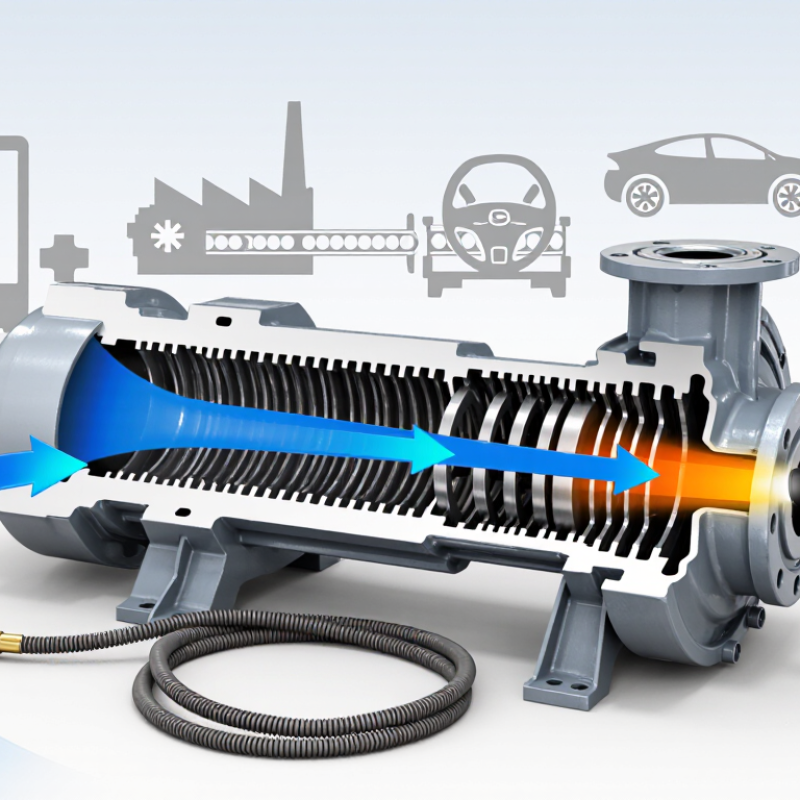
Table of Contents [Hide]
What Is a Vane Pump?
What Is a Vane Pump?
A vane pump is a positive-displacement pump that moves fluid with sliding vanes. Its main parts include a rotor, vanes, housing, inlet, and outlet. The rotor sits slightly off-center inside the housing. As it turns, centrifugal force or spring pressure pushes the vanes against the inner surface. Small chambers form between the vanes. These chambers grow near the inlet and draw in fluid. They shrink near the outlet and force fluid into the system. Pressure follows the changing chamber volume.
This design provides steady flow for hydraulic equipment, lubrication systems, and industrial machinery. It can operate quietly when the fluid is clean and the internal clearance is correct. However, vane pumps are not immune to wear. Contaminated oil can scratch surfaces, weaken vane movement, and reduce efficiency. In practical inspections, unusual noise, heat, or slow actuator movement may signal trouble. Still, one symptom rarely proves one cause. The simple model is useful, but real pump behavior is less forgiving.
Tips: Use the fluid recommended by the equipment designer. Check filters and fluid levels regularly. Watch for air bubbles, leaks, and rising temperature. A pressure reading should be compared with the machine’s service specifications. Never assume a worn vane pump needs replacement immediately; testing can reveal whether contamination, alignment, or incorrect pressure is responsible.