


- Home
- A-Z Catalogue
- Products
- Valves
- Cetop
- Manual Directional Valves
- Proportional Valves
- Poppet Valves
- High-Speed Linear Servo Valves
- All High-Speed Linear Servo Valves
- Cetop 10 (NG32) Two Stage Type High Speed Linear Servo Valves – LSVHG-10
- Cetop 10 (NG32) Two Stage Type High Speed Linear Servo Valves – LSVHG-10 (With Fail-Safe)
- Cetop 8 (NG25) Two Stage Type High Speed Linear Servo Valves – LSVHG-06
- Cetop 8 (NG25) Two Stage Type High Speed Linear Servo Valves – LSVHG-06 (With Fail-Safe)
- Cetop 7 (NG16) Two Stage Type High Speed Linear Servo Valves – LSVHG-04
- Cetop 7 (NG16) Two Stage Type High Speed Linear Servo Valves – LSVHG-04 (With Fail-Safe)
- Cetop 5 (NG10) Direct Type High Speed Linear Servo Valves – LSVG-03
- Cetop 5 (NG10) OBE Type Direct Operated Linear Servo Valves – LSVG-03-EH
- Cetop 3 (NG6) OBE Type Direct Operated Linear Servo Valves – LSVG-01-EH
- Pumps
- Pressure control
- Flow Control Valves
- Pressure Control Valves
- All Pressure Control Valves
- Brake Valves
- Direct Relief Valve
- Low Noise Solenoid Controlled Relief Valves
- Low Noise Pilot Operated Relief Valves
- Pilot Operated Relief Valves
- Pressure reducing and relieving valves
- Pressure reducing and check valves
- Pressure control valves
- Remote Control Relief Valves
- Solenoid Controlled Relief Valves – BSG
- Solenoid Controlled Relief Valves – BST
- Unloading relief valves
- Check valves
- Environmental
- Valves
- Hydraulic Systems
- Power pack
- About Us
- Contact
- Blog

Why Choose a 2 Door Electric Truck for Your Business?
Choosing a 2 Door Electric Truck can reshape how a business handles daily transport. For local deliveries, maintenance work, landscaping, and facility services, its compact cabin and open cargo area offer practical flexibility. Drivers can enter narrow streets, park beside loading zones, and carry tools without managing a large passenger cabin. That matters when every minute affects route efficiency.
Electric power also changes the driving experience. Instant torque helps the truck move smoothly from traffic lights, while regenerative braking can reduce brake wear during repeated urban stops. A quieter motor may improve communication at busy work sites. However, the benefits depend on real operating conditions. Battery range can drop in cold weather, heavy rain, steep areas, or when the truck carries a full payload. Charging access must be checked before purchase, not after delivery.
A responsible fleet decision should compare payload capacity, charging time, warranty coverage, service support, and expected annual mileage. Review manufacturer data, then test the vehicle on a normal business route. A short demonstration drive may reveal turning limits, seat comfort, or storage problems that brochures overlook. The truck may lower fuel and maintenance costs, but its purchase price can remain challenging for smaller companies. Careful planning matters.
This article examines where a 2 Door Electric Truck performs well, where it may disappoint, and how businesses can judge its long-term value with practical evidence.
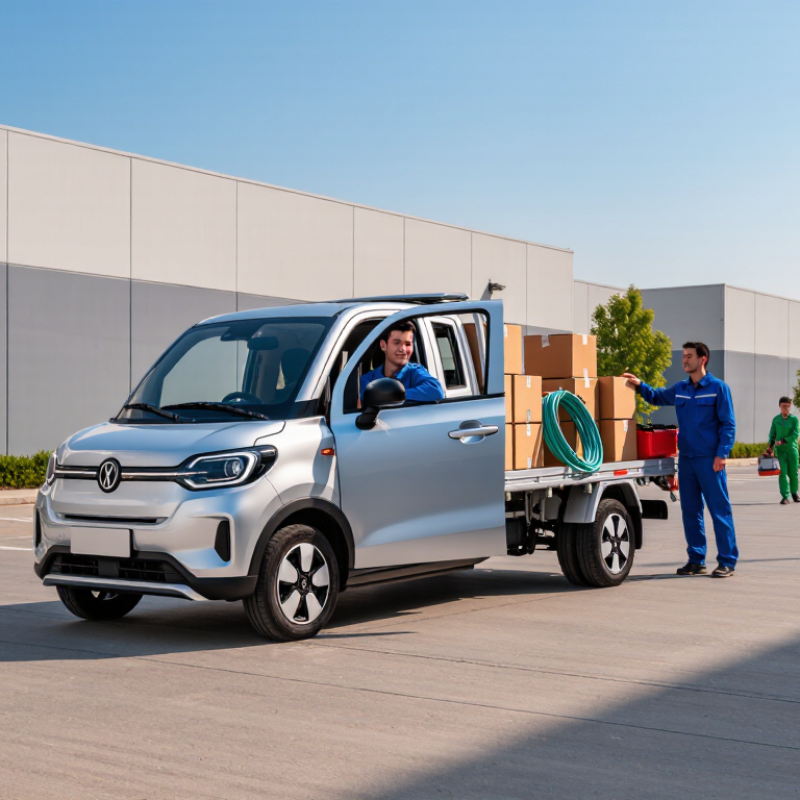
Table of Contents [Hide]
What Is a 2-Door Electric Truck?
A 2-door electric truck is a compact commercial vehicle with two entry doors, an electric motor, and a rechargeable battery pack. Its cab usually seats two or three people, depending on the interior layout. Behind the cab, a flatbed, box, or specialized cargo body supports daily business work.
The design keeps the cabin short and leaves more space for useful equipment. A wider door opening can make repeated entry easier at delivery sites. The low cabin floor may also reduce climbing effort during busy shifts. In practice, drivers often notice quieter operation, smoother acceleration, and less vibration than with conventional trucks. That matters near offices, warehouses, and residential streets.
Battery size, payload, weather, traffic, and driving habits affect real-world range. Charging access matters just as much. A business should compare its route length with overnight charging capacity and local electrical limits. Payload ratings deserve careful attention too. A larger cargo body does not always mean a higher safe load. This is where assumptions can fail. Fleet managers should review manufacturer specifications, service records, warranty terms, and operating data before purchase. A short test route with the actual cargo can reveal uncomfortable seating, limited visibility, or slower charging than expected. Practical details often matter more than a clean brochure.