


- Home
- A-Z Catalogue
- Products
- Valves
- Cetop
- Manual Directional Valves
- Proportional Valves
- Poppet Valves
- High-Speed Linear Servo Valves
- All High-Speed Linear Servo Valves
- Cetop 10 (NG32) Two Stage Type High Speed Linear Servo Valves – LSVHG-10
- Cetop 10 (NG32) Two Stage Type High Speed Linear Servo Valves – LSVHG-10 (With Fail-Safe)
- Cetop 8 (NG25) Two Stage Type High Speed Linear Servo Valves – LSVHG-06
- Cetop 8 (NG25) Two Stage Type High Speed Linear Servo Valves – LSVHG-06 (With Fail-Safe)
- Cetop 7 (NG16) Two Stage Type High Speed Linear Servo Valves – LSVHG-04
- Cetop 7 (NG16) Two Stage Type High Speed Linear Servo Valves – LSVHG-04 (With Fail-Safe)
- Cetop 5 (NG10) Direct Type High Speed Linear Servo Valves – LSVG-03
- Cetop 5 (NG10) OBE Type Direct Operated Linear Servo Valves – LSVG-03-EH
- Cetop 3 (NG6) OBE Type Direct Operated Linear Servo Valves – LSVG-01-EH
- Pumps
- Pressure control
- Flow Control Valves
- Pressure Control Valves
- All Pressure Control Valves
- Brake Valves
- Direct Relief Valve
- Low Noise Solenoid Controlled Relief Valves
- Low Noise Pilot Operated Relief Valves
- Pilot Operated Relief Valves
- Pressure reducing and relieving valves
- Pressure reducing and check valves
- Pressure control valves
- Remote Control Relief Valves
- Solenoid Controlled Relief Valves – BSG
- Solenoid Controlled Relief Valves – BST
- Unloading relief valves
- Check valves
- Environmental
- Valves
- Hydraulic Systems
- Power pack
- About Us
- Contact
- Blog

Why Do Car Wiper Blades Wear Out So Quickly?
Why Do Car Wiper Blades Wear Out So Quickly?
Car Wiper Blades face rain, dust, road salt, sunlight, and sudden temperature changes. Their rubber edges drag across glass thousands of times each year. That constant contact slowly rounds the wiping edge, creating streaks, skips, and noisy chatter.
Grand View Research estimates that the global automotive windshield wiper market reached approximately USD 4.5 billion in 2023. Its report also projects continued growth through 2030, supported by rising vehicle ownership and replacement demand. The data suggests a practical point: wiper replacement is not a minor maintenance issue. It is a recurring safety requirement.
Richard Reina, Product Training Director at CARiD, describes wipers as “one of the most overlooked safety components on a vehicle.” His observation explains why worn blades often remain installed too long. Many drivers wait for visible cracking. However, microscopic hardening can begin earlier, especially after prolonged sun exposure. Heat matters.
The common six-to-twelve-month replacement guideline is useful, but it is not a strict rule. AAA recommends regular inspection and replacement when performance declines, while climate and driving conditions can shorten blade life. A vehicle parked outdoors in Arizona may need different attention than one kept in a shaded garage in Oregon.
The overlooked detail is the windshield itself. Fine grit can act like sandpaper beneath the rubber. Using dry blades accelerates wear. I have to admit, replacement intervals are sometimes presented too confidently. Real-world evidence depends on inspection, weather, glass cleanliness, and blade quality. This article examines those factors closely.
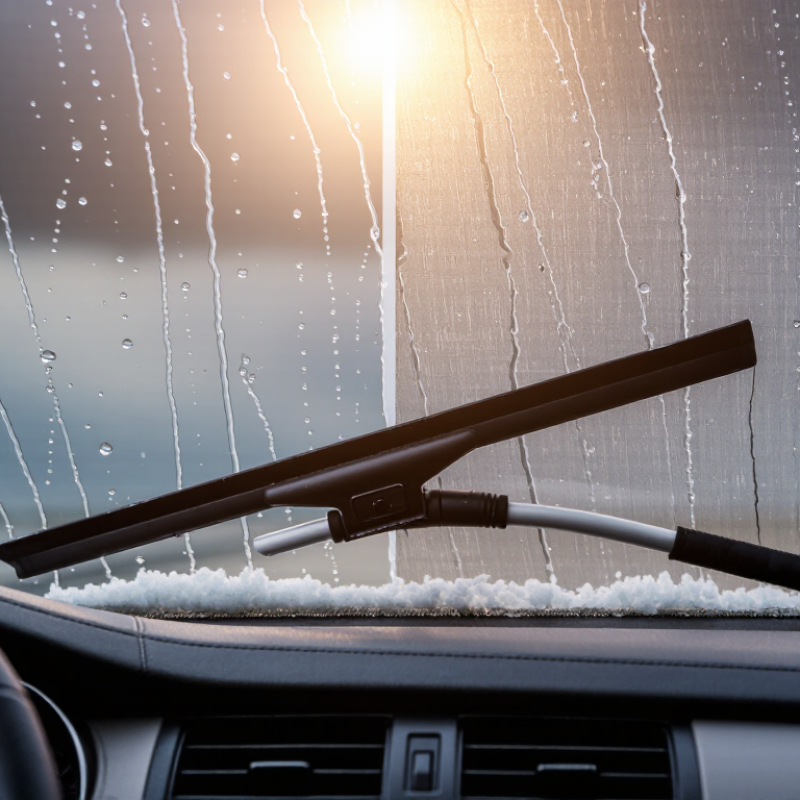
Table of Contents [Hide]
What Wiper Blades Do and Why Their Rubber Edges Matter
Why Do Car Wiper Blades Wear Out So Quickly?
Wiper blades do more than sweep away rain. Their rubber edges press against the windshield, clearing water, dust, and road grime so the driver can see clearly. That thin edge needs even contact across the glass. When it hardens, cracks, or gets nicked, it may leave streaks or skip over parts of the windshield.
Sunlight and heat can dry the rubber, while grit trapped beneath the blade can scratch its edge with every pass. Using the wipers on a dry, dusty windshield adds friction. A small split may seem harmless, but it can leave a hazy band right where visibility matters. Rubber wear is gradual, and it is easy to miss until rain makes it obvious.
Tips: Lift the blades gently and check for cracks, rough spots, or loose sections. Clean the rubber edge and windshield with a damp, soft cloth; avoid pulling or twisting the blade. If it still streaks after cleaning, replacement may be needed. Don’t wait for a heavy downpour to find out. Even regular checks can miss early wear, so keep an eye on the view through the glass.