


- Home
- A-Z Catalogue
- Products
- Valves
- Cetop
- Manual Directional Valves
- Proportional Valves
- Poppet Valves
- High-Speed Linear Servo Valves
- All High-Speed Linear Servo Valves
- Cetop 10 (NG32) Two Stage Type High Speed Linear Servo Valves – LSVHG-10
- Cetop 10 (NG32) Two Stage Type High Speed Linear Servo Valves – LSVHG-10 (With Fail-Safe)
- Cetop 8 (NG25) Two Stage Type High Speed Linear Servo Valves – LSVHG-06
- Cetop 8 (NG25) Two Stage Type High Speed Linear Servo Valves – LSVHG-06 (With Fail-Safe)
- Cetop 7 (NG16) Two Stage Type High Speed Linear Servo Valves – LSVHG-04
- Cetop 7 (NG16) Two Stage Type High Speed Linear Servo Valves – LSVHG-04 (With Fail-Safe)
- Cetop 5 (NG10) Direct Type High Speed Linear Servo Valves – LSVG-03
- Cetop 5 (NG10) OBE Type Direct Operated Linear Servo Valves – LSVG-03-EH
- Cetop 3 (NG6) OBE Type Direct Operated Linear Servo Valves – LSVG-01-EH
- Pumps
- Pressure control
- Flow Control Valves
- Pressure Control Valves
- All Pressure Control Valves
- Brake Valves
- Direct Relief Valve
- Low Noise Solenoid Controlled Relief Valves
- Low Noise Pilot Operated Relief Valves
- Pilot Operated Relief Valves
- Pressure reducing and relieving valves
- Pressure reducing and check valves
- Pressure control valves
- Remote Control Relief Valves
- Solenoid Controlled Relief Valves – BSG
- Solenoid Controlled Relief Valves – BST
- Unloading relief valves
- Check valves
- Environmental
- Valves
- Hydraulic Systems
- Power pack
- About Us
- Contact
- Blog

2026 Top Flow Control Valve Types for Global Buyers
Choosing the right flow control valve in 2026 requires more than comparing pressure ratings and purchase prices. Global buyers face changing media, temperatures, connection standards, automation needs, and maintenance conditions. A valve that performs well on a clean-water line may fail quickly with abrasive slurry, sticky chemicals, or high-temperature steam.
Béla G. Lipták, a respected process-control engineer and editor of Instrument Engineers’ Handbook, describes the control valve as “the most common final control element.” His observation remains practical. The valve directly influences flow, pressure, temperature, and production stability. Small sizing errors can create noise, vibration, leakage, or unstable control.
No single valve wins every service.
This guide examines the leading flow control valve types for international buyers, including ball, butterfly, globe, gate, plug, diaphragm, and check valves. It connects valve design with real operating details, such as line size, fluid viscosity, cavitation risk, actuator response, and available maintenance skills. It also considers material selection, pressure classes, certification records, spare-part access, and supplier documentation.
Experience still matters. A catalog may show impressive specifications, yet field performance depends on installation and operating discipline. That assumption deserves caution. Buyers should verify test reports, factory quality systems, applicable regional requirements, and the manufacturer’s service history before approving a shipment.
The strongest choice is rarely the cheapest unit. It is the valve that delivers controlled performance, predictable maintenance, and dependable availability throughout its expected service life.
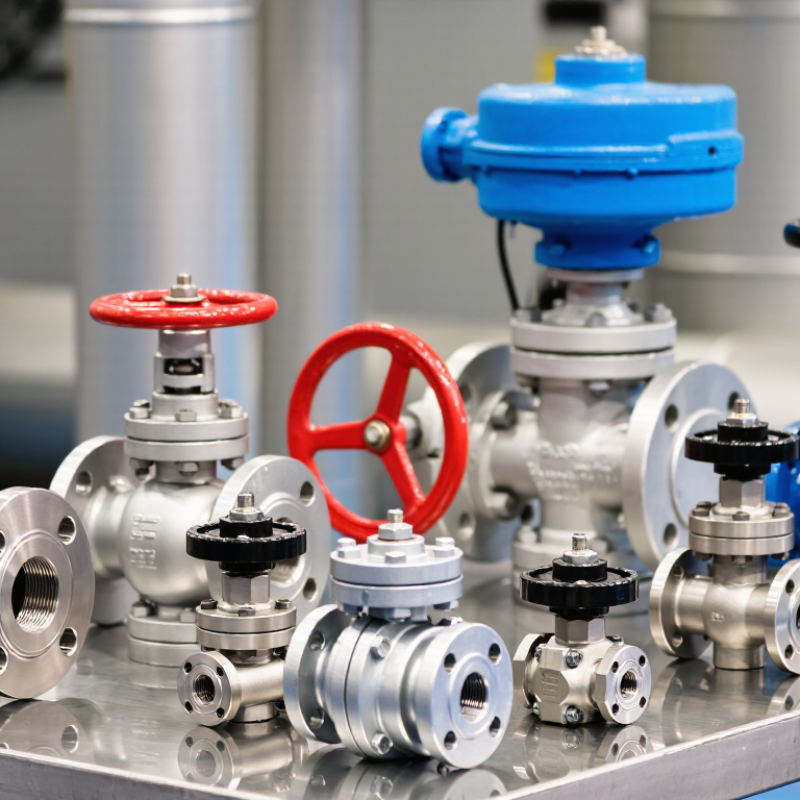
Table of Contents
[Hide]
Understanding Flow Control Valves and Their Core Functions
Flow control valves regulate the movement of liquids, gases, and steam through piping systems. Their core function is controlling flow rate, pressure, temperature, or process stability. In practical systems, the valve responds to changing conditions instead of simply opening or closing. A small position change can alter pump demand, product quality, and energy use.
Globe valves provide accurate throttling and suit water, steam, and process lines. Butterfly valves are lighter, compact, and useful for large pipe diameters. Ball valves offer fast shutoff, but standard designs may provide limited control at low flow rates. Needle valves handle precise adjustment in smaller lines. Diaphragm valves help isolate corrosive or contaminated media from moving parts. Each type has limits.
Selection should begin with flow rate, pressure, temperature, media properties, pipe size, and required control accuracy. Engineers often check the valve’s flow coefficient, pressure drop, actuator force, and fail-safe position. Cavitation can sound like gravel inside the line and damage trim quickly. Incorrect materials may swell, corrode, or leak around seals. During commissioning, verify actual operating data rather than trusting assumptions from a specification sheet. No selection is perfect. A valve that works well on clean water may perform poorly with suspended solids, and maintenance access is sometimes overlooked. Global buyers should also confirm testing records, documentation, and applicable regional standards before installation.
2026 Top Flow Control Valve Types for Global Buyers - Understanding Flow Control Valves and Their Core Functions
| Valve Type | Primary Flow-Control Method | Typical Flow Path | Best-Suited Media | Typical Pressure Capability | Throttling Performance | Shutoff Capability | Main Advantages | Key Limitations | Common Applications |
|---|---|---|---|---|---|---|---|---|---|
| Globe Valve | Moves a plug toward or away from a fixed seat to vary the opening. | Generally changes direction inside the body, creating higher resistance than straight-through designs. | Clean liquids, steam, gases, and many process fluids. | Low to high; design-dependent | Excellent and predictable control over a broad operating range. | Good to excellent when correctly selected and maintained. | Accurate regulation, stable control characteristics, and availability in many body configurations. | Higher pressure loss, larger installed size, and more actuator force than many rotary valves. | Steam control, cooling-water systems, process piping, and industrial utility services. |
| Butterfly Valve | Rotates a disc around a shaft positioned in the pipeline. | Short, nearly straight-through passage with a disc in the flow stream. | Water, air, gases, wastewater, and compatible low- to medium-viscosity fluids. | Low to medium; design-dependent | Good for general modulation; performance depends on disc profile and seat design. | Good with resilient or high-performance seats; metal-seated versions suit demanding temperatures. | Compact, lightweight, economical, and suitable for large pipe sizes. | Disc remains in the flow path; control accuracy may be lower than a purpose-built globe valve. | Water distribution, HVAC, fire-protection systems, air handling, and wastewater treatment. |
| Ball Valve | Rotates a drilled ball to align or misalign the bore with the pipeline. | Straight-through when fully open, with low flow resistance. | Clean liquids, gases, hydrocarbons, and compatible chemicals. | Medium to high; design-dependent | Limited with standard full-port designs; characterized or segmented versions provide better control. | Excellent quarter-turn shutoff, especially with suitable soft or metal seats. | Fast operation, compact construction, low pressure drop, and strong isolation capability. | Standard designs can suffer seat wear or unstable control at partially open positions. | Gas distribution, chemical processing, fuel systems, compressed air, and general isolation. |
| Plug Valve | Rotates a cylindrical or conical plug with a passage through its center. | Usually straight-through, depending on plug and body design. | Liquids, gases, slurries, and fluids requiring robust isolation. | Medium to high; design-dependent | Moderate; eccentric or specialized control designs perform better than basic on/off plugs. | Good to excellent, with suitable sealing arrangements. | Simple quarter-turn operation, compact flow path, and tolerance for some contaminated services. | Operating torque can be high; lubrication, emissions, and wear require design consideration. | Pipeline service, slurry handling, gas systems, wastewater, and industrial isolation. |
| Gate Valve | Raises or lowers a gate to open or close the passage. | Straight-through when fully open. | Clean liquids, gases, steam, and general utility fluids. | Medium to high; design-dependent | Not recommended for routine throttling because partial opening can cause vibration, erosion, and seat damage. | Good isolation when fully closed and properly maintained. | Low pressure drop when open and suitable for large-diameter pipelines. | Slow operation, large vertical travel, and poor performance as a regulating valve. | Water mains, process isolation, power facilities, and upstream or downstream pipeline isolation. |
| Needle Valve | Uses a slender, tapered plug that moves into a small seat opening. | Flow passes through a small, precisely controlled opening. | Clean liquids and gases at relatively low flow rates. | Medium to high; small-bore design-dependent | Excellent for fine adjustment and low-flow metering. | Good for small-bore isolation when the seat and tip are properly matched. | High precision, repeatable adjustment, and strong resistance to sudden flow changes. | Very limited flow capacity and unsuitable for large-particle or highly contaminated media. | Instrumentation, sampling lines, calibration systems, laboratory equipment, and hydraulic controls. |
| Pinch Valve | Compresses a flexible sleeve to restrict or stop flow. | Full-bore flexible sleeve with no metal obstruction in the normal flow path. | Slurries, powders, abrasive fluids, corrosive chemicals, and liquids containing solids. | Low to medium; sleeve-dependent | Good for coarse to moderate control, especially in abrasive services. | Good when the sleeve is correctly sized and undamaged. | Excellent resistance to abrasion and corrosion; media contacts mainly the sleeve. | Sleeve life depends on temperature, pressure, chemical compatibility, and cycling frequency. | Mining, mineral processing, cement, wastewater, chemical handling, and bulk solids service. |
| Diaphragm Valve | Uses a flexible diaphragm to press against a weir or seat. | Weir-style or straight-through flow path, depending on body design. | Corrosive, viscous, contaminated, sterile, and particulate-containing fluids. | Low to medium; diaphragm-dependent | Good for many low- to medium-flow duties; not ideal for extreme pressure-drop service. | Excellent isolation because the actuator mechanism is separated from the process fluid. | Low leakage potential, strong corrosion protection, and cleanability in hygienic designs. | Diaphragm wear limits service life; temperature and pressure are restricted by diaphragm material. | Water treatment, pharmaceutical processing, food production, chemical service, and corrosive fluids. |
| Check Valve | Opens automatically with forward flow and closes when flow reverses. | Axial, swing, lift, or dual-plate flow path depending on construction. | Liquids, gases, steam, and compatible process fluids. | Low to high; design-dependent | Not designed for active throttling or manual flow adjustment. | Provides automatic reverse-flow prevention rather than operator-controlled isolation. | Protects pumps, compressors, and process equipment from backflow without external actuation. | Can slam or generate water hammer if closing characteristics are poorly matched to the system. | Pump discharge lines, compressor systems, boiler feedwater, pipelines, and process equipment protection. |
| Control Valve | Continuously varies the effective flow area using an actuator and control signal. | Globe, rotary, eccentric, or other engineered body configurations. | Liquids, gases, steam, and process fluids selected for material compatibility. | Application-specific | Excellent when correctly sized for flow coefficient, rangeability, cavitation, noise, and flashing conditions. | Usually requires a separate shutoff valve unless the control valve is specifically rated for isolation. | Supports automatic pressure, temperature, level, and flow regulation. | Requires proper sizing, instrumentation, actuator selection, and maintenance expertise. | Refineries, chemical plants, power generation, water treatment, HVAC, and automated process systems. |
Note: Pressure capability, temperature range, flow coefficient, leakage class, materials, and allowable media vary by body design, pressure class, trim, seat, lining, and applicable standards. Buyers should verify the manufacturer’s technical datasheet and the requirements of the specific installation before selection.
Related Posts
-

Why Flow Control Valve is Essential for Effective System Performance
-

Top Hydraulic Equipment Trends and Innovations for 2026?
-

How to Choose the Right Hydraulic Unit for Your Needs?
-

Understanding the Importance of Hydraulic Flow Control Valves in Modern Industrial Applications
-
2026 How to Choose a Hydraulic Directional Control Valve for Your Project?
-

Top 10 Reasons You Need a Hydraulic Power Unit for Your Business Operations