


- Home
- A-Z Catalogue
- Products
- Valves
- Cetop
- Manual Directional Valves
- Proportional Valves
- Poppet Valves
- High-Speed Linear Servo Valves
- All High-Speed Linear Servo Valves
- Cetop 10 (NG32) Two Stage Type High Speed Linear Servo Valves – LSVHG-10
- Cetop 10 (NG32) Two Stage Type High Speed Linear Servo Valves – LSVHG-10 (With Fail-Safe)
- Cetop 8 (NG25) Two Stage Type High Speed Linear Servo Valves – LSVHG-06
- Cetop 8 (NG25) Two Stage Type High Speed Linear Servo Valves – LSVHG-06 (With Fail-Safe)
- Cetop 7 (NG16) Two Stage Type High Speed Linear Servo Valves – LSVHG-04
- Cetop 7 (NG16) Two Stage Type High Speed Linear Servo Valves – LSVHG-04 (With Fail-Safe)
- Cetop 5 (NG10) Direct Type High Speed Linear Servo Valves – LSVG-03
- Cetop 5 (NG10) OBE Type Direct Operated Linear Servo Valves – LSVG-03-EH
- Cetop 3 (NG6) OBE Type Direct Operated Linear Servo Valves – LSVG-01-EH
- Pumps
- Pressure control
- Flow Control Valves
- Pressure Control Valves
- All Pressure Control Valves
- Brake Valves
- Direct Relief Valve
- Low Noise Solenoid Controlled Relief Valves
- Low Noise Pilot Operated Relief Valves
- Pilot Operated Relief Valves
- Pressure reducing and relieving valves
- Pressure reducing and check valves
- Pressure control valves
- Remote Control Relief Valves
- Solenoid Controlled Relief Valves – BSG
- Solenoid Controlled Relief Valves – BST
- Unloading relief valves
- Check valves
- Environmental
- Valves
- Hydraulic Systems
- Power pack
- About Us
- Contact
- Blog

How to Choose the Right Hydraulic Unit for Your Needs?
Choosing the right hydraulic unit can be a daunting task. The hydraulic equipment industry is expected to reach $41.3 billion by 2025, highlighting its growing importance. Efficient hydraulic units enhance productivity across various sectors. They are crucial for construction, manufacturing, and agriculture.
Selecting a hydraulic unit involves understanding specific requirements. Not all units are suitable for every application. For instance, the power capacity and size affect performance. An improper selection may lead to inefficiencies or costly repairs. Industry data shows that 30% of production downtime stems from equipment failure.
Hydraulic units offer versatility, but complexities exist. Users often overlook details like fluid compatibility and maintenance needs. A poorly chosen hydraulic unit can hamper operations. Evaluating options requires careful analysis and expert advice. Always consider both immediate and long-term needs.
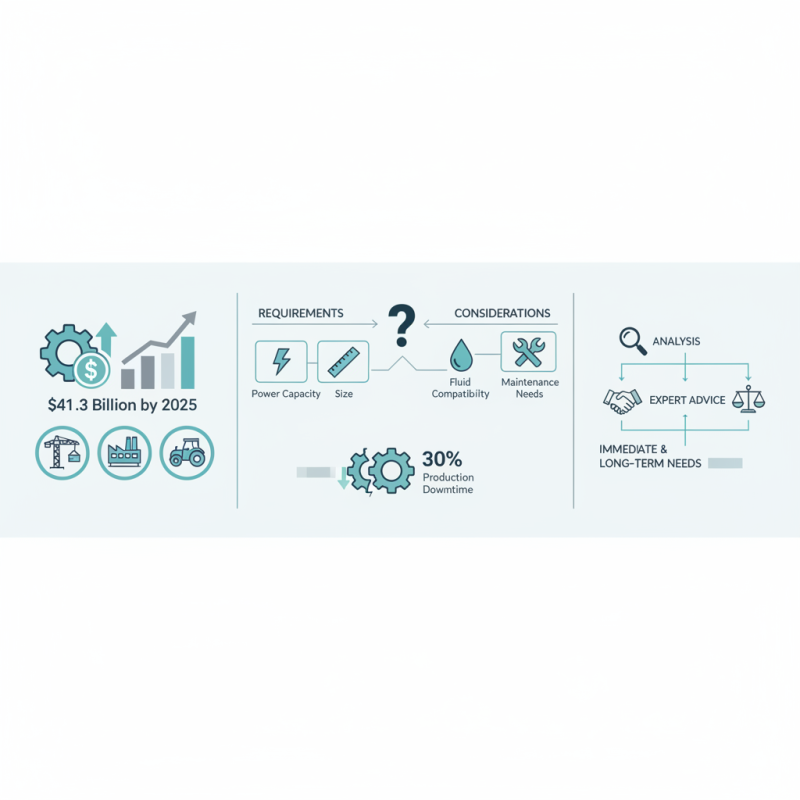
Table of Contents
[Hide]
Factors to Consider When Selecting a Hydraulic Unit for Specific Applications
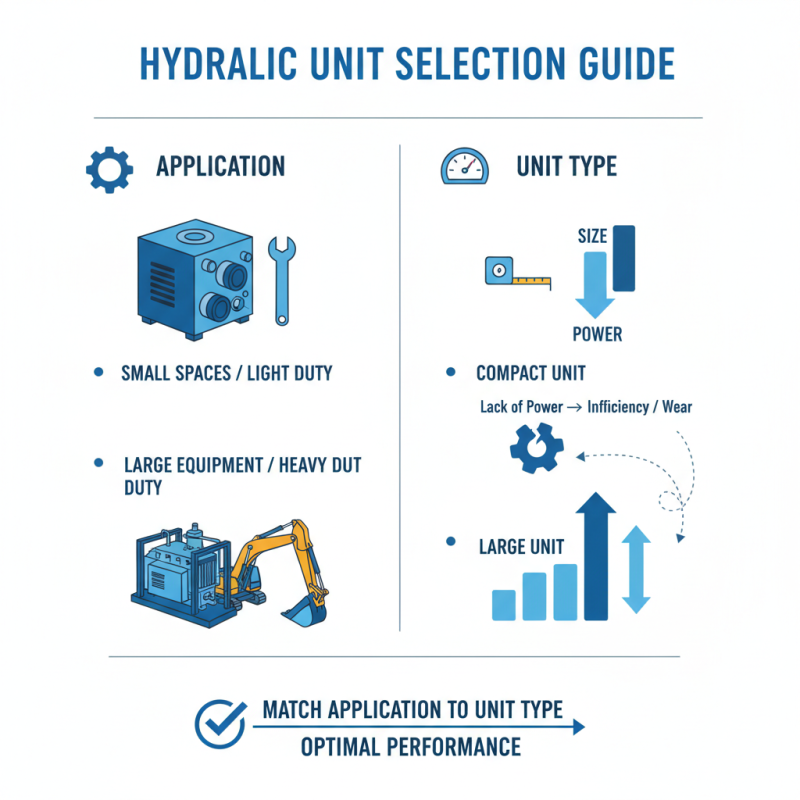
When selecting a hydraulic unit, understanding the specific application is crucial. Different tasks require different power outputs and sizes. For example, a compact unit may fit well in small spaces but may lack the power needed for heavy-duty applications. This mismatch can lead to inefficient operation and increased wear over time.
Pressure ratings are another important factor. High-pressure systems may be necessary for certain applications but can be overkill for others. It is critical to assess the operational needs instead of defaulting to the highest specs. Consider also the fluid type. Oil-based or water-based fluids have distinct characteristics that can affect efficiency and compatibility.
Durability is a reflection of quality, yet users often overlook it. Maintenance needs can vary widely. Frequent maintenance might be a hassle but can prevent larger failures later. Think about the environmental conditions too; exposure to moisture or extreme temperatures can lead to unexpected breakdowns. Balancing these factors ensures a more tailored hydraulic unit choice. Always reflect on past decisions, and be prepared to adjust based on performance.
Related Posts
-

How to Choose the Right Hydraulic Unit for Your Needs?
-

Why You Should Invest in a Hydraulic Unit for Efficient Machinery Operation
-
The Essential Guide to Understanding Hydraulic Power Packs in Industrial Applications
-

Understanding the Importance of Hydraulic Flow Control Valves in Modern Industrial Applications
-
Why Hydraulic Flow Control Valves are Essential for Optimizing System Performance: Insights and Data
-

How to Choose the Right Hydraulic Unit for Your Industrial Needs