


- Home
- A-Z Catalogue
- Products
- Valves
- Cetop
- Manual Directional Valves
- Proportional Valves
- Poppet Valves
- High-Speed Linear Servo Valves
- All High-Speed Linear Servo Valves
- Cetop 10 (NG32) Two Stage Type High Speed Linear Servo Valves – LSVHG-10
- Cetop 10 (NG32) Two Stage Type High Speed Linear Servo Valves – LSVHG-10 (With Fail-Safe)
- Cetop 8 (NG25) Two Stage Type High Speed Linear Servo Valves – LSVHG-06
- Cetop 8 (NG25) Two Stage Type High Speed Linear Servo Valves – LSVHG-06 (With Fail-Safe)
- Cetop 7 (NG16) Two Stage Type High Speed Linear Servo Valves – LSVHG-04
- Cetop 7 (NG16) Two Stage Type High Speed Linear Servo Valves – LSVHG-04 (With Fail-Safe)
- Cetop 5 (NG10) Direct Type High Speed Linear Servo Valves – LSVG-03
- Cetop 5 (NG10) OBE Type Direct Operated Linear Servo Valves – LSVG-03-EH
- Cetop 3 (NG6) OBE Type Direct Operated Linear Servo Valves – LSVG-01-EH
- Pumps
- Pressure control
- Flow Control Valves
- Pressure Control Valves
- All Pressure Control Valves
- Brake Valves
- Direct Relief Valve
- Low Noise Solenoid Controlled Relief Valves
- Low Noise Pilot Operated Relief Valves
- Pilot Operated Relief Valves
- Pressure reducing and relieving valves
- Pressure reducing and check valves
- Pressure control valves
- Remote Control Relief Valves
- Solenoid Controlled Relief Valves – BSG
- Solenoid Controlled Relief Valves – BST
- Unloading relief valves
- Check valves
- Environmental
- Valves
- Hydraulic Systems
- Power pack
- About Us
- Contact
- Blog

2026 Top Yuken Valve Types for Global Buyers?
The 2026 global valve market will reward buyers who compare operating conditions, not catalog labels. Grand View Research estimates steady growth in the global hydraulic equipment market through 2030, driven by construction, manufacturing, energy, and mobile machinery. MarketsandMarkets also identifies increasing automation and predictive maintenance as major hydraulic-system trends. These shifts make the yuken valve more than a replacement component. It becomes a decision about control accuracy, contamination tolerance, energy use, and service access.
Hydraulic systems punish vague specifications. A compact factory line may need a reliable solenoid-operated directional valve, while a high-load press may require proportional control or a pressure-control valve. Yuken Kogyo’s engineering approach emphasizes matching valve performance with the complete circuit. Fluid-power specialist Eric Lanke has expressed a related principle: “Fluid power delivers value when performance, reliability, and application knowledge work together.” That idea matters for global buyers comparing Yuken valve types across different machines and climates.
A small mistake becomes expensive.
This guide examines directional, pressure, flow-control, proportional, and pilot-operated Yuken valve options for 2026 procurement planning. It considers response time, rated pressure, port size, hydraulic-fluid compatibility, noise, maintenance, and regional support. Data sheets remain essential, but they do not reveal every field problem. Installation quality, oil cleanliness, and replacement availability can change real-world performance. Buyers should question optimistic claims. The “best” valve may still fail when filtration is poor or commissioning is rushed. Our comparison therefore treats application evidence as seriously as laboratory specifications.
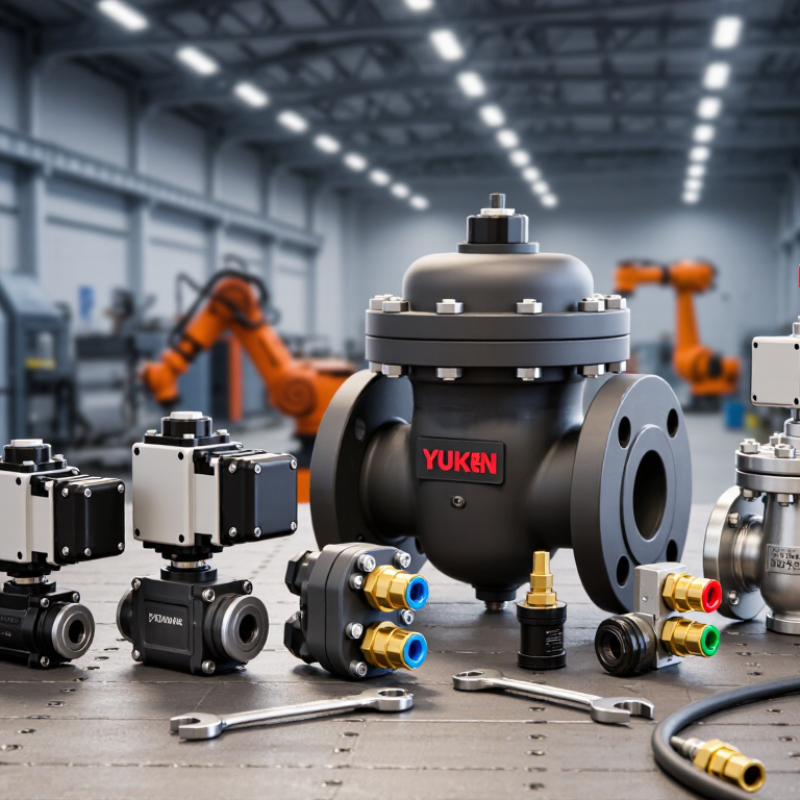
Table of Contents
[Hide]
Yuken Valve Basics and Their Role in Hydraulic Systems
Hydraulic valves control how pressurized fluid moves through a machine. They direct flow, limit pressure, or adjust actuator speed. In practical systems, a valve acts like a traffic controller for oil. Small spool movement can change cylinder direction within seconds.
Directional control valves connect the pump, actuator, and return line. Pressure relief valves protect components when resistance rises unexpectedly. Flow control valves regulate movement, helping a cylinder extend smoothly instead of jerking. Check valves allow flow in one direction and prevent reverse movement. Each type has a specific duty. Mixing their functions can create unstable operation.
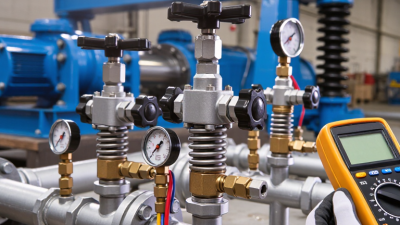
A reliable selection begins with pressure, flow rate, fluid type, port size, and response time. Technicians should compare the valve’s rated pressure with real operating peaks, not only the pump setting. Clean fluid matters greatly; particles can damage precision surfaces and cause internal leakage. Installation should follow recognized hydraulic safety practices, including proper hose routing and pressure isolation. Field inspections often reveal loose fittings or incorrect seals. These details seem minor, but they can stop a production line. Valve sizing is not always perfect on the first attempt. Actual load changes, temperature, and aging seals may require later adjustment. A pressure gauge near the valve helps reveal those changes.
Related Posts
-
Understanding the Role of Hydraulic Valves in Modern Industrial Applications
-
7 Essential Tips for Choosing the Right Hydraulic Valve for Your Application
-
How to Choose a Hydraulic Control Valve in 2026?
-
How to Choose a Hydraulic Pressure Control Valve?
-
What is a Yuken Directional Valve and How Does It Work?
-
10 Essential Tips for Choosing the Right Hydraulic Relief Valve